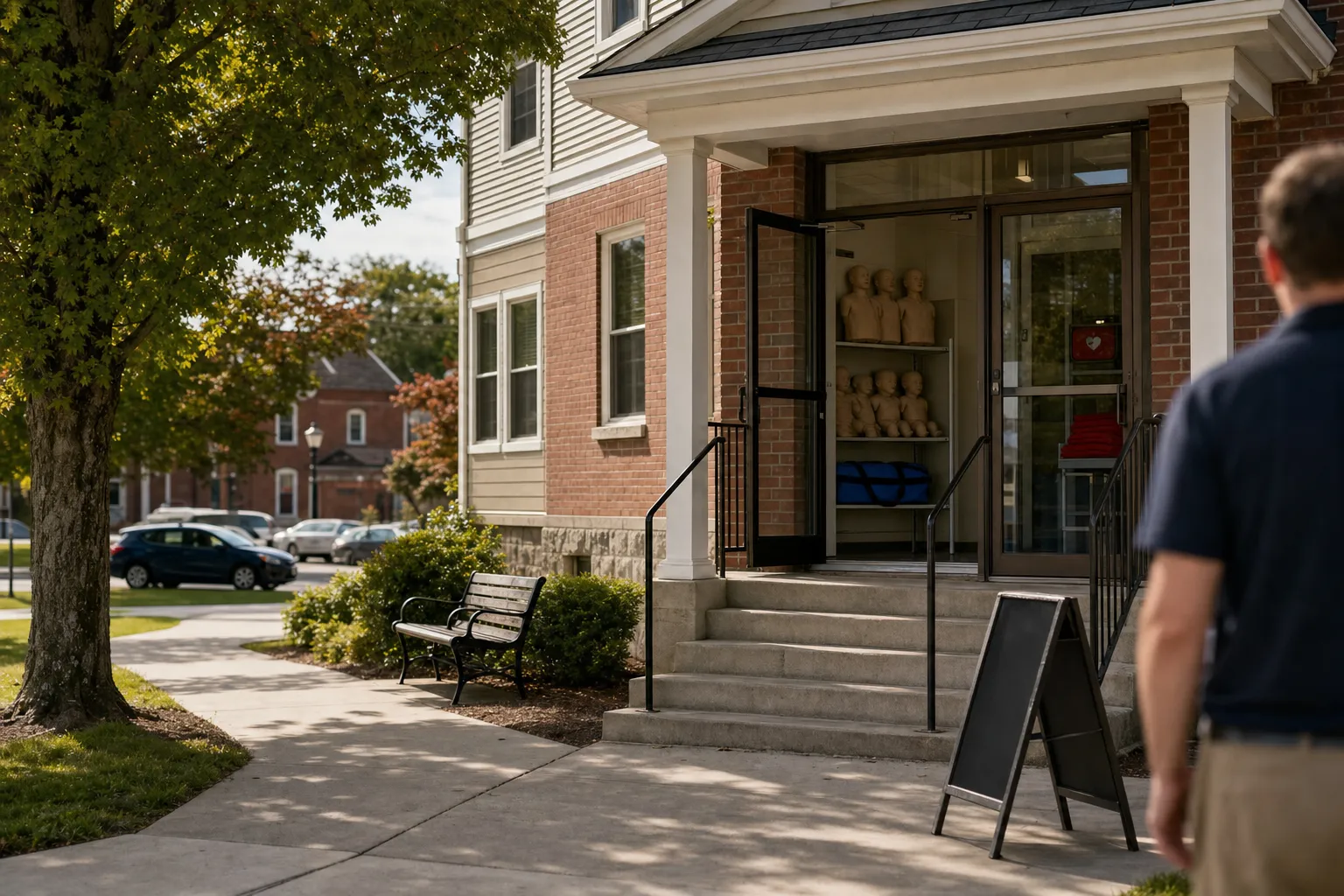
We often see people assume a single certification or one supply kit makes a group prepared. Real readiness for groups combines role assignments, scenario practice, appropriately sized supplies, and a schedule for refresh training that fits the group size and the setting.
Why group preparedness is not the same as individual readiness
Preparedness for a group is a systems problem, not an item on a checklist. A person who is individually certified in CPR can help, but a group needs coordinated roles, clear communication, equipment that is accessible for the whole space, and practice so members work together under pressure.
We teach and advise organizations in and around Stewartstown, Pennsylvania on how to move beyond single person competence to team readiness. That means thinking about roles, handoffs, supplies, and realistic practice.
Common misunderstandings we correct most often
Misunderstanding 1: One class equals preparedness
Many groups believe a one time CPR or first aid class makes them ready for every emergency. A single course gives essential skills, but skills fade and scenarios vary. We recommend periodic refresh training and scenario practice to keep muscle memory and decision making sharp.
Misunderstanding 2: Equipment alone will save the day
Having an AED or a first aid kit is important. What matters more is that people know where the equipment is, how to access it quickly, and who will use it. Supplies also need to be sized and organized for the group. Our FEMA aligned supply recommendations help organizations match kits to classrooms, meeting rooms and community spaces.
Misunderstanding 3: The same plan works for every group
Preschool classrooms, small businesses, senior care sites, and sports teams each face different risks. A one size fits all plan misses those differences. We tailor guidance based on the audience, whether it is daycare staff, babysitters, nursing students, or workplace safety teams.
- Assuming certification is permanent. Skills require refreshers and practice.
- Counting on one responder. A team approach reduces delays and errors.
- Buying the same kit for every room. Kit contents and placement should reflect likely incidents and the number of people present.
How we approach preparedness for groups at Care First Education
We design group readiness around instructor led, scenario focused learning and clinician reviewed supplies. Our educators are certified through the PQAS and we offer American Red Cross and American Heart Association aligned courses, including Basic Life Support and workplace programs.
When we work with a daycare center, school staff, small business, or a community group in Stewartstown, we evaluate three things:
- People. Who will be present, and who can perform which roles during an emergency.
- Place. Where incidents are likely to occur, and where equipment should be staged for fastest access.
- Practice. How often the group will rehearse scenarios and refresh skills.
For information on certification that supports group readiness, see our CPR Certification page. To see how we work with local organizations, review our Stewartstown location page at Stewartstown, Pennsylvania. For planning resources about community scale readiness, see our topic on Community Preparedness.
Checklist for preparing a group, classroom or small organization
Group preparedness checklist
- Assign roles before an incident, including a primary responder, a communicator for calling for help, and someone to retrieve supplies.
- Inventory supplies and match kit contents to the group size and activity. Use FEMA aligned guidance and clinician reviewed lists for classrooms and community spaces.
- Schedule initial certification and planned refreshers. Include scenario practice during each refresh.
- Map equipment locations and post a simple access plan. Make sure keys, doors, or storage are not barriers.
- Practice communication, including who will call emergency services and how to direct responders to the scene.
- Document training, participants, and dates to satisfy workplace compliance and to identify when refreshers are due.
What training and supplies make the biggest difference
Two elements move a group from uncertain to confident. The first is realistic, instructor led scenario practice that involves multiple people and role transitions. The second is well organized supplies that are visible, stocked and matched to likely incidents.
Scenario practice over lecture
We use scenario practice to build teamwork, not just individual skill. During sessions we stage common events, run a short practice, pause for coaching, and then run the scenario again. This format builds confidence in roles and reduces hesitation during real events.
Supply choices and maintenance
Supplies curated by our FEMA certified registered nurse include classroom sized first aid kits, anaphylaxis response packs, naloxone for opioid overdose when appropriate, and AED program guidance. Supplies are paired with care and storage guidance so they are ready when needed.
Pro tip: Label kit contents and keep an inventory sheet inside each box. A dated checklist reduces time spent searching and shows when restocking is needed.
Watch out: Storing an AED or medication behind a locked cabinet without an access plan can delay care. Make sure someone on every shift knows how to reach needed supplies quickly.
How to run a short group drill that actually helps
- Set a clear objective. Pick a single goal, for example, starting chest compressions and activating an AED within a target time, or recognizing anaphylaxis and delivering epinephrine.
- Keep it short. Run a 10 to 15 minute scenario, then debrief for 10 minutes to highlight what worked and what to practice next.
- Rotate roles. Let different people try communication, patient care, and equipment retrieval so the whole team improves.
- Record action items. Make a short list of two to three improvements and schedule a follow up during the next training session.
These drills are practice for teamwork and decision making, not replacements for formal certification. For structured courses that include scenario practice and skills assessment, see our CPR Training and our First Aid Training pages.
How to evaluate readiness and quality markers
When we assess a group, we look for the following quality markers. These help leaders know whether the group is practically ready, and where to invest next.
- Regular refresh schedule. Training dates and documented participation within the last year for high risk roles.
- Scenario based assessment. Evidence of team drills that test communication and equipment access.
- Accessible supplies. Kits and an AED located within a reasonable distance and clearly marked for quick retrieval.
- Clear documentation. Records of training, kit inventories, and incident notes for continuous improvement.
Key takeaway
Preparedness for groups is about people and systems as much as it is about skills and equipment. Certification and supplies matter, but they must be paired with role assignments, realistic practice, and maintenance to be effective.
Frequently asked questions
How often should a group refresh CPR or first aid training?
We recommend at least annual refreshers for most groups, and more frequent practice for high risk settings like daycare or senior care. Regular scenario practice between formal certifications helps maintain teamwork and decision making.
What supplies should a classroom or small meeting room keep on hand?
Basic items include a classroom sized first aid kit, epinephrine for known severe allergies when applicable, naloxone where opioid exposure is a concern, gloves, and a plan for an AED if one covers the building. Our FEMA aligned supply lists tailor contents to the location and audience.
Will one certified person be enough for a group of people?
One trained person can help, but relying on a single responder creates delays if they are not present or become overwhelmed. We advise assigning backup roles and training multiple people so duties can be shared during an event.
Can equipment maintenance be handled by volunteers?
Yes, with a clear schedule and documented checks. Assign responsibility for kit inventories and AED maintenance to specific staff, and keep records. We include maintenance checklists with our supply recommendations.
Learn more and check our local information
Read customer reviews and get directions on our Google Business Profile, and explore related resources on this site to plan group preparedness for your organization.