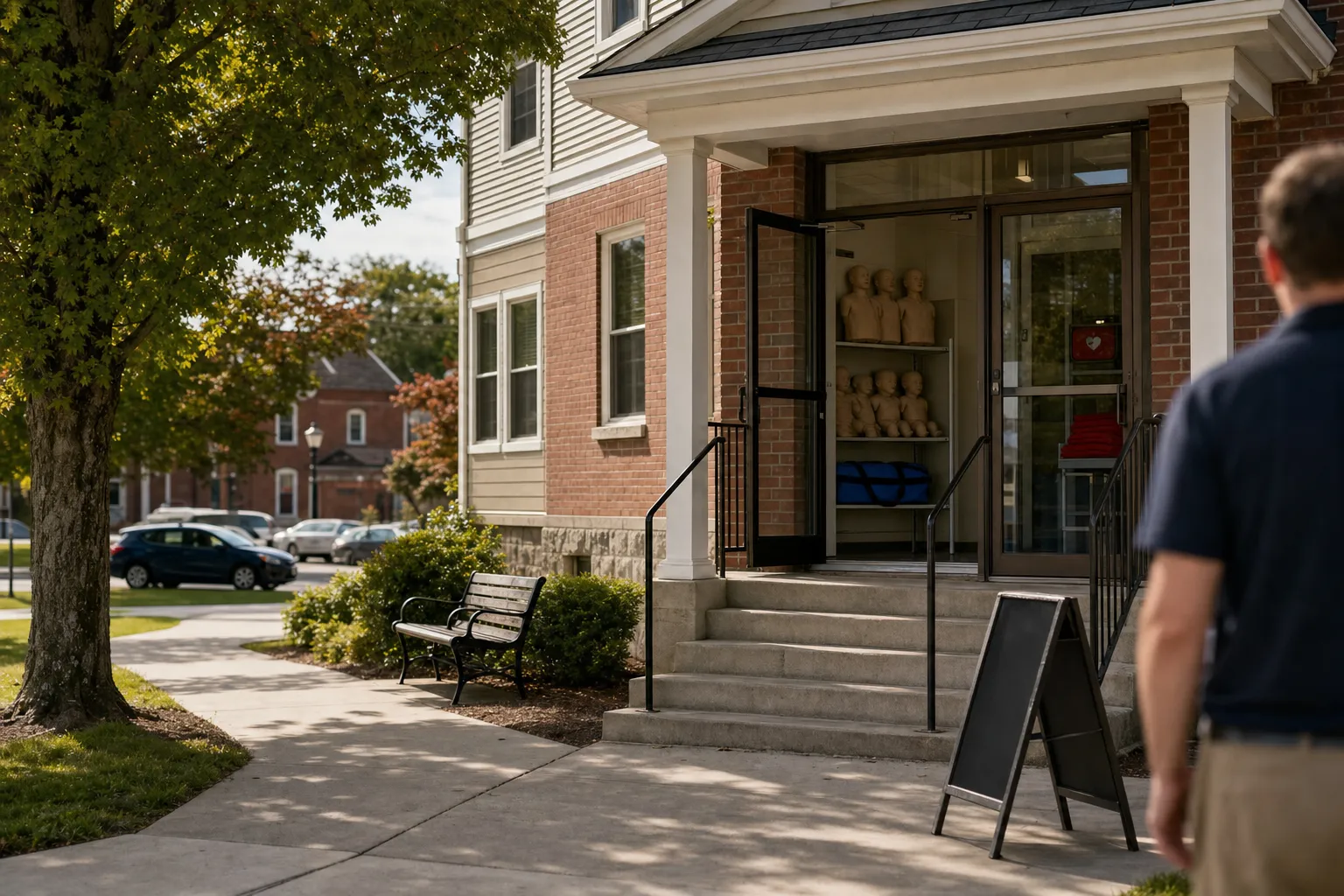
A strong CPR certification plan for a group starts with clearly assigned roles, regular hands on skills practice, scenario rehearsal, and a documented recertification schedule tied to AED and naloxone readiness. In short, a plan turns individual certification into group preparedness.
What is a CPR certification plan for a group
A certification plan describes how a group keeps people certified, competent and ready to respond. It covers who trains, which classes are required, how often skills are practiced, what equipment is available, and how documentation is kept for compliance and review.
We think of preparedness for groups as a repeatable program rather than a single class. That program combines courses, scenario practice, supplies and a schedule for recertification and drills.
Why a group plan matters in Red Run, Pennsylvania
Local organizations in Red Run, Stewartstown and nearby communities face the same realities. Schools, daycare centers, small businesses and senior care settings need predictable coverage, especially where help may not be immediate.
We design group plans to match local needs. That includes offering courses to meet Pennsylvania workplace and childcare expectations, preparing staff who work near community landmarks, and aligning supplies with FEMA and Pennsylvania guidance.
Key concepts that make plans practical
- Defined roles and coverage. Identify primary responders, backups and who manages equipment and records.
- Certification plus skills maintenance. Certification proves knowledge. Regular hands on practice preserves muscle memory.
- AED program alignment. Integrate automated external defibrillator readiness with training and storage plans.
- Naloxone and medication readiness. If your group serves at risk populations, include opioid overdose recognition and naloxone use in the plan.
- Scenario practice. Short, realistic drills build confidence under pressure and test communication and logistics.
- Documentation and recertification timing. Keep records of who is certified, expiration dates and a reminder cadence for renewals.
- Instructor qualifications. Choose instructors with recognized certifications, such as PQAS certified educators and American Heart Association Basic Life Support instruction where appropriate.
- Supply kits and maintenance. Match kits to the group context and schedule regular inventory checks by a trained staff member.
How different delivery models affect a plan
| Feature | In person only | Blended learning with skills session |
|---|---|---|
| Access | Requires scheduled class time for all participants | Online content can be completed ahead of hands on session |
| Skills practice | Full class time devoted to hands on practice | Skills session focuses practice and assessment |
| Scheduling | May be harder to find a single slot for large groups | Shorter on site sessions make scheduling easier |
| Best for | Groups that prefer live instruction for every element | Groups needing flexible timing or staggered participants |
Plan readiness checklist
Group CPR plan checklist
- List of designated responders and alternates
- Calendar with certification and recertification dates
- Documented AED locations and maintenance log
- Supply kit inventory aligned with FEMA guidance
- Scenario practice schedule for the year
- Records of instructor credentials and course completion
- A communication plan for an actual emergency
How to build a CPR certification plan for your group
- Set objectives. Decide what you want the plan to achieve, for example coverage during all open hours at a daycare or a minimum number of trained employees per shift.
- Identify participants. Choose who needs certification, who needs awareness training, and who will be trained in naloxone or AED use.
- Choose course types. Match participants to courses, such as American Red Cross First Aid, American Heart Association Basic Life Support, or workplace focused CPR and AED training.
- Schedule skills practice. Plan short quarterly skills sessions and at least one full scenario drill each year.
- Assign equipment stewardship. Designate a staff member to oversee AED checks and supply kit inventories.
- Document and review. Keep certificates and a recertification calendar, and review the plan after drills or real events.
Pro tip: Pair blended learning with a concise on site skills session. That approach keeps hands on time focused and frees staff to complete knowledge modules when convenient.
Common questions and quick answers
Below are questions we hear from schools, small businesses and community groups in and around Red Run.
- How often should a group run drills? We recommend a short skills rehearsal quarterly and one full scenario drill annually.
- Who should keep the records? Assign a single person, such as a safety officer or office manager, to maintain certificates and expiration dates.
- Do volunteers need the same training as staff? Core responders should match staff requirements. For volunteers with limited duties, consider awareness level training plus focused skills practice.
Related services we provide
We offer several options you can include in a group plan, depending on goals and participant roles. For formal certification, see our CPR Certification page. For broad readiness training, our First Aid Training sessions cover bleeding control, anaphylaxis and common medication emergencies. For integrated programs that prepare teams for complex responses, review our Emergency Response Training.
Related locations and who we serve
Care First Education LLC serves Stewartstown and surrounding communities, including Red Run. If your group is based in Red Run, consider local factors such as distance to emergency medical services and facility layout when you build coverage. See our local Red Run page for location specific details at Preparedness For Groups in Red Run.
Helpful external resources
We reference national guidance when we design plans. Helpful sources include the American Heart Association for current CPR and resuscitation guidance, FEMA advice on emergency supply kits for groups, and local Pennsylvania health pages for naloxone and workplace requirements.
Key takeaway
A strong group CPR certification plan combines clear roles, regular hands on practice, appropriate course selection, and documented recertification. In Red Run and Stewartstown area settings, aligning training with AED programs, naloxone readiness and FEMA recommended supplies makes the plan practical and defensible.
Frequently asked questions
What should be included in a group recertification schedule?
Include certificate expiration dates, reminder intervals, and a plan for staggered recertifications so not all responders expire at once. We recommend logging dates centrally and notifying staff six to eight weeks before expiry.
Can blended learning meet certification requirements?
Yes. Blended models that combine online knowledge checks with an in person skills evaluation meet many certification standards. Confirm that the chosen blended course includes a supervised hands on skills check by a qualified instructor.
Who should be trained in naloxone administration?
Organizations serving populations at risk for opioid overdose should include naloxone training for primary responders. Training should follow state guidance and include recognition, safe administration, and post administration procedures.
How do we choose an instructor?
Look for instructors with recognized credentials, such as PQAS certification and current American Heart Association Basic Life Support instructor status. Ask about experience with scenario practice and group readiness work.
What supplies should a group keep on site?
Keep an AED if the setting warrants it, and maintain a first aid kit sized to the group. Follow FEMA and Pennsylvania guidance for contents. Include spare batteries, replacement pads, and a log for maintenance checks.
Learn more and check local details
For local information about our courses and how we design group preparedness programs, review our CPR Certification page and our guidance on certification pathways. To see what neighbors are saying and get directions, check our Google Business Profile for reviews and location details.