We begin every CPR certification with an intake conversation to confirm who will attend, which certification pathway fits their goals, and how much hands on practice they need. From that first call we set expectations for course length, assessment, and follow up so you know exactly what certification will look like in Shrewsbury Station.
Why we start with questions
Asking a few targeted questions up front helps us match you to the correct credential and class format. A parent enrolling for pediatric CPR has different needs than a workplace safety team preparing for Basic Life Support. We use that information to choose the right standards and the right mix of scenario practice and skills checks.
When appropriate we will discuss American Heart Association Basic Life Support, American Red Cross First Aid and CPR, or employer specific requirements. That ensures the course you take aligns with your workplace policy or your professional credentialing body.
How we choose a certification pathway
- Intake and goals. We ask who will attend, their prior training, and whether certification is for professional requirements, childcare, or family readiness.
- Standards and credential. We match your needs to the appropriate credential, for example American Heart Association BLS for healthcare providers or American Red Cross CPR and First Aid for lay rescuers.
- Course format. We select instructor led, blended learning, or a skills only session depending on scheduling and recertification rules.
- Assessment plan. We set clear performance expectations, including hands on skills checks and any written or online components.
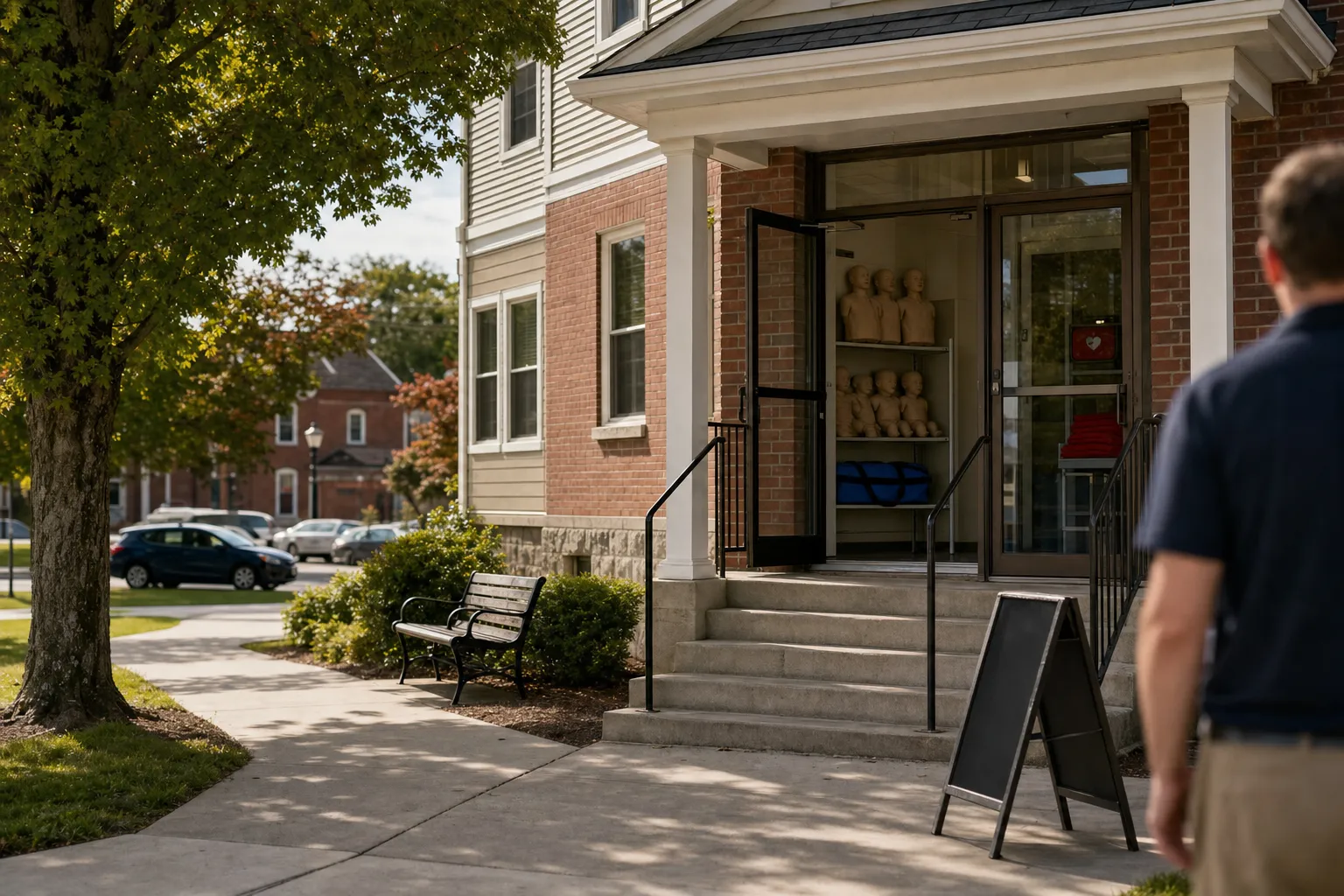
- Supplies and accessibility. We confirm any accessibility needs and the supplies we will use during class, such as mannequins and training AEDs provided by our team.
What to expect during the class
Our classes emphasize practical skills, scenario practice, and confidence under pressure. Educators certified through the PQAS lead small group practice so each participant gets repeated hands on time with feedback. Typical class elements include demonstration, guided practice, team resuscitation drills, and a final skills check.
Pro tip: If you are scheduling for a workplace, tell us about your existing emergency plan and any AED models on site. That helps us make scenarios specific and useful.
How we handle supplies and preparedness
We curate first aid and preparedness supplies using guidance from a FEMA certified registered nurse and align kit contents with Pennsylvania and FEMA emergency preparedness guidelines. For organizations we can review what should be in a classroom kit, a staff station kit, or a small business kit so supplies support your training and ongoing readiness.
After certification and recertification planning
Certification is only one step toward readiness. We outline recertification timelines, refresher practice options, and documentation you will need for employer records. For many people a short skills review at six months keeps confidence high between formal recertification cycles.
Our step by step from the first conversation
- Gather details. We confirm attendee roles, prior training, and timeline.
- Recommend pathway. We explain the differences between BLS and lay rescuers courses and show which credential fits your goal. For background read our page on certification pathways.
- Schedule and prepare. We set a date, share pre course materials if needed, and confirm accessibility needs.
- Deliver the course. PQAS certified educators run hands on practice, scenario drills, and skills assessment.
- Document and plan next steps. We issue completion details and suggest refresher practice or supply updates that match Pennsylvania guidelines.
Watch out: Training prepares you to act in emergencies, but it does not replace professional medical care. We do not provide diagnosis or medical advice, and classes stop short of clinical procedures that require advanced licensure.
What to bring and how to prepare
Before class
- Wear comfortable clothing suitable for floor practice.
- Bring proof of identity if required by the credentialing organization.
- Share any accessibility needs with us in advance so we can accommodate them.
Key takeaway
From the first conversation we match your needs to the right certification pathway, prioritize hands on practice with PQAS certified educators, and plan follow up so certification supports real readiness in Shrewsbury Station and nearby communities.
Frequently asked questions
How long does certification usually take?
Class length depends on the credential and participant experience. Lay rescuers courses often fit into a half day, while Basic Life Support for healthcare providers may take several hours. We confirm duration during your intake conversation.
Do you provide course materials and mannequins?
Yes. Our instructors bring training mannequins and training AEDs. We also supply course materials required by the credentialing organization and can advise on maintenance and replacement supplies.
Can a workplace combine multiple staff types in one class?
Sometimes, but it depends on employer requirements. We recommend separate tracks if clinical staff need BLS and nonclinical staff need lay rescuer certification. We will advise on the best approach during scheduling.
Learn more and check our local listing
Read reviews and get directions on our Google Business Profile, and learn more about our services and topics on this site. See our CPR Certification page for course specifics, visit the Equipment Care topic to understand how we maintain training gear, and check details for training in Shrewsbury Station.
CPR Certification | Equipment Care | Shrewsbury Station location details | Services hub | Topics hub