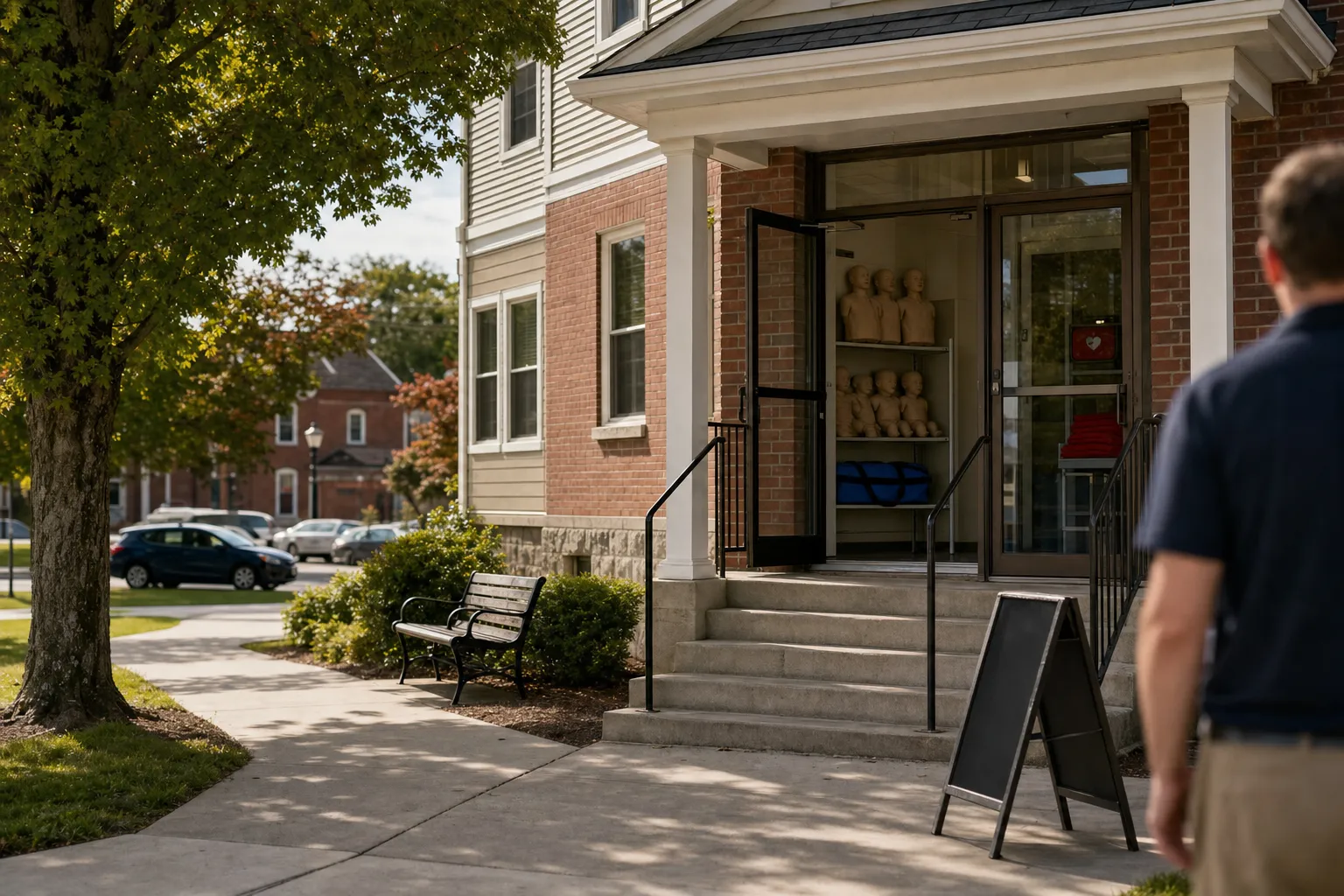
Proper equipment care directly affects CPR certification outcomes. When manikins, AED trainers and first aid supplies are clean, functional and set up as intended, learners complete skills checks reliably, practice with confidence and meet certification criteria more consistently. When equipment is neglected, assessments may be invalid and learning suffers.
What equipment care means for CPR certification
Equipment care covers cleaning, routine inspection, functional checks and following manufacturer guidance for manikins, AED trainers, ventilation devices and instructor supplies. For a training center that runs American Red Cross and American Heart Association courses, like ours, equipment care also includes tracking maintenance logs and rotating consumables so every course uses reliable gear.
We teach and certify students for Basic Life Support, CPR, AED use and first aid. Those certifications rely on hands on demonstration. If a manikin chest does not compress correctly or an AED trainer has a dead battery, a student can fail a skills check through no fault of their own. We control that variable by maintaining our equipment and documenting care before every certification session.
Why proper equipment care matters here in North Hopewell and Stewartstown
Local groups in North Hopewell, Stewartstown and surrounding communities bring us workplace teams, daycare staff, nursing students and parents who must meet training requirements or be ready in an emergency. Reliable training gear shortens class time because less time is spent troubleshooting broken equipment. Reliable gear also reduces the chance of repeat tests, which helps organizations meet compliance and keeps learners confident.
For schools, childcare centers and small businesses in Hopewell Township or nearby neighborhoods, well maintained equipment supports consistent record keeping and predictable certification pathways. We keep service records that align with common employer and school auditor expectations.
Key concepts we focus on
- Cleanliness and infection control. We follow recommended cleaning practices for manikin lungs, face shields and reusable airway trainers so skills practice is safe and comfortable.
- Functional performance. We verify chest recoil, compression depth feedback, and AED trainer pacing so assessments reflect real ability.
- Consumable management. We track and replace items such as face shields, lung bags and electrode pads before they degrade.
- Manufacturer guidance. We follow the care and inspection intervals set by device manufacturers and document them.
- Calibration and software updates. For feedback devices and electronic manikins, we keep firmware and software current when required.
- Record keeping. We log inspections and maintenance so each certification session has an equipment trail for auditors and instructors.
How equipment issues change certification outcomes
We see three common ways poor equipment care affects certification.
- Invalid skills checks. A faulty feedback sensor can record shallow compressions as acceptable or reject correct compressions. That can lead to unnecessary retesting or incorrect evaluations.
- Lost learning time. Troubleshooting takes minutes that add up across a class. That reduces scenario practice and lowers skill retention.
- Lack of confidence. Learners who practice on unreliable gear are less confident during real emergencies and during observed assessments.
Pro tip: For groups that certify regularly, ask whether your training partner documents maintenance logs and rotates consumables before each course.
What we inspect before every CPR certification session
- Manikin readiness. We check the chest for compression rebound, confirm lung bags or air reservoirs are intact, and ensure face pieces and airway trainers are clean and ready.
- AED trainer checks. We verify battery status, speaker output and correct simulator settings so learners practice recognizing shockable and non shockable rhythms as intended.
- PPE and hygiene supplies. We confirm there are adequate face shields, gloves and cleaning supplies for the class size.
- Instructor feedback devices. We pair and test real time feedback monitors and apps so learners see accurate compression rates and depths.
- Consumables inventory. We confirm there are replacement lungs, pads and other single use items to avoid interruptions during practice.
Checklist to review before you join a certification class
Bring this up when you register
- Ask whether manikins are inspected and cleaned between classes.
- Confirm AED trainers are tested and on a maintenance schedule.
- Check that single use items are replaced between sessions.
- Verify that instructors use real time feedback where required by the certification standard.
Comparison: well maintained equipment versus neglected equipment
| Well maintained equipment | Neglected equipment |
|---|---|
| Consistent, valid scoring on skills checks | Variable or invalid scores that may require retesting |
| Shorter hands on practice time wasted on troubleshooting | Class time lost to fixing or substituting gear |
| Higher learner confidence and smoother certification process | Learners unsure if their practice reflects real skills |
Common questions instructors and organizations ask
Below are frequent concerns we address before a group signs up for certification with us.
Can equipment problems cause a certification to be invalid?
Yes. If the gear used for the skills check does not function as intended, the assessment may not meet the certifying organization standards. We avoid that by testing equipment just before the evaluation and keeping maintenance logs for every class.
Do learners need to bring anything?
Students should come ready to participate. We provide training manikins, AED trainers and consumables for the class. If a workplace requires a specific model of AED trainer for internal compliance, let us know when you register and we will plan for it.
How often should training devices be inspected?
Inspection frequency depends on manufacturer guidance and usage. For high volume programs weekly functional checks make sense. For smaller programs monthly checks may be adequate. We follow manufacturer instructions and the practices recommended by certifying bodies when we schedule inspections.
Related services and support
We link equipment care directly to our instructional services. If you are reviewing certification pathways, see our page on CPR Certification and our page on CPR Training for course details and what we require for a valid skills assessment.
We also curate first aid and preparedness supplies under FEMA aligned guidance. If your organization needs consistent kit content for classes or drills, our supplies support classroom readiness and compliance with local expectations.
Related locations we serve
Care First Education LLC delivers instructor led certification courses and hands on training in Stewartstown and nearby communities. Many of our customers come from areas such as Hopewell Township, Zeigler, Shrewsbury Station and Oak Grove for group sessions. For local directions, reviews and operating details, check our Stewartstown location page at Stewartstown, Pennsylvania.
Helpful resources we recommend
We follow manufacturer care instructions for each device used in our classes. When evaluating training partners or supplies, look for documentation that details cleaning steps, inspection intervals and replacement parts. For broader preparedness and supply guidance, consult recognized emergency preparedness sources and manufacturer literature when available.
Watch out: Do not assume older training gear performs like new. Batteries, sensors and consumables degrade over time and can affect assessment validity.
Key takeaway
Equipment care is not a backroom task. It directly affects whether learners pass skills checks, how much class time is useful and how confident people feel in emergencies. When you look for a certification provider, ask about inspection logs, consumable rotation and how trainers verify AED and manikin performance before each session.
Frequently asked questions
What specific equipment do you check before a CPR certification session?
We inspect manikin compression and recoil, airway and lung bag integrity, AED trainer battery and simulator settings, feedback device pairing, and the availability of PPE and consumables. We document checks in a simple maintenance log for each class.
Can students practice at home with the same equipment standards?
Home practice devices vary widely. For certification we require controlled, documented training conditions. If you plan to practice at home, bring any personal trainers to class so we can confirm they are set up correctly for skills practice.
How do you clean reusable manikin parts between classes?
We follow manufacturer cleaning recommendations and common infection control practices. That includes using approved disinfectants on face pieces and surfaces, replacing or sanitizing lung bags as appropriate, and drying components thoroughly before storage.
What happens if a device fails during a skills check?
If a device fails during a check we stop the assessment, document the issue, and either substitute a verified device or reschedule the assessment according to the certifying organization rules. We avoid this through pre class checks and spare consumables.
Do you keep records of equipment maintenance for audits?
Yes. We keep simple maintenance and inspection logs tied to course dates so organizations and auditors can see that equipment was operational during certification events.
Want to learn more about our approach to equipment care and certification?
Read our topic page on equipment care to see how we manage maintenance and supplies. For details on certification offerings and local sessions, review our CPR Certification page and our Stewartstown location page to check reviews and directions.