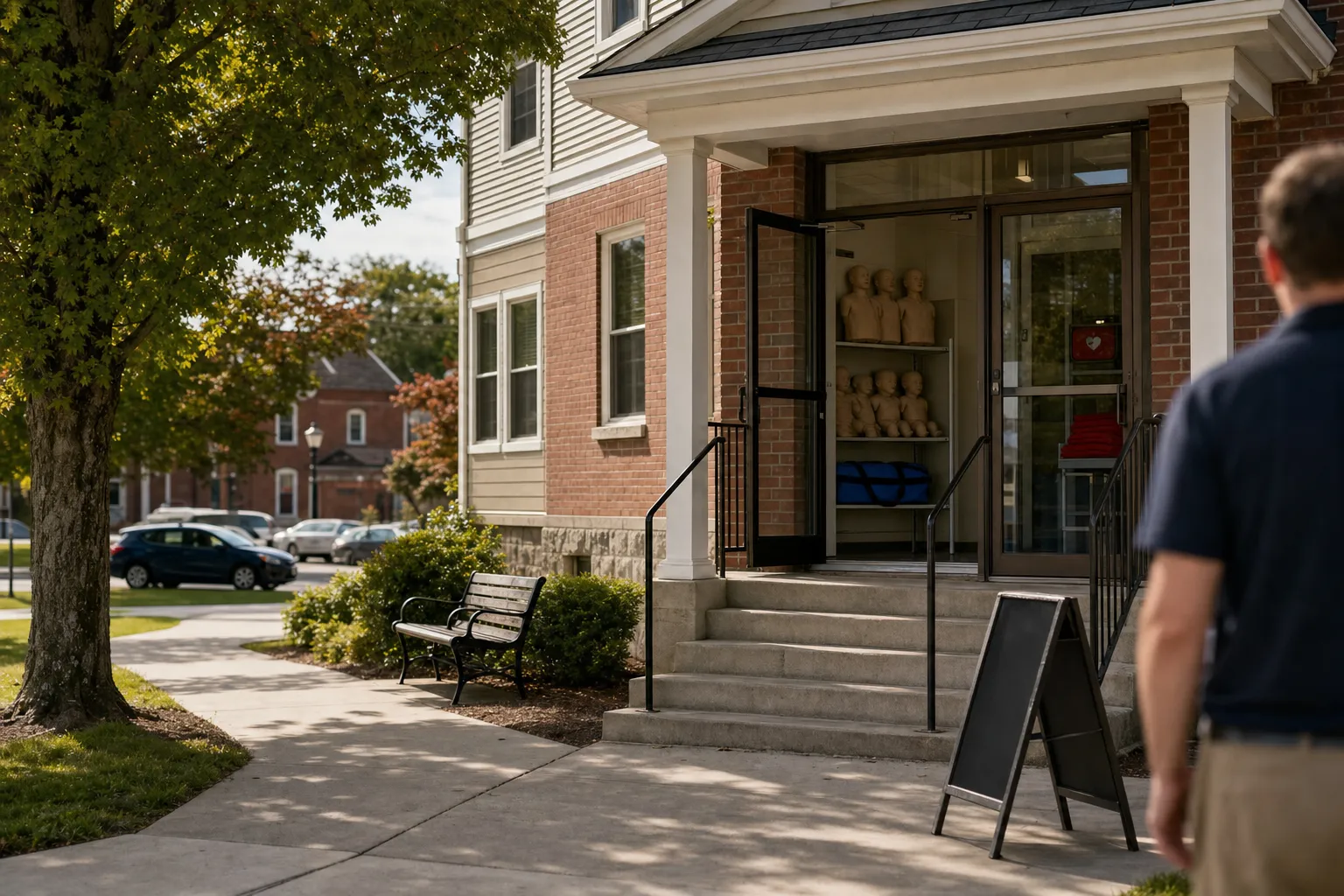
Mental preparedness matters because it reduces hesitation, improves decision making, and helps you perform effective chest compressions and AED use when every second counts. In a CPR class we teach not only technique, but also how to stay calm, focus on priorities, and lead under pressure.
What mental preparedness means for CPR
Mental preparedness is the set of attitudes, expectations and simple mental routines that let you move from noticing an emergency to acting decisively. It includes recognition of cardiac arrest, a quick plan for calling for help and using an AED, and the confidence to begin chest compressions without delay.
For learners in a CPR class, mental preparedness covers three practical skills: situational awareness, decision sequencing, and stress management. We design scenarios so these skills are practiced alongside compressions, breaths and AED steps.
Why it matters in Ruhlstown and nearby communities
Outcomes in out of hospital cardiac arrest depend on seconds and on bystander action. In smaller communities near Ruhlstown and Stewartstown, immediate help from a trained bystander is often the difference between life and death while professional responders are on the way. Mental preparedness reduces the hesitation that commonly delays basic life support.
We teach residents, daycare staff and workplace teams how to recognize emergencies in local settings such as homes, schools and small businesses. Building mental readiness into training makes skills learned in the classroom translate to real life in Ruhlstown, Glen Rock and surrounding towns.
Key concepts we cover
- Recognition. Spotting unresponsiveness and abnormal breathing quickly.
- Prioritization. What to do first: safety, call for help, compressions, AED.
- Simple scripts. One or two short mental prompts to overcome freeze response.
- Small team roles. How to assign tasks when others are present.
- Stress control. Breathing and pacing techniques to preserve focus between compressions.
How mental preparedness fits into our CPR classes
In our instructor led CPR classes we blend hands on practice with scenario drills that simulate common local situations. PQAS certified educators guide learners through realistic calls to action, timed interventions and role assignments so people learn the habit of acting under mild stress.
We recently added American Heart Association Basic Life Support courses to our offerings, and we align mental readiness practice with those protocols so skills meet current standards while also reflecting practical realities in homes and workplaces near Stewartstown.
Common mental barriers and how we address them
People in class often tell us they worry about making a mistake, causing harm, or being legally liable. Other common barriers are noise, crowds and emotional distress. We address these barriers by teaching clear short prompts and by normalizing imperfect performance in training so learners can act even when conditions are messy.
Pro tip: Simple, repeatable scripts like I need help, call 911, start compressions help people move from thinking to doing. We practice those scripts in every scenario.
Checklist for mental readiness before you leave class
Personal mental readiness checklist
- Know how you will call for help in your setting, and who to ask for help if available.
- Practice a one sentence script to start compressions.
- Identify where an AED is likely stored in your building or nearby public space.
- Run one short scenario with a partner so you have felt acting under time pressure.
- Plan simple team roles to use when others arrive.
Mental readiness versus technical skill
| Mental readiness | Technical skill |
|---|---|
| Focus on recognition, decision speed and leadership | Focus on compression depth, rate and airway steps |
| Helps you start action and stay consistent under stress | Improves hands on quality once you are performing |
| Trained with short scripts and scenario practice | Trained with repetition on mannequins and AED trainers |
Related services and topic links
Mental preparedness is a component of several of our offerings. For certification that includes scenario practice and team roles see our CPR Class. If you want the same mindset training integrated with workplace planning, our Emergency Response Training includes role drills and communication practice. Read more about the concept on our Mental Preparedness topic page, which collects related guidance and resources.
How mental preparedness looks in different local settings
We adapt scenarios to settings you know. For daycare centers we include upset parents and small children in the scene. For small businesses we practice compressions while a staff member calls for help. For home settings we simulate limited space and limited help. We also run sessions for nursing students and early responders to practice leadership and handoffs.
Care First Education serves Stewartstown and nearby communities including Ruhlstown, Glen Rock, and Zeigler. Training tuned to local realities helps learners act more confidently when they face a real emergency.
Helpful resources
Authoritative sources on resuscitation science and preparedness include the American Heart Association guidelines on CPR and resuscitation science and FEMA guidance on emergency preparedness kits. We draw on those resources when we design scenarios and when our FEMA certified registered nurse curates first aid and preparedness supplies.
Common questions about mental preparedness during training
Below are questions we hear in class and short answers you can use or repeat when you are training others.
Frequently asked questions
What is a simple script I can use to start CPR?
A short script we practice is: I need help, call for emergency services, start compressions now. Saying that aloud sets roles and starts action.
Will mental readiness replace the need to practice compressions?
No. Mental readiness helps you start and sustain action, but hands on practice is still necessary to reach and maintain good compression quality. Both are trained together.
How often should I refresh mental readiness skills?
Short refreshers every six to 12 months help keep mental prompts current, especially if you work in childcare, healthcare or a high risk occupation. Hands on recertification follows the timelines of your chosen certification program.
Do you teach mental readiness for pediatric emergencies?
Yes, we adapt mental readiness scripts and scenarios for pediatric situations because emotions and scene complexity are different when a child or infant is involved.
Key takeaway
Mental preparedness shortens the time between recognition and action, and it makes technical CPR skills more effective. Practice short scripts, run brief scenarios and include team role planning so training translates into action in Ruhlstown and nearby communities.
Learn more and check local information
Read local course details and related topics on our site, and view location specific information for Ruhlstown to see how classes and scenarios reflect local settings.
Ruhlstown location details | CPR Class | Mental Preparedness topic page