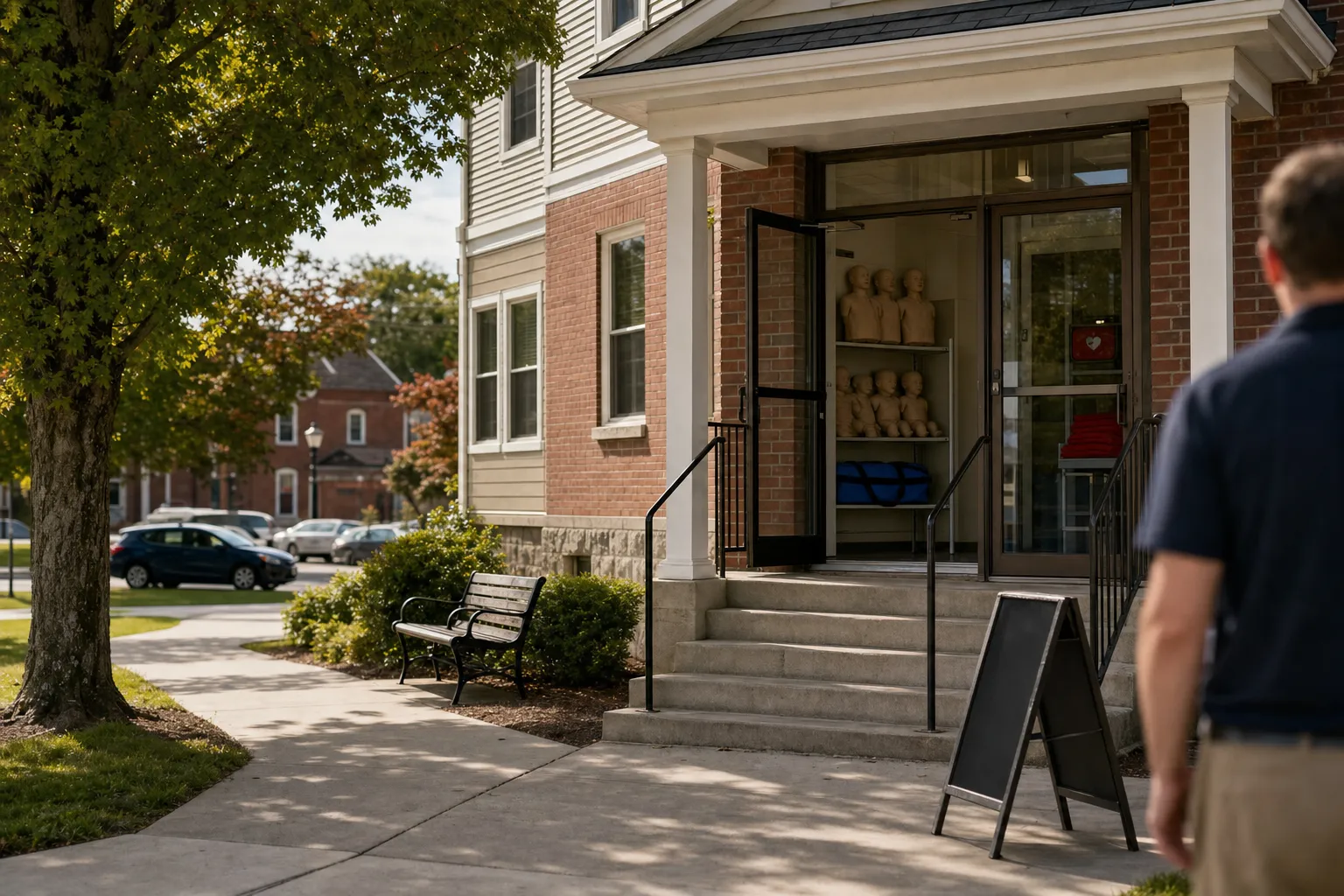
We run a blended CPR class that pairs online review with an in person skills session and a hands on competency check, then a clear set of next steps for certification and ongoing preparedness. In Fawn, Pennsylvania, you complete the prework at home, attend a focused skills session taught by PQAS certified educators, demonstrate required skills, and leave with guidance on certification records, renewal timelines and supplies aligned to FEMA and Pennsylvania guidelines.
How the blended learning model shapes our CPR class
Blended learning means we split knowledge transfer and hands on practice. The online portion covers steps, timings and decision cues so your in person time is dedicated to practicing compressions, ventilations, team communication and AED use under instructor feedback.
That approach suits busy adults, nursing students, childcare providers and workplace teams because it reduces seat time while preserving the hands on assessment required for certification.
Step by step: from review to certification
- Step one. Enroll and review the course outline. After you register, we send the online modules and the checklist of skills you will practice. The prework includes short videos and knowledge checks to make the in person session efficient. Learn more about our blended learning approach on our Blended Learning Models topic page.
- Step two. Complete the online modules. You work at your own pace, completing short lessons on CPR technique, airway management and AED basics. The online section includes manufacturer guidance where relevant and references to accepted standards so you know what instructors will observe.
- Step three. Attend the in person skills session. The hands on session focuses on compressions, ventilations, AED practice and scenario based team resuscitation. Our PQAS certified educators coach technique, observe performance and run timed practice cycles. Read about our CPR Class format for details on what to expect.
- Step four. Demonstration and assessment. We assess psychomotor skills and situational responses during the session. Successful demonstration leads to the certification pathway we document for your records. If more practice is needed, we outline targeted drills and repeat assessment options.
- Step five. Next steps and documentation. After the class we give clear instructions about certification validity, renewal windows and recommended refresher practice. We also review relevant workplace compliance or school requirements and can point you to our CPR Certification and Certification Pathways resources for follow up.
What to bring and how to prepare
Before your skills session, have these ready
- Completed online modules and any printed or electronic completion proof
- Comfortable clothing you can kneel in
- Photo identification if required by your organization
- A charged mobile device for any digital paperwork
Pro tip: Finish the online modules at least 24 hours before your session so muscle memory practice is the focus during hands on time.
Who benefits from this format
- Healthcare professionals and nursing students who need efficient skill refreshers
- Babysitters, parents and daycare staff needing pediatric scenarios
- Small business workplace safety teams and school staff wanting compliance aligned training
- Community groups that require certification with minimal disruption to schedules
Quality markers we use during the class
We measure quality by instructor credentials, scenario practice, skills assessment fidelity and alignment to current protocols. Our instructors are certified through PQAS and our course materials reference accepted standards so you can expect consistent evaluation and clinical review.
Watch out: Online-only completion without a supervised skills check does not meet many employer, school or certification standards. The hands on evaluation is the part that demonstrates safe, effective technique.
After class: maintaining readiness and next actions
We recommend scheduled practice, team drills where relevant, and keeping AED and first aid supplies checked. Our FEMA aligned kits and preparedness recommendations support ongoing readiness for home, classroom or small business settings.
For organizations that need documentation, we outline what records to file for compliance and link to our CPR Certification and Certification Pathways resources to help you plan renewals and team training cycles.
Practical tips for instructors and organizers
- Block a quiet room and reserve manikins so each student gets repeated practice
- Use timed cycles in scenarios to simulate real response pacing
- Pair learners for peer feedback before instructor assessment
Key takeaway
A blended CPR class gives you the knowledge base online and the essential supervised practice in person. In Fawn, Pennsylvania, our model focuses your hands on time where it matters most, then provides clear next steps for certification, record keeping and ongoing readiness.
Frequently asked questions
Do I need to finish the online modules before attending the skills session?
Yes, complete the online portion before the in person session. The prework covers fundamentals so the skills session can focus on hands on practice and assessment.
What happens if I do not pass the skills assessment the first time?
If you do not demonstrate competency during the scheduled session, we outline targeted practice and a repeat assessment option. We document what needs improvement so you can address specific skills before retesting.
Will this class meet workplace or school certification requirements?
Many employers and schools accept blended classes that include a supervised skills check and documented assessment. We also review specific compliance needs during booking and can point you toward our Certification Pathways resource for details.
Are your instructors certified?
Yes, our educators are certified through PQAS and our course content aligns with current protocols. We emphasize scenario practice, practical skills and confidence under pressure.
Learn more and check reviews
Check our Google Business Profile to read reviews and get directions, and explore related resources on our site for course details and certification pathways.