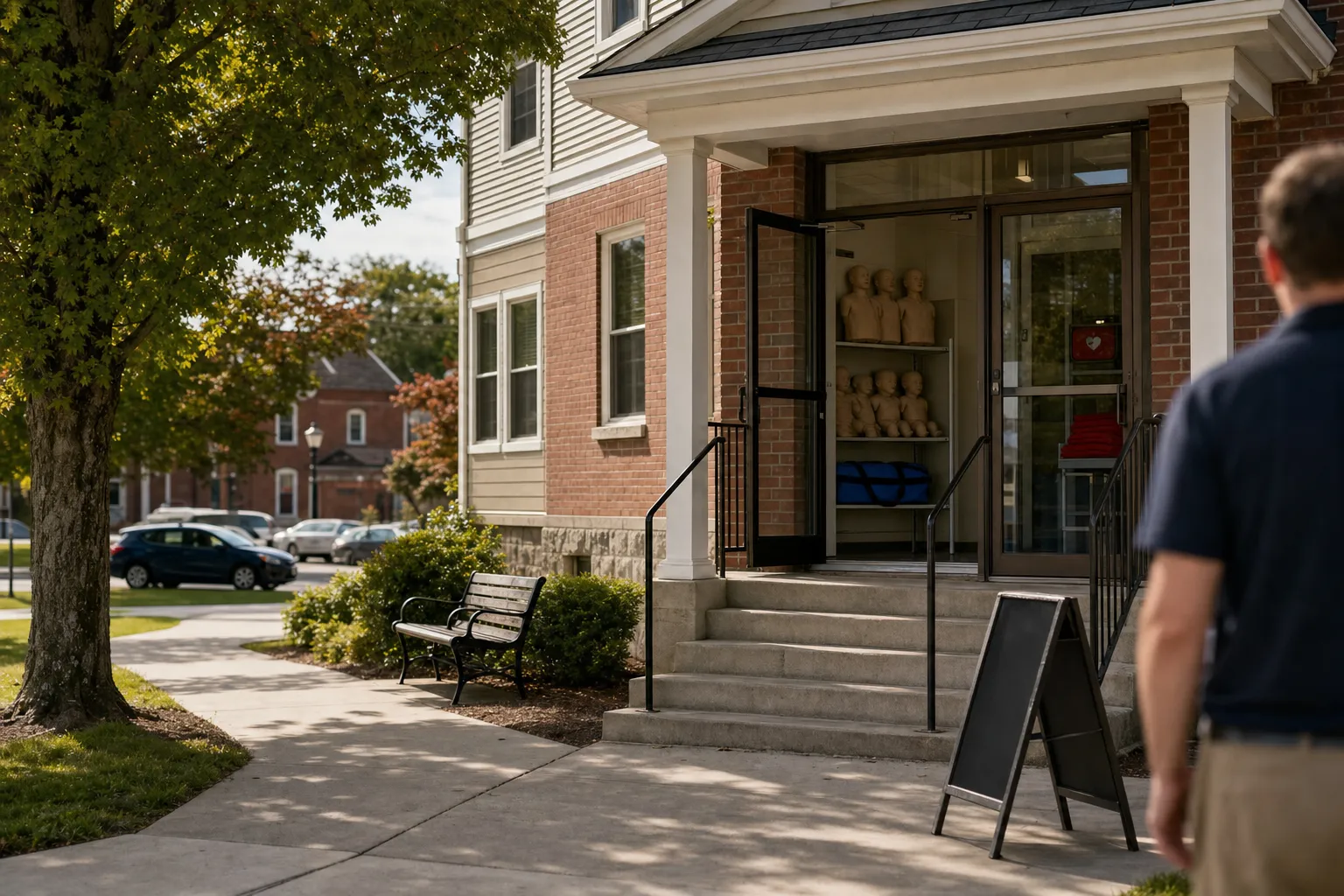
Before you enroll in a CPR class, ask whether the instructors are certified, which protocols the course follows, how much hands on practice you get, and how the class addresses mental preparedness. Those questions tell you whether the course will give practical skills, real confidence under pressure, and a valid certification you can rely on.
Why these questions matter
Not all CPR classes are the same. Some focus on lecture and paperwork, while others prioritize scenario practice, teamwork, and the decision making you need in a real emergency. Asking the right questions helps you pick a course that matches your goals, whether you are a parent, childcare worker, healthcare student, or workplace responder.
We teach courses for a range of learners and we structure our classes to build both skills and mental readiness. Knowing what to look for helps you evaluate any provider in Glen Rock and the surrounding area.
Instructor credentials and teaching approach
Ask about the instructors and their background. Specifically, ask these questions:
- Are your instructors certified through a recognized program, such as PQAS or the American Heart Association?
- Do instructors have clinical or field experience with emergency response?
- How do instructors divide time between demonstration, guided practice, and independent skills checks?
Courses taught by educators certified through the PQAS or equivalent typically include clinician reviewed scenarios and an emphasis on practical skills. At Care First Education LLC our instructors are PQAS certified and emphasize scenario practice and confidence under pressure.
Certification standards and protocols
Ask which certification or standard the class follows. Good questions to ask include:
- Is this American Red Cross, American Heart Association, or another recognized curriculum?
- Which year or version of the guidelines do you teach from?
- How do you handle protocol updates between certification cycles?
Knowing the standard matters for employers, schools, and childcare providers that require specific credentials. It also tells you what to expect during testing and how long your certification will remain valid.
Hands on practice, scenario work and assessment
Practical skills are the core of effective CPR training. Ask about:
- How much time is spent on hands on chest compressions and rescue breaths per student.
- Whether scenarios include team resuscitation, pediatric cases, and use of an AED.
- How you are evaluated, and whether there is a skills check at the end.
We recommend classes that let every participant perform compressions and AED placement more than once. Repetition builds muscle memory and reduces hesitation during an emergency.
Mental preparedness specific questions
Mental preparedness is often overlooked. Ask whether the class addresses decision making, stress responses, and communication under pressure. Useful questions include:
- Do you include scenario practice that simulates stress and distractions?
- How do you teach situational awareness and prioritization during a collapse or choking event?
- Do you cover psychological barriers to action, such as fear of doing harm or legal concerns?
We cover mental preparedness alongside hands on skills. That includes short, realistic scenarios, team roles, and guided debriefs so learners reflect on what went well and what to improve. For more on the topic, read our Mental Preparedness topic page.
Class format, size and accessibility
Format affects how much attention each student receives. Ask:
- Is the class instructor led, blended with online modules, or fully online?
- What is the typical student to instructor ratio?
- Are classes available at accessible locations and times for families and workplace teams?
Instructor led and blended formats that preserve in person skills practice offer the best balance of convenience and competency. We recently added American Heart Association Basic Life Support courses to our offerings so learners can choose the curriculum that meets their workplace requirements. See our CPR Class page for course descriptions and formats.
Equipment, classroom supplies and takeaways
Ask what equipment you will use and what you take away from the class. Important points:
- Are manikins and AED trainers current and cleaned between participants?
- Do you provide practice AED trainers and barrier devices?
- Will you receive a course manual, wallet card, or online resources after class?
We supply clinician reviewed learning materials and cleaned manikins. We can also recommend a compact first aid kit aligned with Pennsylvania and FEMA guidance for home or classroom preparedness.
How mental preparedness is taught in class
- Introduce the concept. We explain common stress responses, like tunnel vision and rapid heart rate, and how they affect performance.
- Practice under mild stress. Short, controlled scenarios add realistic noise and interruptions so learners practice staying focused.
- Role assignments and leadership cues. Learners rotate through roles such as team leader and compressor to practice communication under pressure.
- Guided debriefs. After scenarios we lead a debrief that highlights decisions, communication, and emotional reactions.
- Rehearsal and reflection. Participants rehearse key actions and leave with simple mental cues they can use in a real event.
Pro tip: When you ask providers about mental preparedness, ask for an example of a scenario they run in class and how they debrief. A specific example shows the instructor moves beyond lecture to practical readiness.
Logistics many people forget to ask
Cover these practical matters before you register.
- What is the refund or rescheduling policy if you cannot make a class?
- Are make up sessions available for missed skills practice?
- Is parking, public transit access, or accessible seating available at the training location?
If your employer or school requires a certain credential, ask whether the course issues the correct card and whether it meets local compliance requirements.
What to expect during a typical class
A dependable class balances instruction, practice, and assessment. Expect about one third lecture, one third demonstration and guided practice, and one third hands on skills and scenario work. You should leave with a clear sense of what to do first, and the confidence to act.
We run classes that suit laypeople, childcare staff, workplace teams, and early responders. If you are local to Stewartstown and nearby communities, our course flow reflects real situations common to local schools, daycare centers and small businesses. Learn about our Stewartstown location and service area on the location page for Stewartstown, Pennsylvania.
Checklist of questions to ask before you enroll
Ask these before you register
- Which certification or guideline do you follow?
- Are instructors certified through PQAS or equivalent?
- How much individual hands on practice will I get?
- Do you include scenario practice and mental preparedness training?
- What is the class size and student instructor ratio?
- What equipment and materials are provided?
- How are skills assessed and what credential will I receive?
- Are there options for make up practice or recertification?
Watch out: Avoid classes that promise certification with minimal or no hands on practice. Effective training requires time at the manikin and guided scenario work, not only slides or multiple choice tests.
Key takeaway
Ask about instructor credentials, hands on practice, accepted certification standards, and how the class prepares you mentally for an emergency. Those questions separate a course that builds practical confidence from one that only issues paperwork.
Frequently asked questions
What specific questions should a parent ask before signing up their babysitter for CPR training?
Parents should ask whether the course covers pediatric CPR and choking, how much hands on time the babysitter will have, and whether the instructor uses child sized manikins. Also ask how the class addresses decision making under stress, since babysitters may face high emotion during a child emergency.
Will mental preparedness training lengthen the class time?
Mental preparedness elements are often integrated into scenario practice and debriefs, so they do not always add a separate block. Expect a slightly longer practice or debrief period when instructors emphasize preparedness, and plan for the full class time stated by the provider.
How do I verify an instructor's PQAS certification?
Ask the provider for the instructor name and PQAS credential details. Reputable programs list instructor qualifications and the certifying body. PQAS certification indicates a focus on practical skills and scenario based teaching.
Do employers accept blended or online CPR classes?
Some employers accept blended courses that include an in person skills session. Always confirm with your employer which credential and course format they require. If an employer requires American Heart Association BLS, choose a course that explicitly issues that credential.
Learn more and check our local information
See our Mental Preparedness topic page to read more about how we teach decision making and stress management during CPR training. Visit our CPR Class page to review course formats and the Stewartstown, Pennsylvania location page for local schedules and directions. You can also check our Google Business Profile to read reviews and get directions to training locations.