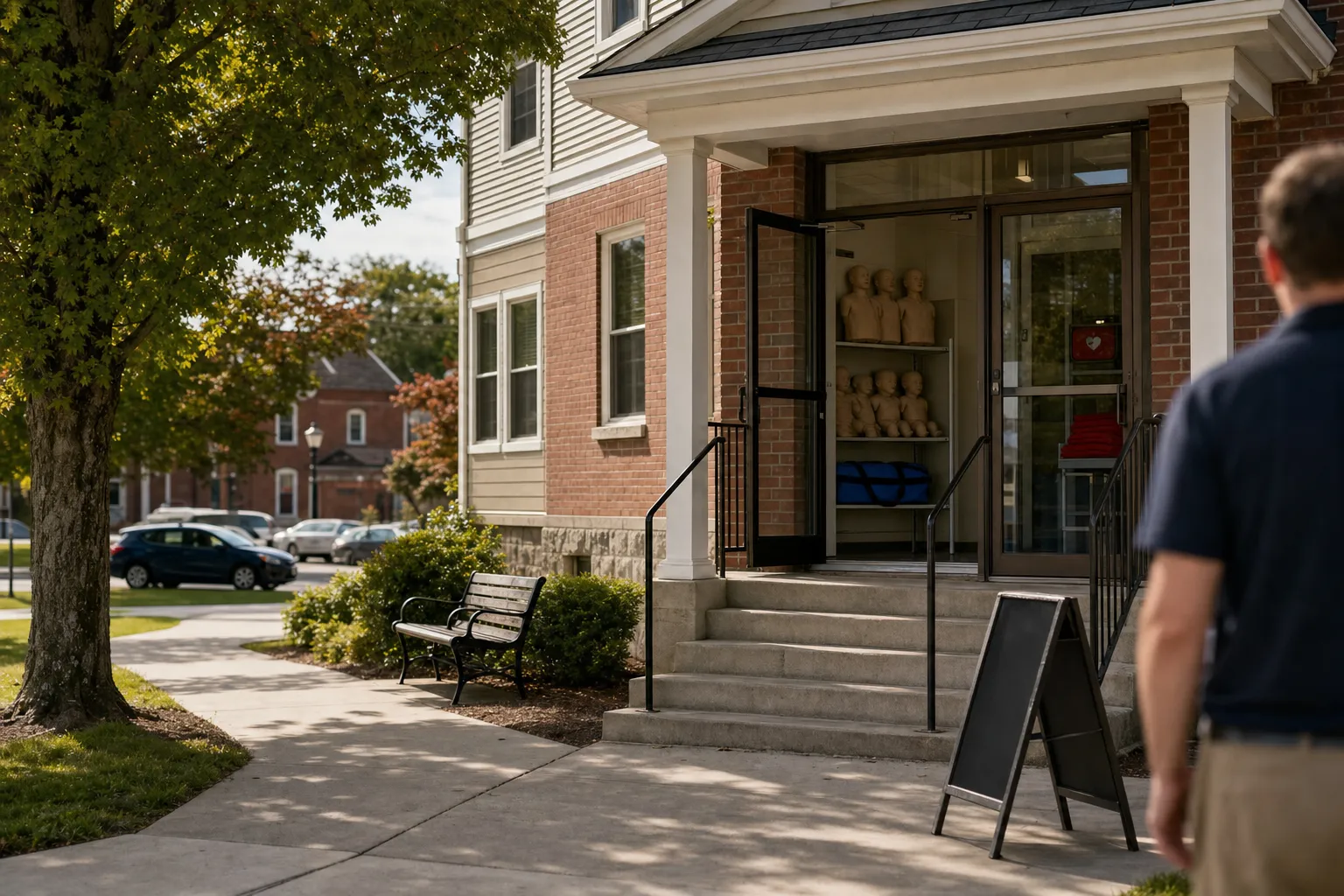
Bring your course confirmation or registration details, any previous certification cards, anything your employer or school requires, comfortable clothing, and a short list of questions. Those items let you jump straight into scenario practice and get hands on time in a CPR class in Reimold Pennsylvania.
What to gather before scenario practice
We keep scenario practice focused and practical. Gather these items so your first conversation and the hands on portion move smoothly.
- Course information. Bring your registration confirmation, course name, and start time. If you signed up through an employer or school, bring any paperwork they provided.
- Prior certifications or training records. Bring any CPR certification cards or certificates so we can confirm prerequisites and tailor scenarios. This includes recent Basic Life Support certification if you have one.
- Identification and affiliation. Bring a photo ID and, if relevant, an employer or school ID. This helps with class rosters and any institutional paperwork.
- Health considerations and limitations. Tell us about any medical conditions, recent injuries, or pregnancy. Knowing this helps us adapt physical tasks during scenario practice so you learn safely.
- Clothing and footwear. Wear clothes you can kneel and move in and closed toe shoes. Scenario practice involves realistic movement and brief physical tasks.
- Notebook and questions. Bring a pen and a short list of things you want to practice or clarify. Writing notes during debriefs helps you retain skills.
- Employer or program checklists. If your workplace or school gave you a checklist or learning objectives, bring that document so we can align scenarios to your requirements.
- Legal or reporting forms. If your group requires paperwork for compliance, bring those forms partially completed so we can advise on documentation during training.
Why each item matters for scenario practice
Scenario practice is about translating knowledge into action. The items above help us set context, match practice to your real world setting, and keep everyone safe.
Course information and prior certification let us know whether to focus on basic skills or team resuscitation. Health information and clothing let us keep physical tasks appropriate. Employer paperwork and checklists let us target scenarios to your workplace layout and likely emergencies.
Pro tip: If you are coming from a school, daycare, or small business, bring a basic description of the space where you work. Details like number of staff, typical occupants, and whether an AED is on site help us design realistic scenarios.
How we use what you bring during class
At Care First Education LLC we use instructor led scenarios to build skill and confidence. Our educators are certified through PQAS and our courses emphasize practical skills and confidence under pressure. Here is how your items inform the session.
- Set the scene. We review your workplace or program details and choose scenarios that match typical emergencies for your setting.
- Skill station checks. We use prior certification and course information to group learners by experience so practice time is efficient and focused.
- Safe participation. We adapt physical tasks for any health limitations you disclose so you can practice without unnecessary risk.
- Debrief and documentation. We review your notes and any employer forms to help you document skills and identify next steps for certification or compliance.
Quick checklist to bring
Before you arrive
- Registration or course confirmation
- Any prior CPR or First Aid certificates
- Photo ID and employer or school ID if applicable
- Notes on health limitations or recent injuries
- Comfortable clothing and closed toe shoes
- Notebook, pen, and questions for instructors
- Employer or program checklists and required forms
What scenario practice looks like in our CPR classes
Scenario practice is a short simulated event followed by a structured debrief. We run multiple short scenarios so you alternate between acting and observing. That repetition builds muscle memory and decision making.
We pull training goals from the course standard you are taking. We now offer American Heart Association Basic Life Support courses in addition to our other certifications. When appropriate we align scenarios to AHA guidance and to workplace compliance needs.
To learn more about how scenario practice fits into our overall approach see our topic page on Scenario Practice, or read about our CPR Class offerings. If you are coming from Reimold Pennsylvania we have a location page with local details at Reimold Pennsylvania.
Sources and further reading
For context on educational program design see the Wikipedia entry on educational institutions. For state guidance on preparedness and training resources review Pennsylvania government preparedness guidance. For current clinical guidance on CPR and resuscitation see the American Heart Association guidelines on CPR and emergency cardiovascular care.
We link these sources so you can see the background behind course standards and why we emphasize scenario practice.
Key takeaway
Arrive with your course details, prior certificates, any required employer paperwork, clothing you can move in, and a few questions. Those items let us start scenario practice right away so you get hands on time and relevant feedback in a CPR class in Reimold Pennsylvania.
Frequently asked questions
Do I need to bring a CPR manikin or other equipment?
No. We provide training manikins and AED trainers for class. Bring your paperwork and questions. If you have workplace specific equipment you want us to consider in scenarios, mention it during registration.
What if I have a physical limitation that affects hands on practice?
Tell us before class or at check in. We adapt tasks so you can participate safely while still practicing decision making and team roles.
Will scenario practice affect my certification status?
Scenario practice is part of skills assessment in many courses. We document practical skills and debrief performance, and we align our evaluation to the certification standard for your course.
How much time is spent on scenario practice in a typical CPR class?
Time varies by course and group size. We aim to include multiple short scenarios so each participant practices and receives feedback. Bring the items listed earlier to help us use class time efficiently.
Learn more and check our local details
Visit our Google Business Profile to read recent reviews and to get directions. To learn more about related topics and services on this site see our Services hub, the Scenario Practice topic page, and the Reimold Pennsylvania location page.
Services hub Scenario Practice topic Reimold Pennsylvania location