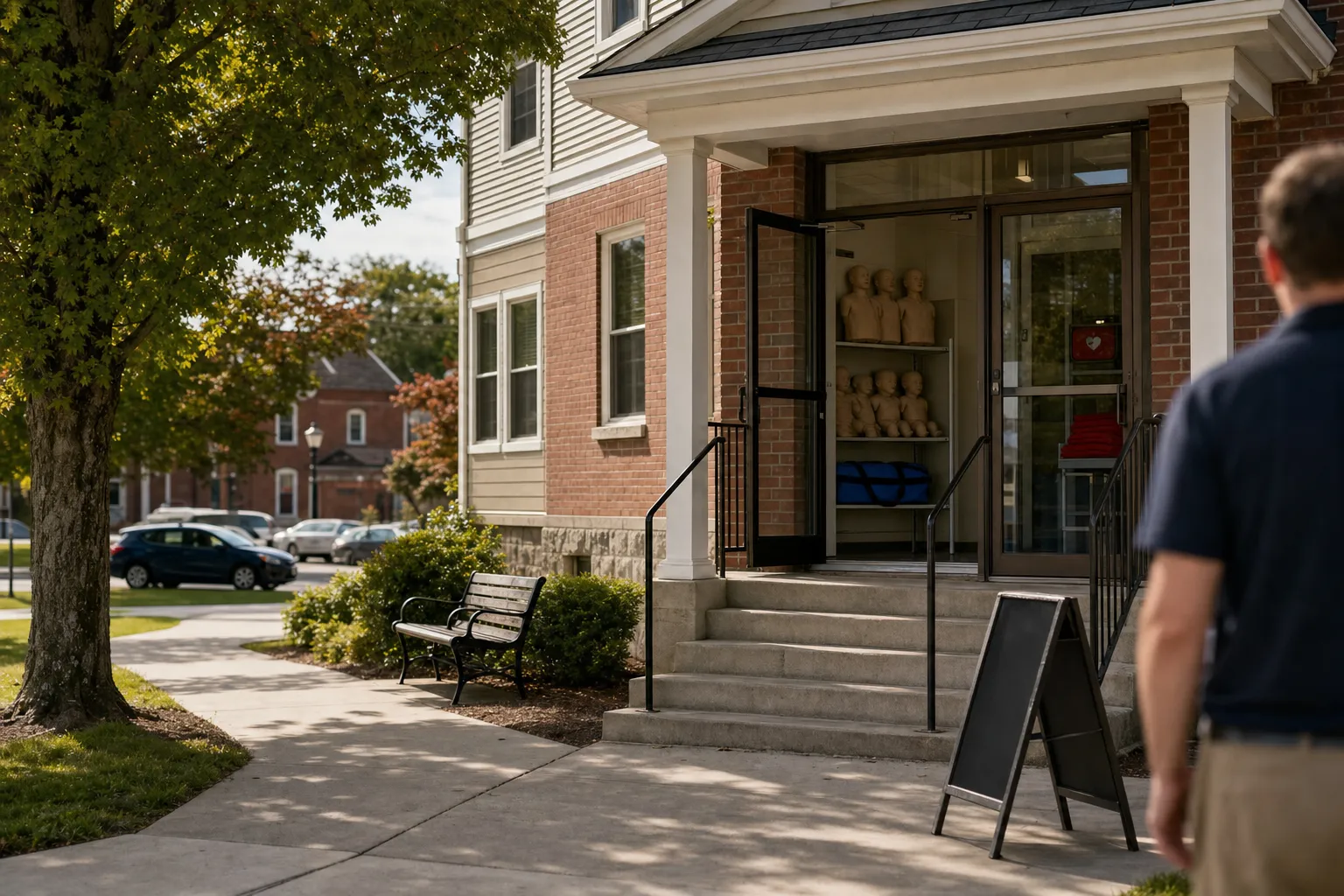
Scenario practice makes emergency response training more complicated because it brings realism into the classroom. Realistic drills add stress, role players, environment constraints and logistics that change how we design learning objectives, set safety limits and manage debriefs. In short, scenario practice forces us to teach practical decision making under pressure, not just isolated skills.
What is scenario practice
Scenario practice is a training method that places learners in a realistic, controlled situation to apply lifesaving skills. Instead of repeating a single skill on a manikin, participants work through a scripted event that includes a patient story, environmental challenges and other people performing roles. The goal is practical readiness, not theatrical effects.
At Care First Education LLC we build scenario practice into our Emergency Response Training courses to connect CPR, first aid and bleeding control to real workplace or community contexts. Our instructors hold PQAS certification and recent American Heart Association Basic Life Support content knowledge, so scenarios reflect current protocols.
Why scenario practice matters locally
Scenario practice matters for Stewartstown and neighboring communities because local incidents rarely unfold in a tidy way. Schools, daycares, small businesses and community centers in Red Lion face space limits, staffing variations and unique hazards. Training that mirrors those conditions helps learners make faster, safer choices when seconds matter.
We see two practical benefits locally. First, scenario practice reveals system gaps, such as unclear roles, missing supplies, or obstacles to moving a patient. Second, it builds team familiarity, so coworkers know who will run the scene, who will fetch the AED, and who will start crowd control.
Key concepts that add complexity
- Fidelity and realism. Higher realism improves transfer of learning, but it increases planning, resources and safety needs.
- Role players and moulage. Actors and simulated injuries make the scenario believable, but they require scripts and ethical treatment of participants.
- Environmental constraints. Stairs, narrow rooms, low light and weather affect how skills are performed and how we stage the event.
- Multi victim triage. Running more than one patient multiplies decisions and resource tracking.
- Team coordination. Scenarios test communication, leadership and handoffs, not just individual technical skills.
- Debrief and learning objectives. A structured after action review turns the stress of a drill into clear learning gains, but it takes time and trained facilitators.
- Safety and boundaries. We must balance realism with physical and psychological safety for learners and role players.
- Equipment and supplies. Realistic gear, working AED trainers and appropriate first aid kits add logistical needs and maintenance tasks.
How we design scenario practice and what to expect
We follow a predictable design process so scenarios teach reliably. That process adds steps compared with a standard skills session, and each step introduces complexity that we manage deliberately.
- Define learning objectives. We start with measurable outcomes, for example, effective team CPR for an adult arrest or correct naloxone administration for an opioid overdose.
- Script the scenario. We build a brief patient history, triggers and expected learner actions. Scripts include branching options to keep the scenario adaptive.
- Assign roles and safety officers. Role players, observers and a safety officer are required. The safety officer watches for physical risk and stops the scenario if needed.
- Prepare environment and equipment. We stage space, check AED trainers, and ensure first aid kits align with FEMA and Pennsylvania guidance.
- Run the scenario. We observe, time critical actions and collect notes without interrupting unless safety is at risk.
- Debrief with structure. After action review focuses on what went well, what could be improved and specific next steps for learners.
We do not use live medications or unsafe props. All equipment is staged to be realistic but physically safe for learners.
Common questions instructors must answer up front
These questions explain why scenario practice needs more preparation than a typical skills lab.
- Who is the learner audience? Scenarios for nursing students look different than those for daycare staff or small business teams.
- What safety limits do we set? Physical exertion, psychological triggers and infection control measures must be defined before the event.
- How will we simulate injuries? Simple moulage and clear scripting avoid ambiguity while keeping realism.
- Who documents outcomes? A notetaker or video recording can be valuable for debrief, but consent and privacy matter.
- What supplies do we need? A curated kit that follows FEMA recommendations keeps scenarios realistic and reproducible.
Checklist for planning scenario practice
Pre scenario checklist
- Define 2 to 3 clear learning objectives.
- Assign instructor roles, including safety officer and debrief lead.
- Prepare realistic, safe equipment and an AED trainer.
- Brief role players and learners on boundaries and consent.
- Confirm space logistics, privacy and access to emergency exits.
- Plan the debrief, including time for reflection and action items.
Pro tip: Running a short pilot with a single team identifies predictable friction points. That saves time when you scale to larger groups.
How scenario practice intersects with other services
Scenario practice is not a standalone activity. We integrate it with core courses so learners practice high value skills in context.
- CPR Certification and CPR Class, where we practice team resuscitation and switchovers during prolonged events. See our CPR Certification page for course connections.
- First Aid Training, where we stage common injuries and environmental responses. Visit our First Aid Training page to compare formats.
- Special topics such as opioid overdose response, anaphylaxis and pediatric emergencies, which appear inside scenario scripts to reflect local needs.
Related locations and why site matters
Scenario practice should mirror the places where people work and live. We deliver location specific drills that reflect building layout, common hazards and available resources.
We routinely run drills for groups from Stewartstown and the surrounding communities, and we tailor scenarios to local staffing patterns and typical response times. If your group needs drills that reflect small classroom layouts or narrow storefronts, we stage scenarios to match that footprint and to surface likely constraints. Learn about our local operations in Stewartstown on the Stewartstown location page at Stewartstown, Pennsylvania.
Helpful resources and standards we follow
We align scenario practice with national guidance and manufacturer recommendations. Two helpful public resources are FEMA guidance for emergency supply kits and the American Heart Association guidelines for basic life support. Both resources describe expectations that inform scenario design and equipment selection.
- FEMA guidance on household and community preparedness, which we use to curate scenario supply kits. For guidance, see FEMA.
- American Heart Association Basic Life Support guidelines, which we follow when scripting resuscitation scenarios.
We also organize kits and instructor notes so scenarios are reproducible and safe. Our supply recommendations are clinician reviewed and mapped to Pennsylvania preparedness expectations.
Common mistakes teams make with scenario practice
- Skipping the debrief. Without an after action review, realistic stress becomes noise, not learning.
- Overdoing realism. Extreme realism without consent can harm learners and role players.
- Poor role definition. If team roles are unclear, the scenario reveals chaos rather than teachable gaps.
- Neglecting equipment readiness. Dead AED trainers or missing supplies derail the learning objectives.
Key takeaway
Scenario practice improves skill transfer, but it requires careful design, more equipment and trained facilitators. When we plan realistic drills for local groups, we focus on clear objectives, participant safety and a structured debrief so the complexity produces measurable learning.
Frequently asked questions
What is the difference between tabletop exercises and full scale scenarios?
Tabletop exercises are discussion based and good for planning roles and communication, while full scale scenarios include actors, props and physical tasks. Tabletop exercises require less logistics and are useful for policy and command level practice. Full scale scenarios offer better practice for hands on skills, but they need safety officers and more setup.
How long does a scenario session take?
Typical sessions run 60 to 120 minutes including briefing and debrief. A focused scenario with a short debrief can be shorter. We set session length based on learning objectives and the number of participants.
Can scenario practice count toward certification requirements?
Scenario practice supports competency, but certification requirements are set by the credentialing organization. We integrate scenario practice into our training so learners meet course skill checks and gain practical experience that complements formal certification pathways.
How do you manage psychological safety during realistic drills?
We obtain consent, screen for triggers, offer opt out options, and include a safety officer who may stop a scenario. Debriefing includes reflection and referral resources if a learner needs support.
Do you provide supplies for scenarios?
Yes, we use clinician reviewed kits aligned with FEMA guidance, and we stage AED trainers and moulage materials. We keep supplies organized so scenarios are reproducible across sessions.
Learn more and see our local training
Check our Google Business Profile to read recent reviews and get directions. To explore related topics and courses on this site, see our page on Scenario Practice, the Emergency Response Training service page, and the Stewartstown location. You can also browse our topics hub and services hub for deeper guidance.