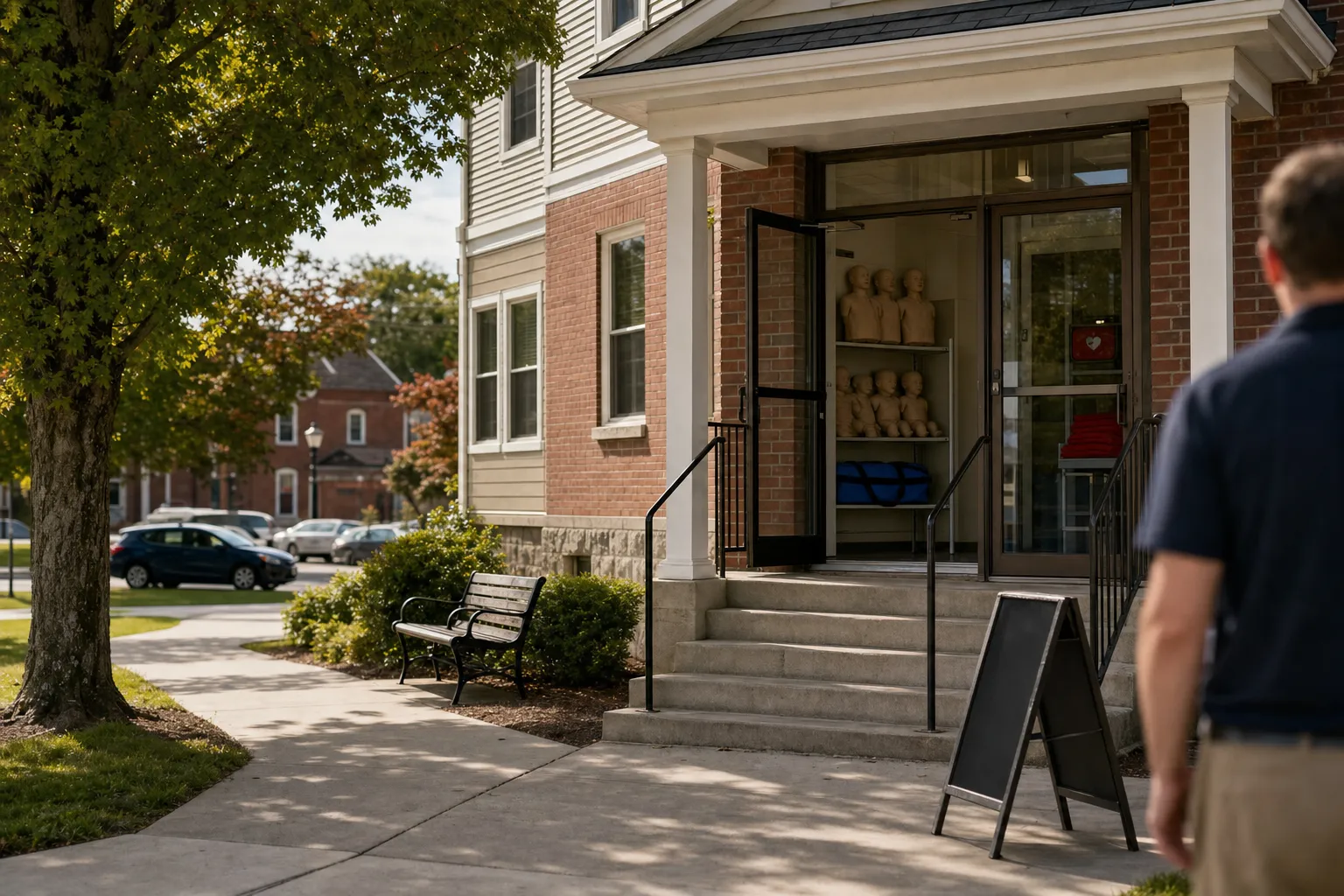
We recommend you look into CPR certification when everyday responsibilities or a change at work or home put you in a position to respond to a cardiac or breathing emergency. Common triggers include new caregiving duties, a change in workplace safety rules, recurrent events in your community, or concern after a close call. If any of these apply, pursuing certification now is a reasonable next step.
What training accessibility for CPR certification means
Training accessibility is about making real certification options available to the people who need them. That includes convenient class times, multiple learning formats, clear certification pathways, and supplies that match local needs. We focus on instructor led classes, blended learning, and hands on practice so participants leave with practical muscle memory and clear documentation of completion.
Our courses are instructor led and taught by educators certified through the PQAS. We also offer American Red Cross and American Heart Association aligned content, and we recently added American Heart Association Basic Life Support courses.
Why CPR certification matters locally in Pleasant View and the Stewartstown area
Local communities like Pleasant View and Stewartstown have a mix of homes, schools, daycare centers, and small businesses where a trained responder can change an outcome. Employers, childcare providers, and community group leaders face specific expectations around preparedness. Meeting those expectations keeps the person who needs care safer and helps organizations meet regulatory and insurance obligations.
We serve Stewartstown and surrounding communities with clinician reviewed supplies and training paths that reflect Pennsylvania guidance and FEMA preparedness principles.
Key concepts to understand before you sign up
- Certification versus skills refresh. Certification shows you completed a course and assessment. A refresher focuses on practice and confidence between formal certifications.
- Course format matters. Instructor led classes emphasize hands on compression and AED practice. Blended learning pairs online knowledge checks with in person skills checks.
- Recertification timing. Most agencies recommend renewal every two years, but employer or program requirements can differ.
- Scope of training. Basic CPR, pediatric CPR, AED use, and first aid are distinct but related courses. Pick the scope that fits your responsibilities.
- Instructor credentials. Instructors certified through recognized bodies and through PQAS deliver reliable, up to date training and assessments.
Common signs it is time to pursue CPR certification
Check the items that apply to you
- You are starting a role caring for infants, children, older adults, or medically fragile people.
- Your workplace now requires CPR or updates its emergency response plan.
- A school, daycare, or community group asks staff or volunteers for certification.
- You witnessed or responded to a recent emergency and want structured training.
- Your organization purchased an AED and needs trained users.
- You are responsible for safety at events, sports teams, or community centers.
- Your current certification is close to its expiration date or employer audit.
How to choose the right course format
There are a few common course formats. Match the format to your learning needs and schedule.
| Format | When it works | What to expect |
|---|---|---|
| Instructor led, in person | When you need hands on practice and real time feedback | Group practice on manikins, AED drills, scenario practice, instructor assessment |
| Blended learning | When you need flexible study with a skills check | Online modules for knowledge, short in person skills evaluation |
| Refresher or skills only session | When you already have certification but need more confidence | Focused compression, breathing work, and AED practice without full lecture |
Blended formats can increase training accessibility, especially for people balancing work and family. Read more about blended learning options on our Blended Learning Models page.
What good training looks like
- Clear certification pathway with written expectations and documented completion.
- Instructor credentials and a low student to instructor ratio for skills practice.
- Scenario practice that reflects real local settings, like homes, classrooms, or small businesses.
- Assessment that includes hands on compression quality, correct ventilations, and AED use.
- Availability of follow up guidance, refreshers, and supply recommendations for preparedness kits.
Supporting services and related topics
CPR certification is commonly combined with other training to create a complete emergency response capability. Related courses we offer include First Aid Training and Emergency Response Training. For instructor standards and what to expect from educators, see our Instructor Qualifications resource.
Local considerations and service area
We are based in Stewartstown and serve nearby communities. Local factors to weigh include travel time for staff, class scheduling around school or shift work, and local AED availability. If your group is in or near Stewartstown, check our local page for community specific details and offerings at Stewartstown, Pennsylvania.
Pro tip: If an employer or regulator sets a training standard, match that requirement first, then choose a course that adds hands on practice or pediatric content as needed.
Helpful resources and standards
For background on cardiopulmonary resuscitation, see the general overview on Wikipedia. For current resuscitation science and course recommendations, consult the American Heart Association guidance on CPR and emergency cardiovascular care. For family and community preparedness, FEMA offers practical checklists for building emergency kits and plans.
Selected external references:
Key takeaway
If your role puts you near children, older adults, people with medical conditions, or if your workplace updates safety rules, those are clear signs to pursue CPR certification. Choose a format that balances hands on practice with scheduling needs, and confirm the instructor credentials and assessment method before you enroll.
Frequently asked questions
How quickly can I get certified once I decide to enroll?
Course length varies by certification and provider. Many basic CPR certification classes take a few hours and are completed in one session. Blended courses require online work plus a shorter skills session. Check the specific course description for exact timing.
Do I need pediatric CPR or standard adult CPR?
Choose pediatric CPR if your responsibilities focus on infants and children, such as babysitters, daycare staff, or pediatric healthcare roles. Standard adult CPR and AED training are appropriate for most workplaces and community responders. We can advise on course scope depending on the population you serve.
How often do I need to recertify?
Most recognized certifications suggest renewal every two years. Employer policies, school systems, and specific programs may require different intervals, so confirm local requirements before you enroll. The American Heart Association provides guidance on recertification intervals.
What should I look for in an instructor led course?
Look for instructors with formal instructor credentials, low student to instructor ratios for hands on practice, scenario based drills, and clear skills assessment. We use PQAS certified educators and emphasize practical scenario practice to build confidence.
Will certification help my organization meet compliance needs?
Certification documents are commonly required for workplace safety programs, childcare licensing, and school staff records. Certification validates that staff completed a recognized course and passed a skills assessment, which supports compliance and audit readiness.
Learn more and check our local listing
To read recent reviews, get directions, and confirm current offerings, view our Google Business Profile. To explore course options and certification pathways, see our CPR Certification page and related topics on this site.