Emergency response training and CPR certification both teach the same lifesaving actions, plus how people work together under pressure. In short, CPR certification trains core compressions, ventilations and AED use while emergency response training adds team roles, scene management and integration with first aid skills.
We deliver both kinds of courses so groups and workplaces in Pleasant Hill understand how single rescuers and teams act the same way and where their training needs differ.
Why the overlap matters for groups in Pleasant Hill
When a cardiac arrest or severe emergency happens, outcomes depend on more than one person. Early compressions and defibrillation are the same whether a lone responder starts care or a three person team responds. Teams that train together move faster and make fewer mistakes.
That is why Team Resuscitation practice is useful for schools, daycare centers, senior care staff and small business safety teams. We tailor sessions for local settings around Stewartstown and Pleasant Hill so scenarios match real places and likely responders.
For background on how teamwork and clinical guidelines align, the American Heart Association summarizes the science behind Basic Life Support and team dynamics.
Core skills both courses cover
- High quality chest compressions, correct hand placement and compression rate.
- Ventilation techniques for adults, children and infants when indicated.
- Automated external defibrillator use and safety around shocks.
- Primary assessment, including checking responsiveness and breathing.
- Scene safety and basic bleeding control until advanced help arrives.
CPR certification focuses on individual competence and testing to a standard. Emergency response training builds on that to add role assignment, communication, and integration with first aid interventions such as tourniquet application and naloxone administration.
How we run a Team Resuscitation session
- Orientation. We start with short objectives so everyone knows the expected skills and outcomes.
- Skills refresh. Participants practice compressions, ventilations and AED steps until performance standards are met.
- Role assignments. We show standard roles, such as compressor, airway, and team leader, and rotate people so everyone practices each role.
- Scenario practice. We run 8 to 12 minute scenarios with realistic prompts, then stop for focused feedback.
- Debrief and improvement plan. We summarize what went well and what to practice between sessions.
Pro tip: Teams get the most value when members train with equipment they use on site, such as the facility AED model, first aid kits curated for classrooms, or the children sized manikins we bring.
When combined training matters more than separate classes
Combined curricula work best when your goals include coordinated response, not just individual certification. Examples include:
Who benefits from combined training
- Daycare centers and schools that need coordinated pediatric response.
- Senior care teams that must move from assessment to oxygen or medication administration quickly.
- Small businesses that want a plan for who does what until EMS arrives.
We cover related topics that often appear alongside team work, including bleeding control, anaphylaxis management and opioid overdose response.
What to expect from certification versus emergency response training
Certification courses such as our CPR Certification measure skills against a recognized standard and issue a credential when performance is acceptable. Emergency response training emphasizes systems, recurring practice and role rehearsal.
Both use hands on practice and scenario work, and both improve confidence under pressure. For an overview of adult learning that supports scenario based practice, see University of Minnesota Extension on teaching adults.
Equipment and supplies we recommend
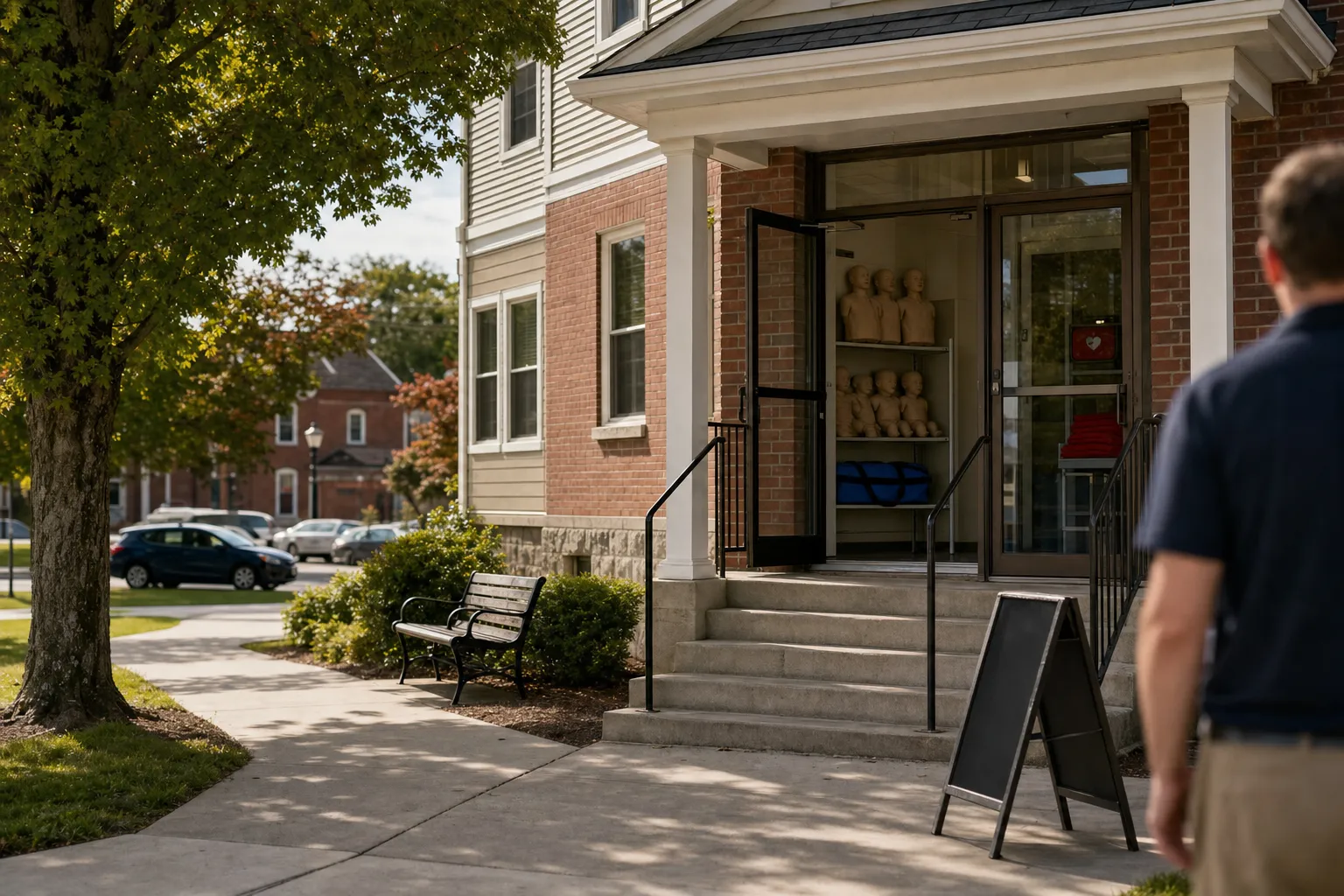
Quality training needs the right gear. We bring manikins sized for infants, children and adults, and can review your AED placement and first aid kit contents. Our supply recommendations follow FEMA and Pennsylvania preparedness guidance and are curated by a FEMA certified registered nurse.
Watch out: Don’t assume an AED or first aid kit is ready to use without checking batteries, pads and medication expiry dates. Equipment care matters for both real incidents and training realism.
Related services and local pages
Read more about our approach to team based scenarios on the Team Resuscitation topic page, and see how that links to our Emergency Response Training service. If you need standard credentials, our CPR Certification page explains the pathways and renewal requirements. We serve Pleasant Hill and nearby communities from our base in Stewartstown, Pennsylvania.
Relevant links: Team Resuscitation topic, Emergency Response Training service, CPR Certification service, Pleasant Hill location page.
Why practice and scenario work improve outcomes
Practice creates automatic responses. When compressors and AED operators have rehearsed together, mental bandwidth is freed for assessment and communication. The Bureau of Labor Statistics notes that many emergency and healthcare roles increasingly depend on team based preparedness and ongoing training.
We emphasize practical skills, scenario practice and confidence under pressure so local responders are ready when a real emergency occurs.
Frequently asked questions
Does CPR certification include team resuscitation practice?
Most basic CPR certification focuses on individual skills and testing. Team resuscitation requires additional scenario practice and role assignments, which we include in our Emergency Response Training sessions.
How long does combined team training usually take?
Sessions vary by goals, but plan on two to four hours for a group workshop that includes skills practice and multiple scenarios. We adapt the length for childcare settings or workplace priorities.
Will combined training count as certification renewal?
Certification renewal depends on the credentialing organization. Our CPR Certification follows recognized pathways and issues the appropriate certificates. Emergency response training reinforces skills but does not replace formal credential requirements unless explicitly stated on the certification page.
Do you provide supplies and kit recommendations?
Yes. We offer first aid and preparedness supplies curated by a FEMA certified registered nurse and aligned with Pennsylvania and FEMA guidelines. Those recommendations are designed for home readiness, classrooms and small organizations.
Key takeaway
CPR certification and emergency response training share core lifesaving skills, but combined team practice adds role clarity, communication and scenario rehearsal. For groups in Pleasant Hill, integrating both approaches improves readiness and helps everyone act faster and with more confidence.
Learn more and find our local details
Check our Google Business Profile to read reviews and get directions, and learn more about Team Resuscitation, Emergency Response Training, and CPR Certification on this site.