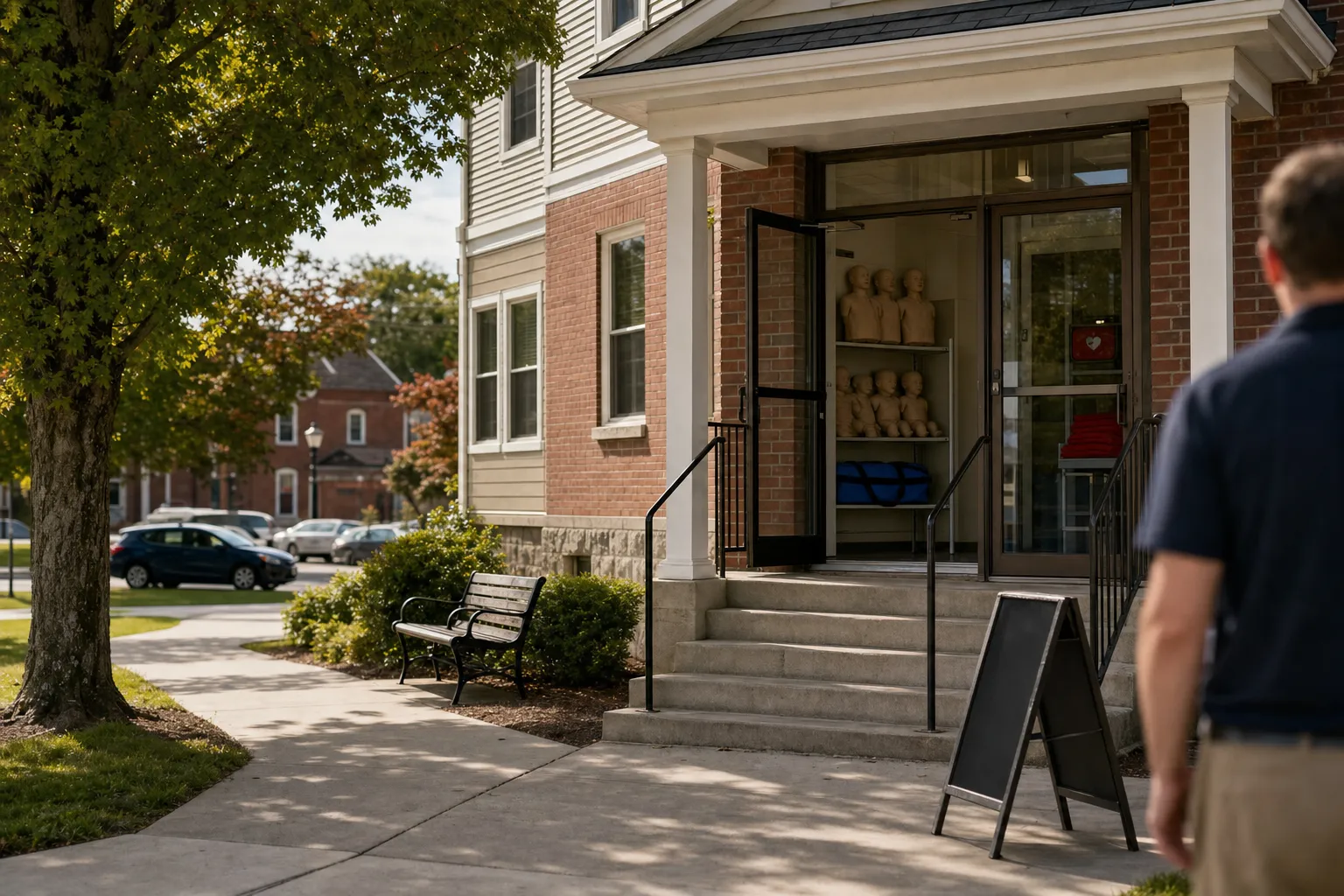
If you suspect an opioid overdose in Loganville, call 911, check responsiveness and breathing, give naloxone if available, and begin rescue breathing or chest compressions as needed. We teach these steps in our Emergency Response Training and opioid overdose response modules so people in our community can act quickly and safely.
What is opioid overdose response
Opioid overdose response is the sequence of actions a bystander, caregiver, or trained responder uses to recognize an opioid overdose and support the person until emergency medical services arrive. That includes recognizing the signs, calling for help, using naloxone to reverse opioid effects when indicated, and providing breathing support or cardiopulmonary resuscitation when needed.
Care First Education LLC delivers instructor led courses that include opioid overdose recognition and naloxone administration as part of our Emergency Response Training. Our instructors are certified through PQAS, and course content is reviewed by clinical staff so trainees practice the exact steps they will use in real situations.
Why this matters for Loganville and nearby communities
Opioid overdoses can happen anywhere, to people of any age or background. For Loganville and nearby towns, the critical factors are how quickly a responder recognizes the overdose and starts life saving steps. Every minute of delayed breathing reduces the chance of a full recovery. That is why local training, readily available naloxone, and basic supplies in homes, schools, and community centers matter.
We serve Stewartstown and surrounding communities, and our classes focus on practical scenarios you might encounter in Loganville, at childcare centers, at small businesses, and in private homes. We also curate first aid and preparedness supplies to align with Pennsylvania and FEMA recommendations so community groups are ready before an emergency happens.
Key concepts you should know
- Recognition. Slow or absent breathing, unresponsiveness, pinpoint pupils, and an unusual snoring or gurgling sound are common signs of opioid overdose.
- Call for help first. Calling 911 starts advanced care and alerts dispatch to opioid overdose protocols.
- Naloxone is a temporary reversal. Naloxone can restore breathing temporarily, but it is not a substitute for professional medical care.
- Support breathing. If the person is not breathing, rescue breaths and chest compressions can maintain oxygen to the brain until EMS arrives.
- Stay safe. Use gloves and a face shield if available, and move the person only if they are in immediate danger.
How a typical response works
- Scene safety and check. Make sure the area is safe for you and the person. Gently tap and shout to see if they respond.
- Call 911. Tell the operator you suspect an opioid overdose and provide the location. This alerts EMS and helps them bring naloxone if needed.
- Check breathing. Look for chest rise and listen for breath sounds. If not breathing or only gasping, prepare to support breathing.
- Give naloxone if available. Administer naloxone per the product instructions. For intranasal spray, place the nozzle into the nostril and press firmly. For injectable formulations, follow manufacturer directions. After administration, move to step five.
- Provide rescue breathing or compressions. If the person is breathing inadequately, provide rescue breaths. If there is no pulse, begin chest compressions. Continue until the person breathes on their own or EMS takes over.
- Monitor and repeat if needed. Naloxone can wear off before the opioid effect ends. Be prepared to administer additional doses if the product instructions allow and if breathing dims again while waiting for EMS.
In our classes we practice these steps in realistic scenarios so trainees learn timing, teamwork, and how to use naloxone devices correctly.
Naloxone forms compared
| Form | How it is given | What to expect |
|---|---|---|
| Intranasal spray | Sprayed into one nostril per manufacturer instructions | Easy to use for most bystanders, fast onset, minimal assembly |
| Injectable naloxone | Intramuscular injection into the thigh or arm | Requires drawing or using a prefilled syringe, works quickly, useful where spray is unavailable |
Both forms can reverse opioid effects temporarily. Training helps you choose and use the right form for your setting. Manufacturer instructions and the FDA product page are reliable sources for exact administration steps.
Essential supplies and readiness checklist
Basic overdose response kit
- At least one naloxone kit appropriate for your setting
- Gloves and a disposable face shield for rescue breaths
- A small flashlight for checking pupils and breathing
- Emergency contact list and directions to the location for EMS
- Simple first aid items such as a blanket and adhesive tape
We assemble kits and supply recommendations that match Pennsylvania and FEMA preparedness guidelines, with input from a FEMA certified registered nurse.
When training matters and what we teach
Training matters because bystanders are often the first on scene. Without training, people hesitate or use naloxone incorrectly. Our Emergency Response Training covers recognition, naloxone administration, rescue breathing, chest compressions, and scenario practice for workplaces, childcare settings, and community groups. For a focused option, our First Aid Training includes overdose modules and supply planning.
Courses emphasize hands on practice, scenario rehearsal, and confidence under pressure, and they follow current protocols from recognized authorities. We recently added American Heart Association Basic Life Support courses to our offerings to align with workplace needs and school safety requirements.
Learn more about our Emergency Response Training modules and certification pathways on our service pages. For reference about overdose response as a topic, we also maintain a detailed resource page on Opioid Overdose Response.
Local considerations for Loganville and the surrounding area
Loganville is served by nearby emergency medical services based in the Stewartstown area and other boroughs. That means response times vary by location and time of day. Training and immediate bystander action are the practical ways local residents and businesses can reduce harm before EMS arrives.
We teach scenarios that reflect local places such as childcare centers, small retail spaces, and private homes. If you manage a classroom or small business in Loganville, considering a practical kit and staff training helps the whole community respond better.
For details about our local presence, see our Stewartstown Pennsylvania location page which lists nearby service areas and locations we serve.
Helpful external resources and authoritative guidance
For technical definitions and background on opioid overdose, the Wikipedia entry on opioid overdose offers a broad summary. For prevention and response guidance, the Centers for Disease Control and Prevention provides up to date public health information on opioid overdose. For naloxone product specifics and administration details, refer to the FDA naloxone information and the product instructions that come with the kit you purchase.
Key takeaway
If you suspect an opioid overdose in Loganville, the most important steps are to call 911, check breathing, give naloxone if available, and support breathing or chest compressions until EMS arrives. Practical, hands on training builds the confidence and muscle memory to do those steps correctly, which is why community training and readiness matter.
Frequently asked questions
How quickly does naloxone work?
Naloxone typically begins to restore breathing within minutes. Effect timing varies with the opioid involved and the dose. Because naloxone may wear off before the opioid effect ends, continued monitoring and professional medical evaluation are essential.
Can naloxone harm someone who is not using opioids?
Naloxone has no effect on people who are not opioid impaired. In someone who is opioid dependent, naloxone can cause sudden withdrawal symptoms, which can be uncomfortable but are not a reason to withhold the medication when breathing is inadequate.
Are there legal protections for people who help during an overdose in Pennsylvania?
Pennsylvania has Good Samaritan provisions that provide limited legal protections for people who report an overdose and assist. Laws vary, and we encourage checking official Pennsylvania resources for current details before relying on them for decision making.
Where can organizations get naloxone and training in this area?
Naloxone is available through pharmacies, community programs, and some public health initiatives. For training, consider accredited local courses that include hands on naloxone practice, rescue breathing, and scenario drills. Our Emergency Response Training and First Aid Training cover these topics for community organizations and small businesses.
Will one dose of naloxone always be enough?
Not always. Some overdoses require multiple doses before breathing returns. Follow the product instructions and be prepared to administer additional doses while awaiting EMS. Continue rescue breathing or chest compressions as needed.
Learn more and check local resources
Read community guidance and related topics on our site and check Care First Education LLC on Google Business Profile for reviews and directions. For more on training and local availability see our Opioid Overdose Response topic page and our Emergency Response Training service page. If you want to know which locations we serve, see our Stewartstown Pennsylvania location page.
Opioid Overdose Response topic page