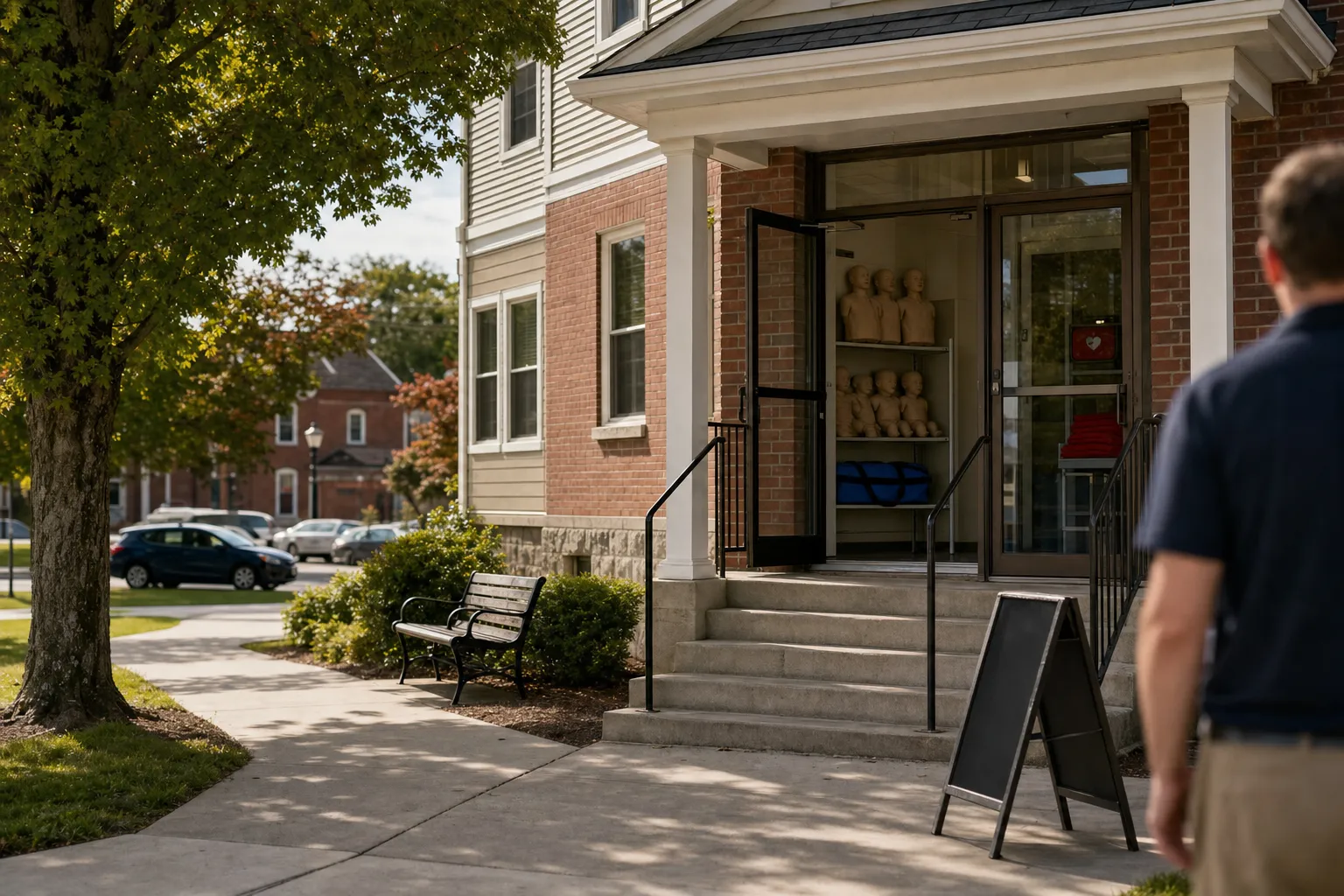
Most opioid overdose response courses we run take between 90 minutes and half a day when offered as a single session, and they typically include naloxone administration, overdose recognition, and basic rescue steps. Costs vary widely because pricing depends on class size, location, certification, supplies, and any required customization for workplaces or childcare settings.
What one session covers and why timeline matters
When people ask how long a course will last, they usually want to know two things, what they will learn and whether the time fits their schedule. A single session focused on opioid overdose response commonly includes: recognizing an overdose, performing a safety assessment, supporting breathing, using naloxone, and post‑event care. We include hands on practice, scenario discussion, and time for questions so participants leave confident.
Short sessions around 90 minutes work well for awareness and naloxone demonstration. Longer half day sessions allow for more scenario practice, group discussion about policies, and linked topics such as basic CPR or bleeding control. If your group needs certification or documented training hours for workplace compliance, plan for a longer session or a blended model with prework and a skills check.
Typical timeline options
We structure timelines to fit different audiences, from parents and babysitters to workplace safety teams and early responders. Common formats include:
- 90 minute awareness session, ideal for community groups and staff meetings.
- 2 to 3 hour skills session with hands on practice and naloxone administration drills.
- Half day workshop that combines opioid overdose response with related topics such as basic CPR or first aid for severe trauma.
- Multi session or blended learning that pairs online prework with a 60 to 120 minute in person skills assessment.
We recommend matching format to your goals. For example, schools and daycare centers often choose longer sessions that include policy review and scenario practice. Small businesses frequently prefer a compact 90 minute session that fits lunch schedules while covering recognition and naloxone use.
What affects cost
We do not publish fixed prices because each training request has different needs. The main cost drivers are:
- Group size and participant ratio. Larger groups usually lower the per person cost, but very large groups require extra instructors to keep practice time effective.
- Customization. Tailoring scenarios, reviewing facility medication policies, or adding classroom materials increases prep time and cost.
- Certification and paperwork. If an organization needs written records, competency checklists, or verification for compliance, add time for assessments and documentation.
- Instructor qualifications. Courses taught by educators certified through the PQAS involve clinical review and scenario design, which affects pricing.
- Supplies and kits. Providing naloxone training kits, mannequins, or take home materials has an upfront material cost. We also offer first aid and preparedness kits curated by a FEMA certified registered nurse for groups that want supplies aligned to Pennsylvania and FEMA guidelines.
- Location and travel. Off site training in Cross Roads or neighboring communities may include travel and set up time for instructors and equipment.
What you get for the time and cost
We design each session so that time and money translate into measurable outcomes. Typical deliverables include:
- Knowledge of overdose signs and when to call for emergency help.
- Hands on practice using naloxone delivery devices commonly available in our region.
- Scenario practice that builds team coordination and role clarity for workplaces and childcare settings.
- Written guidance for local follow up, supply management, and record keeping.
- If requested, verification of attendance or competency documentation for your organization.
We make sure training aligns with regional practices and state guidance so participants can act confidently after the course.
How Care First Education structures opioid overdose response sessions
We teach courses as clinician reviewed, instructor led classes emphasizing practical skills and confidence under pressure. Our instructors are certified through PQAS and use scenario practice, skills checks, and group discussion.
- Orientation and goals. We start by aligning on learning objectives and any workplace or school policies that should be included.
- Core content. Overdose recognition, basic life support priorities, breathing support, and naloxone administration methods.
- Hands on practice. Simulated administration with instructor feedback, role based practice, and group debriefs.
- Policy and supply planning. Review of naloxone storage, kit contents, documentation, and local notification steps.
- Assessment and resources. A brief skills check, time for questions, and take home materials curated by our FEMA certified registered nurse.
We often pair opioid overdose response with related offerings such as Emergency Response Training and First Aid Training when organizations want a broader preparedness package.
Pro tip: If you need documented competency for a workplace, ask for a blended model with short prework and a focused in person skills check. That keeps in person time efficient while meeting documentation needs.
Special considerations for groups in Cross Roads and Stewartstown area
Local context matters. In Cross Roads and nearby Stewartstown, training requests often come from schools, daycare centers, senior care programs, and small businesses. When planning training here consider:
- Local supply access. Check where naloxone can be obtained and any employer policies about maintaining kits.
- Coordination with local emergency services for role clarity and local protocols.
- Scheduling around busy school and business calendars so staff coverage is available for in person sessions.
We serve Stewartstown and surrounding communities and design sessions that reflect local practices and facility realities. For local groups, we can review facility layout, medication storage, and emergency response roles during the training session.
Learn more about our local service area on our Stewartstown location page: Stewartstown, Pennsylvania.
Planning checklist for organizers
Before the session
- Decide the learning goals, for example naloxone administration only, or naloxone plus policy review.
- Choose a format, single session, half day, or blended model.
- Identify who needs documentation and what form it should take.
- Tell participants whether prework is required and share time expectations.
On training day
- Provide a suitable room with seating and a table for practice.
- Allow time for scenario practice and questions.
- Have a staff member available to coordinate facility specific questions during the session.
Watch out: Not all naloxone products are identical. Training should cover the devices your group will carry or keep on site and how to check expiry dates and storage recommendations.
Common questions about timelines and cost
Organizations often ask whether it is worth paying more for a longer session. The short answer is yes when your goal is team coordination and documented competency. Short awareness sessions are valuable for introducing concepts, but hands on practice and scenario time are where confidence grows.
When groups ask about supplies we explain the difference between basic take home naloxone and a small organizational kit with storage, signage, and replacement plans. These items affect cost and ongoing maintenance responsibilities.
Regulatory and public health context
State guidance affects how programs deliver opioid overdose response training and how naloxone is distributed. For basic background on overdose medication and intervention, see the Substance Abuse and Mental Health Services Administration resource on overdose prevention. For local statutory and public health details, review Pennsylvania Department of Health guidance on naloxone and overdose prevention. For background on education and training centers, see the general description on Wikipedia.
These resources help organizers understand legal context, supply sourcing, and recommended practices that inform how we design sessions for Cross Roads and Stewartstown area groups.
How to budget and get internal approval
When asking a finance or planning team to approve training, present it as a risk reduction and staff readiness activity. Include the following line items in a budget request:
- Instructor time and preparation.
- Materials and take home kits.
- Certification or documentation fees if needed.
- Optional equipment rental, for example mannequins or demonstration devices.
- Travel or facility fees if training is off site.
We can provide a written outline of what a session will cover and the documentation delivered so your approvers can see the learning and compliance value before making a decision.
Key takeaway
Short awareness sessions can fit into busy schedules but hands on practice and scenario time are where participants gain confidence. Costs vary because of group size, customization, supplies, and documentation needs. Plan format and goals first, then match time and budget so the session meets your local Cross Roads objectives.
Frequently asked questions
How long does naloxone training take for staff with no prior experience?
A single instructor led session for beginners typically runs 90 minutes to 3 hours depending on how much scenario practice you want. If documentation or competency checks are required, add time for assessments.
Will training cover the specific naloxone product we keep on site?
Yes. Effective training includes the exact devices your group will use, how to check them, and basic storage guidance. If you tell us ahead of time which products you have, we bring matching demonstration devices when possible.
Do you include CPR or other first aid topics in opioid overdose response sessions?
We can combine opioid overdose response with CPR, bleeding control, or first aid topics. Combined sessions are longer but provide integrated skills that are useful in multi hazard situations. See our Emergency Response Training page for combined options.
Can training be scheduled for schools and daycare centers in Cross Roads?
Yes. We frequently work with schools and childcare providers, and we tailor scenarios to the childcare setting. For more on school related safety topics, see our School And Childcare Safety topic page.
Learn more and check local availability
For more on opioid overdose response training, see our topic overview on Opioid Overdose Response. To explore broader preparedness options, review our Emergency Response Training service page. If you are in the Stewartstown area, our Stewartstown location page describes the communities we serve.