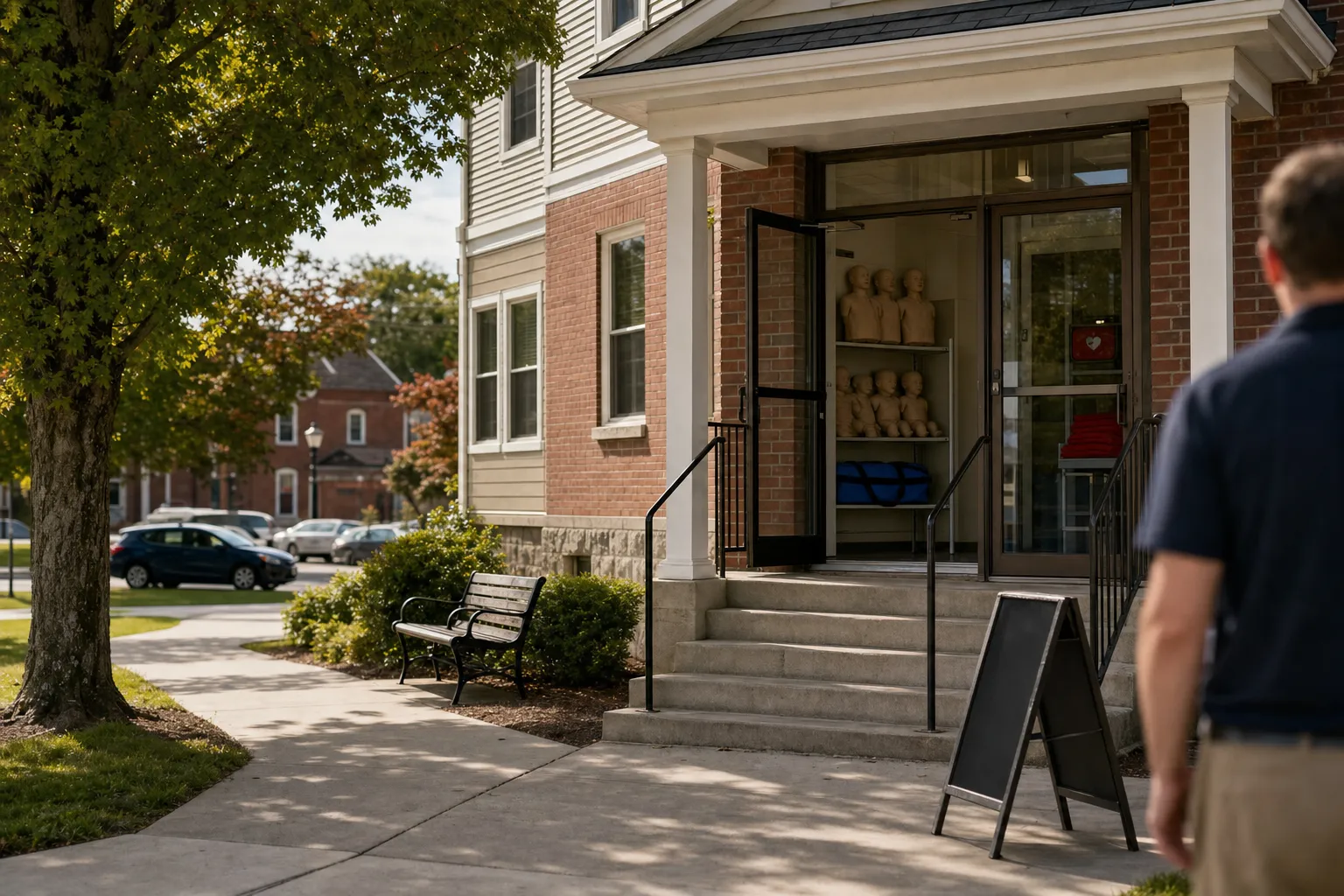
Mass casualty basics change outcomes by giving teams a shared process for triage, communication and resource use. We have found that teaching those basics early in emergency response training improves decision making, reduces confusion under pressure and helps groups match limited resources to the people who need them most.
and short summary
Direct answer: Mass casualty basics improve outcomes by standardizing triage priorities, clarifying roles, and practicing resource management so responders make faster, safer choices during a surge event. In practice those basics are short, repeatable routines for sorting patients, assigning tasks, and escalating care, supported by clear communication and a simple supply plan.
Below we explain what those basics include, why they matter for schools, businesses and community groups around New Freedom Pennsylvania, and how we teach them at Care First Education LLC so local teams leave with usable skills and confidence.
What we mean by mass casualty basics
When we talk about mass casualty basics we mean the foundational knowledge and simple actions that let a team respond to multiple seriously ill or injured people at once. That includes:
- Triage principles and a plain triage method for rapid sorting.
- Role definition so someone leads triage, someone handles scene safety, and someone communicates with outside services.
- Rapid assessment and prioritization, not definitive treatment.
- Resource triage, meaning how to use limited oxygen, bandaging, splints and personnel where they help most.
- Clear handoff language for when professional emergency medical services arrive.
These basics are not a substitute for advanced medical care. They are a shared language that helps lay responders, childcare staff, workplace first aid teams and early responders act together until higher levels of care arrive.
Why mass casualty basics change training outcomes
We emphasize the basics because complex protocols break down under stress. Simple, practiced routines deliver three measurable benefits:
- Faster decisions. Teams that practice triage and role assignment shave critical minutes off initial sorting and movement.
- Better resource use. When everyone knows priorities, limited supplies and people are directed where they have the highest impact.
- Reduced cognitive overload. Clear roles and handoff language free mental bandwidth for critical tasks and quality care.
For organizations in and around New Freedom Pennsylvania, those benefits translate into clearer staff expectations during drills, more effective collaboration with EMS, and training records that support workplace safety planning.
How we teach mass casualty basics
We design emergency response training that layers mass casualty basics into familiar courses like First Aid, CPR and Emergency Response Training. Our approach balances short, repeatable techniques with scenario practice so participants can use the basics without delay.
- Orientation and learning objectives. We start each class by stating what participants will be able to do by the end, for example sort five patients into three priority groups and explain the reasons for those choices.
- Simple triage method. We teach one easy-to-remember triage approach and the key decision points, so learners do not have to toggle between systems under stress.
- Role practice. Learners practice being triage lead, safety officer and treatment manager, so each role’s tasks become familiar.
- Scenario practice. Short, realistic drills simulate school incidents, workplace events or community gatherings. Scenarios focus on time pressure, noise and limited supplies to build confidence.
- Debrief and documentation. After each scenario we debrief decisions and document learning points that teams can use to improve local plans.
Pro tip: Repeating short scenarios with slightly different constraints is more effective than one long exercise. It builds flexible instincts and helps staff retain the triage steps.
Our instructors are PQAS certified, and we align course content with American Red Cross and American Heart Association recommendations when relevant. We recently added American Heart Association Basic Life Support courses to our offerings, so teams can combine BLS skills with mass casualty basics during integrated training days.
Who needs these basics and what to expect in a class
Mass casualty basics are appropriate for a wide range of local audiences. Typical groups we work with include:
- Schools and daycare centers that need fast, practical ways to manage multiple injured children.
- Small businesses and manufacturing sites with shift work and limited onsite medical coverage.
- Community organizations and faith groups that host large events.
- Senior care facilities and assisted living locations where mobility limitations create triage challenges.
In a training session you can expect a mix of short lectures, hands-on practice and multiple scenarios. We keep group sizes small for skills practice and include supply planning using kits curated by our FEMA certified registered nurse, matched to classroom, workplace and home needs.
Deciding what belongs in your mass casualty basics class
Not every group needs the same content. We help clients choose the right emphasis by asking three questions:
- What is your likely incident profile, for example a sporting event, chemical exposure, or multi-vehicle crash?
- Who is on site during operating hours, for example volunteers, medically trained staff, or only lay caregivers?
- What supplies and space are realistically available during a surge?
Answers to those questions guide whether we focus more on pediatric triage, resource distribution, or evacuation and sheltering logistics. We also review regulatory expectations with organizations that have workplace compliance responsibilities.
Training design tradeoffs we discuss with local organizations
When we plan training we walk groups through tradeoffs so leaders make informed choices. The most common tradeoffs are:
- Speed versus information, meaning faster triage sacrifices some diagnostic detail but improves throughput.
- Broad reach versus depth, meaning short awareness sessions reach many people, while full scenario training builds deeper skills in a smaller group.
- Supply standardization versus local improvisation, meaning a curated kit simplifies training, while relying on ad hoc items requires additional practice.
We recommend blending brief awareness for all staff with periodic in depth drills for core responders. That balance preserves operational continuity while building a reliable nucleus of experienced responders.
Checklist for what good looks like
Mass casualty basics readiness checklist
- Defined triage method that all team members know and can describe.
- Role list and simple job cards for triage lead, safety officer and treatment coordinator.
- At least two short scenario drills per year, with documented debriefs.
- Accessible, labeled supplies based on FEMA and Pennsylvania guidance, thumbed into kits by a clinician.
- Clear handoff language for when EMS or external responders arrive.
Watch out: Don’t assume awareness equals competence. Staff who sat through a lecture may still freeze in a real event without practiced roles and scenario repetition.
How supply planning ties into mass casualty basics
Training and supplies go together. Our supply kits, curated by a FEMA certified registered nurse, are organized for classroom, workplace and small organization needs. In training we show how to prioritize items under stress, for example when to use bandages and tourniquets and when to conserve airway adjuncts.
Good supply planning also includes storage, labeling and simple resupply protocols so teams can find what they need during an incident, not search for it. We map common event scenarios to a minimal usable kit so teams avoid overstocking items they will not use.
Local context for New Freedom and Stewartstown participants
Responding in small boroughs and townships around Stewartstown has practical implications. EMS response times, event sizes and available onsite medical experience vary across neighborhoods and venues. We tailor training to that local context, so a daycare in Stewartstown practices different logistics than a volunteer event at a community center in Windsor Township.
For organizations in New Freedom and the surrounding area we recommend integrating mass casualty basics into recurring drills and linking training records to workplace safety plans. See our Stewartstown location page for local scheduling and community references at Stewartstown Pennsylvania.
Related classes and topics we combine with mass casualty basics
Mass casualty basics pair well with other practical topics. If you are planning training consider one of these complementary options:
- Emergency Response Training that combines triage with scene management.
- Scenario Practice modules that repeat short drills under varied constraints.
- Community Preparedness planning for larger events and supply coordination.
We also offer CPR Certification and First Aid Training that can be scheduled alongside mass casualty basics for a full day of practical readiness.
Standards and further reading
For background on mass casualty principles see the overview on Wikipedia for the incident model and common terminology. State level preparedness information is available from the Pennsylvania Emergency Management Agency. For practical guidance on community and disaster preparedness see the American Red Cross emergency preparedness resources. These sources provide useful context and planning checklists that align with the classroom practice we run.
External resources:
How organizations measure training impact
We recommend three practical metrics so leaders can judge whether basics training is working:
- Time to initial triage completion during drills, recorded and trended across sessions.
- Role clarity, measured by short surveys after scenarios asking who led triage and who managed communication.
- Supply accessibility checks, meaning a quarterly inventory of the kits used in drills.
These measures are easy to collect and give a clear signal about readiness improvements over time.
Key takeaway
Mass casualty basics are short, teachable routines that improve speed, coordination and resource use during surge events. Combined with scenario practice and simple supply planning, they give local teams in New Freedom and Stewartstown the confidence to act until professional EMS takes over.
Frequently asked questions
What exactly is triage in a mass casualty context?
Triage is a rapid sorting process used when the number of patients exceeds immediate resources. It prioritizes who needs immediate interventions, who needs later treatment, and who can wait or be moved. We train a straightforward triage method so participants can sort quickly and consistently.
Who should attend mass casualty basics training?
Anyone who is likely to be present when multiple people need help. That includes school staff, childcare providers, workplace safety teams, community event volunteers, and senior care staff. We tailor exercises to each audience.
How long does mass casualty basics training take?
We typically deliver the core basics in a two to four hour block when combined with hands on scenario practice. For teams that want deeper scenario drills we offer half and full day options integrated with CPR and first aid modules.
Do we need special equipment for drills?
No special equipment is required for basic triage practice. We use simple props and labeled supplies that match the kits we recommend. For integrated BLS practice we use manikins and BLS equipment in accordance with American Heart Association guidance.
How do we coordinate with local EMS?
We teach clear handoff language and documentation so your team can communicate patient priorities and interventions to responding EMS. When appropriate we can tailor a drill to mirror local EMS expectations and timelines for smoother collaboration.
Learn more and check our local presence
See our Emergency Response Training page to review course outlines and how mass casualty basics fit into a full training day.