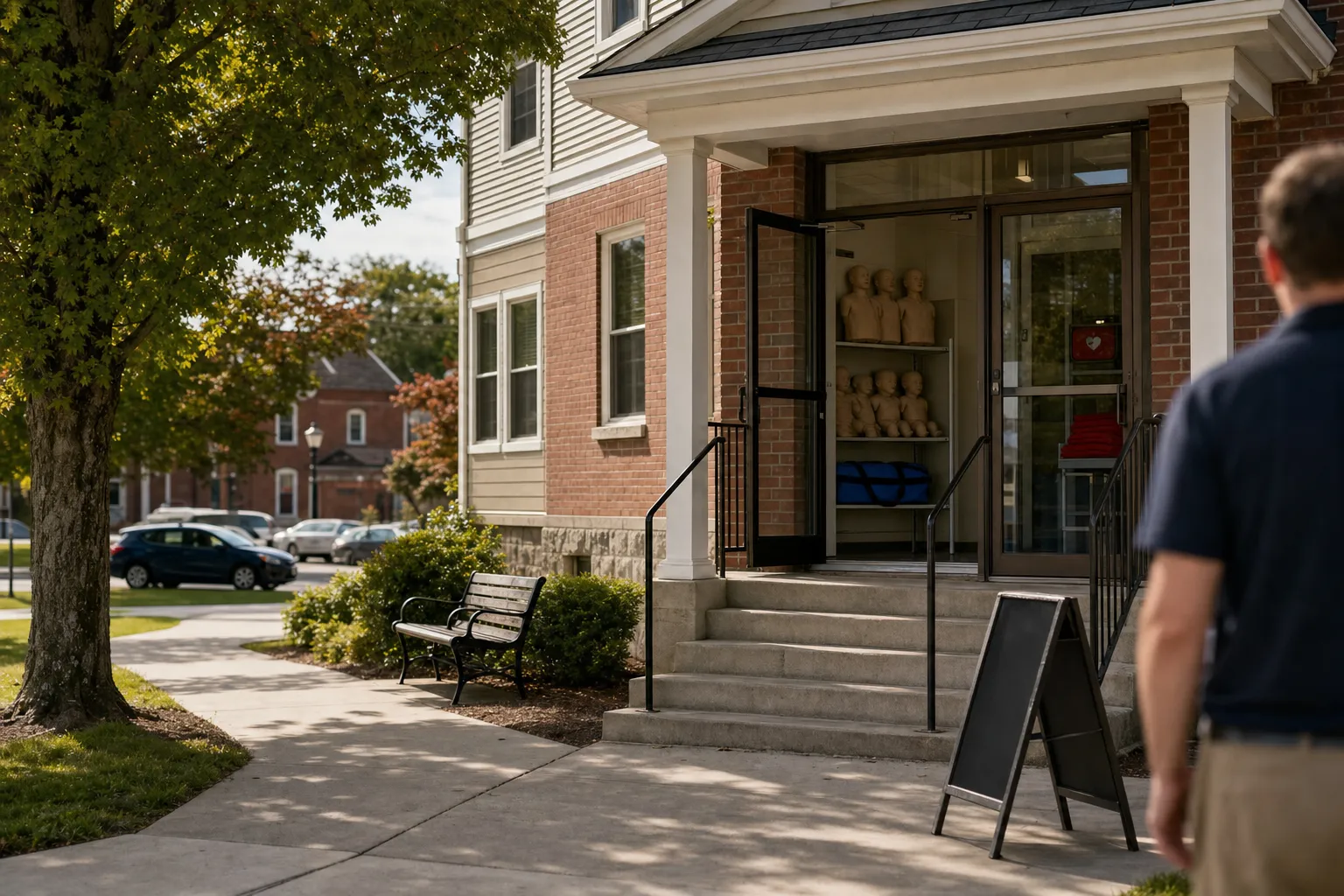
CPR training and Mass Casualty Basics are common in East Hopewell because local schools, childcare centers, volunteer responders and small businesses need practical readiness for incidents that involve multiple patients. We teach Mass Casualty Basics alongside our CPR courses so community groups and workplaces have the skills, supplies and confidence to stabilize people until higher level care arrives.
Why communities around East Hopewell prioritize Mass Casualty Basics
People in this part of York County plan for events that can overwhelm a single responder, such as multi patient crashes, sudden illnesses at school, or incidents at community gatherings. Organizations and households value training that covers simple triage, coordinated care, and efficient use of limited supplies so more lives have a chance before ambulance crews arrive.
We see consistent demand from several local audiences: schools and daycare centers that must protect children, workplace safety teams in small manufacturers and farms, babysitters and parents who want practical skills, and volunteer emergency responders who operate in rural settings. That mix of users explains why courses that combine CPR, first aid and mass casualty basics are scheduled regularly.
Who benefits most from Mass Casualty Basics
The training is useful for anyone who may be first on scene when more than one person is injured. Typical groups in and near East Hopewell include:
- School staff and coaches who manage multiple students during a single emergency
- Daycare providers and babysitters responsible for groups of young children
- Workplace safety teams in agriculture, light manufacturing and construction
- Senior care staff and volunteers working with older adults
- Healthcare students, early responders and community volunteers who need coordinated team skills
We prepare courses to match the audience, because priorities and likely scenarios differ between a daycare classroom and a factory floor.
What Mass Casualty Basics covers in our classes
Mass Casualty Basics is not a single skill. It is a set of practical choices you make when resources are limited and several people need help. In our classes we focus on:
- Rapid assessment and simple triage concepts so responders can identify who needs immediate intervention
- Hands on CPR and rescue breathing skills for patients who are not breathing or are in cardiac arrest
- Basic bleeding control including gauze, pressure and when to prioritize rapid transport
- Safe use of an AED trainer as part of team resuscitation
- Communication and role assignment so small teams act without confusion
- Supply management and how to adapt basic first aid kits to group incidents
All courses emphasize situational awareness and scene safety, and we connect these practical skills to local emergency services expectations so participants understand how their actions fit into the larger response.
How we teach Mass Casualty Basics and CPR in East Hopewell
We deliver instructor led courses that combine demonstration, scenario practice and formative feedback. Our educators are certified through PQAS and we have added American Heart Association Basic Life Support material to our curriculum. That means participants learn the latest protocols and also practice them until actions become more automatic.
Class components you should expect
- Short, focused demonstrations for core skills
- Scenario practice where small teams manage multiple simulated patients
- Use of training manikins and AED trainers so learners get realistic timing and feedback
- Competency checks and instructor coaching to reinforce safe technique
How we adapt training for different groups
We tailor scenarios and emphasis based on the audience. For daycare staff we prioritize pediatric assessment and safe movement of small children. For workplace teams we focus on triage, bleeding control and safe transfer to awaiting EMS. For nursing and healthcare trainees we include team resuscitation and role clarity under pressure.
Checklist for group organizers planning Mass Casualty Basics
- Decide the audience and likely scenarios, for example school events or workplace incidents
- Reserve a safe training space with room for multiple manikins and group movement
- Tell participants to wear comfortable clothing that allows movement
- Identify learner goals upfront, such as basic triage awareness or team resuscitation practice
- Plan for at least one AED trainer and multiple manikins for small group drills
What we recommend about supplies and preparedness
Training pairs best with a practical review of current supplies. Our course materials and first aid kit recommendations are curated by a FEMA certified registered nurse and aligned with Pennsylvania and FEMA emergency preparedness guidance. A focused kit for group incidents usually includes dressings, pressure bandages, gloves, basic airway adjuncts, and an AED if the site supports one.
For more on community level planning and how to match training to local risks, read our Community Preparedness topic.
Pro tip: When you sign up a team, let us know the setting and typical weekend or weekday activities. We adapt scenarios so training time focuses on what is most likely to happen at your site.
Watch out: Mass casualty basics teach triage and stabilization, not definitive care. Actions taken in the field are about buying time and preventing harm until professional emergency services take over.
How Mass Casualty Basics connects to formal certification and other courses
Mass Casualty Basics complements certification courses like CPR Certification and First Aid Training. It does not replace required credentialing when an employer or regulator requires formal certification. If you need American Heart Association Basic Life Support or Red Cross First Aid certification, we offer those pathways alongside scenario based mass casualty practice.
Learn about our CPR Training offerings for groups and individuals.
Local context and partnerships in Hopewell Township and Stewartstown area
Care First Education LLC serves Stewartstown and surrounding communities, including Hopewell Township. We coordinate scenarios that reflect road types, school sizes and common local activities so training feels relevant. When local volunteer responders or school nurses ask for joint exercises, we structure content to match local response patterns and communication channels.
To read about training options in Hopewell Township specifically, see our location information for Hopewell Township.
Resources and further reading
For national guidance that informs our course design, refer to materials from authoritative organizations. FEMA publishes operational tools and planning considerations for mass casualty incidents, and the American Heart Association provides standards for basic life support and team resuscitation. We use those resources to keep scenarios current and aligned with accepted practice.
Recommended sources:
Key takeaway
Mass Casualty Basics matters in East Hopewell because local schools, workplaces, caregivers and volunteer responders all share the need to coordinate care for multiple patients. Training that combines CPR, basic triage and scenario practice helps small teams act safely and efficiently while waiting for professional emergency services.
Frequently asked questions
What is Mass Casualty Basics and how does it differ from standard first aid?
Mass Casualty Basics focuses on priorities and coordination when multiple people need care at the same time. Standard first aid treats one patient at a time. Our classes teach simple triage, role assignment and supply use so a small team can stabilize several people until EMS arrives.
Who should attend a Mass Casualty Basics course?
Anyone responsible for groups of people benefits, including school staff, childcare providers, workplace safety teams, volunteers and healthcare students. We scale scenarios to the audience so the practice is relevant and actionable.
Do I need to be certified to take Mass Casualty Basics?
No. Mass Casualty Basics is an educational course meant to increase practical readiness. If you need formal certification for CPR or first aid because of work requirements, we offer those certification courses separately and can combine them with scenario practice.
How long does a typical class last?
Class length depends on goals. Short awareness sessions can run a few hours. Full day courses allow for repeated scenario practice and skills checks. We will discuss the appropriate length based on your objectives during scheduling.
Are supplies included or do we need to provide equipment?
We bring training manikins and AED trainers for class. For live site exercises you should provide a safe space and, if possible, basic first aid kit items. Our courses include a review of recommended supplies, curated by a FEMA certified registered nurse.
Learn more and check local details
Read participant reviews and get directions on our Google Business Profile, and learn more about related topics and services on our site.