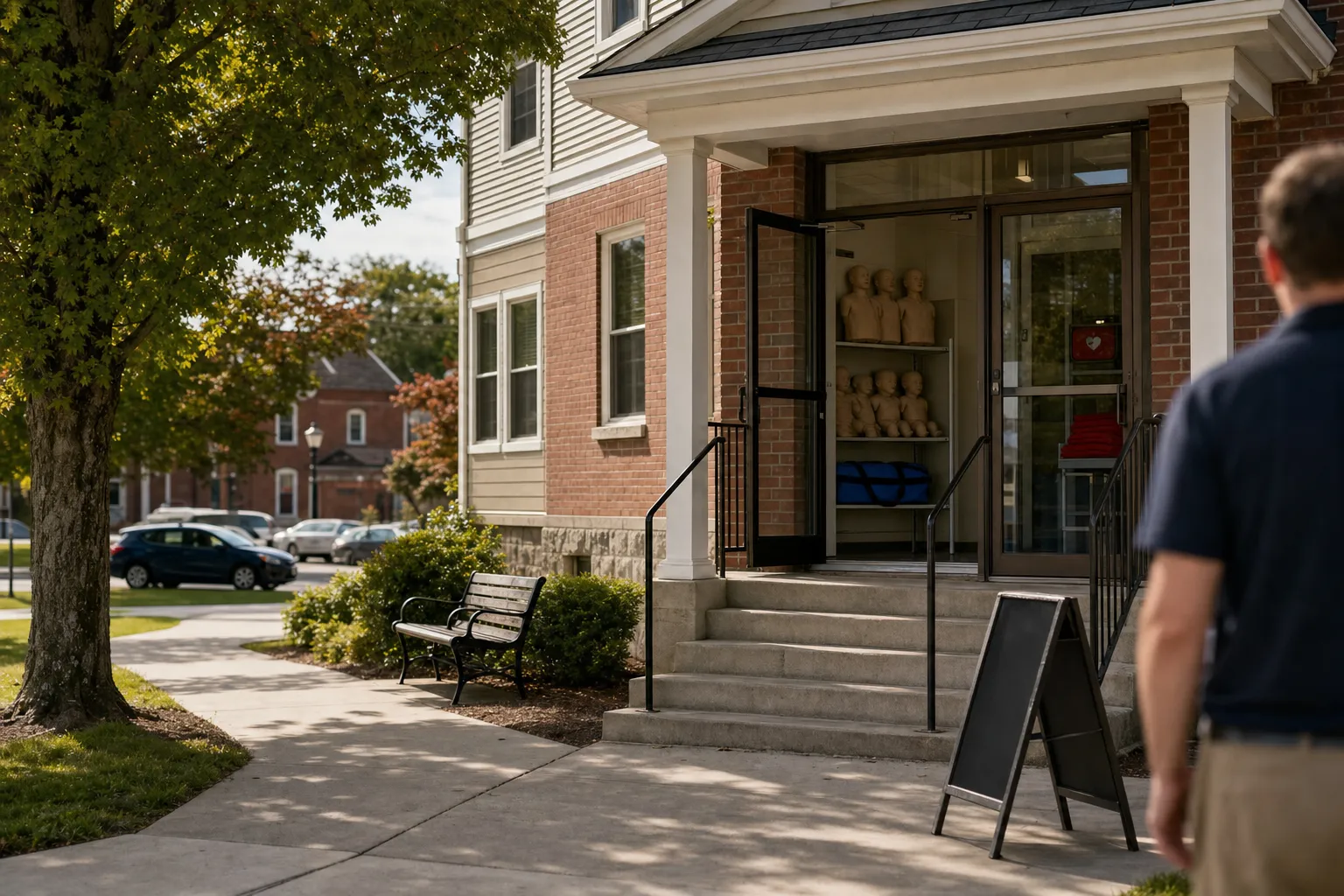
CPR training and CPR certification teach the same core lifesaving skills and follow the same clinical standards, but they serve different purposes: training builds hands on ability and situational confidence, while certification documents that a learner met a defined performance standard. In short, training prepares people to do the work, and certification verifies they can do it reliably.
How training and certification overlap
Both CPR training and CPR certification share several essential elements that matter for schools and childcare programs.
- Common curriculum and standards. Courses follow nationally recognized guidance, such as the American Heart Association recommendations for adult, child and infant CPR, and for use of an automated external defibrillator.
- Skills that matter. Chest compressions, rescue breaths when indicated, team resuscitation basics, and safe use of an AED appear in both learning and testing.
- Performance assessment. Instructors assess hand placement, compression depth and rate, and safe airway management in both classroom practice and formal testing.
- Scenario practice. Realistic scenarios that reflect school and childcare emergencies are used to build decision making and breathing space under pressure.
- Documentation and records. Certification usually produces a wallet card or electronic certificate that organizations keep for compliance and staffing records.
Key differences in purpose and format
Knowing the difference helps you choose what your program needs.
- Training. Focuses on building and refining skills. Class time is spent on demonstration, guided practice, and scenario drills that mirror school and childcare emergencies.
- Certification. Focuses on verifying competence against a published standard. Certification testing is typically time limited and uses objective observations or skills stations.
- Recency and renewal. Certification has an expiration, so refreshers or repeat certification are needed to keep records current.
- Audience. Training can be adapted for groups with different starting skills, such as new babysitters, daycare staff, or school nurses. Certification requires meeting the same standard for everyone tested.
Why both matter for School And Childcare Safety in Shrewsbury
For schools and childcare centers, having staff who have both practiced skills and hold current certification reduces risk and improves response time in an emergency. Practical readiness means more than a certificate on file. We recommend programs expect both focused training for staff and timely certification renewals.
Regulatory and accreditation expectations vary by district and organization, but many schools and licensed childcare providers list current CPR certification and documented hands on training as part of their safety policies. For guidance on applying these practices in educational settings see our topic page on School and Childcare Safety.
National organizations track cardiac events and emergency response outcomes. For background on the clinical rationale for prompt bystander CPR and early defibrillation see the American Heart Association guidance on CPR and emergency cardiovascular care and the Centers for Disease Control and Prevention overview of cardiac conditions.
How we structure courses at Care First Education LLC
We design courses to meet both goals: build practical skill and document competence. Our educators are certified through the PQAS, and we offer American Heart Association Basic Life Support courses in addition to our American Red Cross offerings.
- Brief review of core concepts followed by instructor demonstration.
- Extended guided practice with manikins and AED trainers to build compression quality and confidence.
- Scenario practice targeted to school and childcare situations, such as choking or pediatric respiratory distress.
- Objective skills assessment for certification courses so your team receives verifiable documentation when they meet the standard.
We also curate first aid and preparedness supplies with input from a FEMA certified registered nurse to align kits with Pennsylvania and FEMA guidance for classrooms and community spaces.
Learn more about our training formats on the CPR Training and CPR Certification pages, and about instructor qualifications on our Instructor Qualifications topic page.
Pro tip: For childcare settings, practice scenarios that involve younger children and common classroom layouts. Pediatric compression technique and airway management differ from adult care, and scenario drills help staff shift quickly between them.
Checklist for schools and childcare providers
Before you schedule training or certification
- Review your staff roles and identify who needs hands on training and who needs formal certification.
- Confirm expiration dates for existing certifications and plan renewals so there is no gap in coverage.
- Inventory AEDs and first aid kits, and note maintenance or battery replacement needs.
- Decide whether to prioritize pediatric skill practice, team resuscitation drills, or both for mixed age settings.
Common questions schools and childcare centers ask
We often hear similar questions from administrators and directors. The answers help clarify what each option delivers.
- Can staff get training without certification? Yes, you can schedule skills focused training for large groups. If your licensing requires certification for certain roles, plan a separate certification session.
- How often should staff refresh skills? Practical refreshers are valuable every six to twelve months. Certification renewal cycles vary by program, so follow the issuing organization guidelines.
- Do infant and child techniques require separate certification? Certification courses typically assess pediatric techniques as part of the curriculum when the course version covers children and infants.
Watch out: A certificate alone does not mean staff are confident or current with the physical skills. Combine certification with scenario based training that mirrors your facility layout and typical incidents.
How to choose between a CPR class, training, and certification
Use this simple decision guide.
- Assess requirements. Check your licensing or employer rules for whether staff must hold certification.
- Evaluate skills. If staff lack recent hands on practice, prioritize a training session that emphasizes compressions, ventilations and AED use.
- Schedule certification. When records are required, schedule certification after staff complete skills practice so the test measures current ability.
Key takeaway
CPR training and CPR certification use the same clinical standards and skills. Training builds ability and confidence, and certification documents that a person met a measurable standard. For school and childcare safety in the Shrewsbury area, use both approaches together so staff are skilled, confident and documented.
Frequently asked questions
Do training certificates count for staffing records in schools and daycare centers?
Training attendance proves participation, but many licensing bodies ask for a formal certification that verifies competency. Check your local licensing requirements, and keep both attendance and certification records as part of your staff file.
How long does a typical certification last?
Certification expiration varies by issuing organization. Many common programs require renewal every one to two years. Always verify the specific course you choose and plan renewals so coverage remains continuous.
Can we do group training at our facility in Shrewsbury?
Yes. We provide sessions for teams in Stewartstown and surrounding communities. Group training can be tailored to classroom layouts and common childcare scenarios so practice feels relevant.
What is the role of AED training in courses for schools?
AED use is a critical component of both training and certification. Courses cover safe pad placement, when to apply an AED, and how to coordinate compressions with defibrillation. Regular AED checks and battery maintenance are recommended as part of your preparedness plan.
Which organizations set the standards used in courses?
Course content commonly aligns with national guidance from organizations such as the American Heart Association. Local regulatory authorities and licensing bodies may also set expectations for training and documentation.
Learn more and check our local listings
Read reviews and get directions from our Google Business Profile to confirm location and community feedback. For details about related services and topics see our CPR Class page, our main location page, and the School and Childcare Safety topic for implementation tips in educational settings.
Care First Education LLC serves Stewartstown and nearby communities with instructor led certification and hands on training.