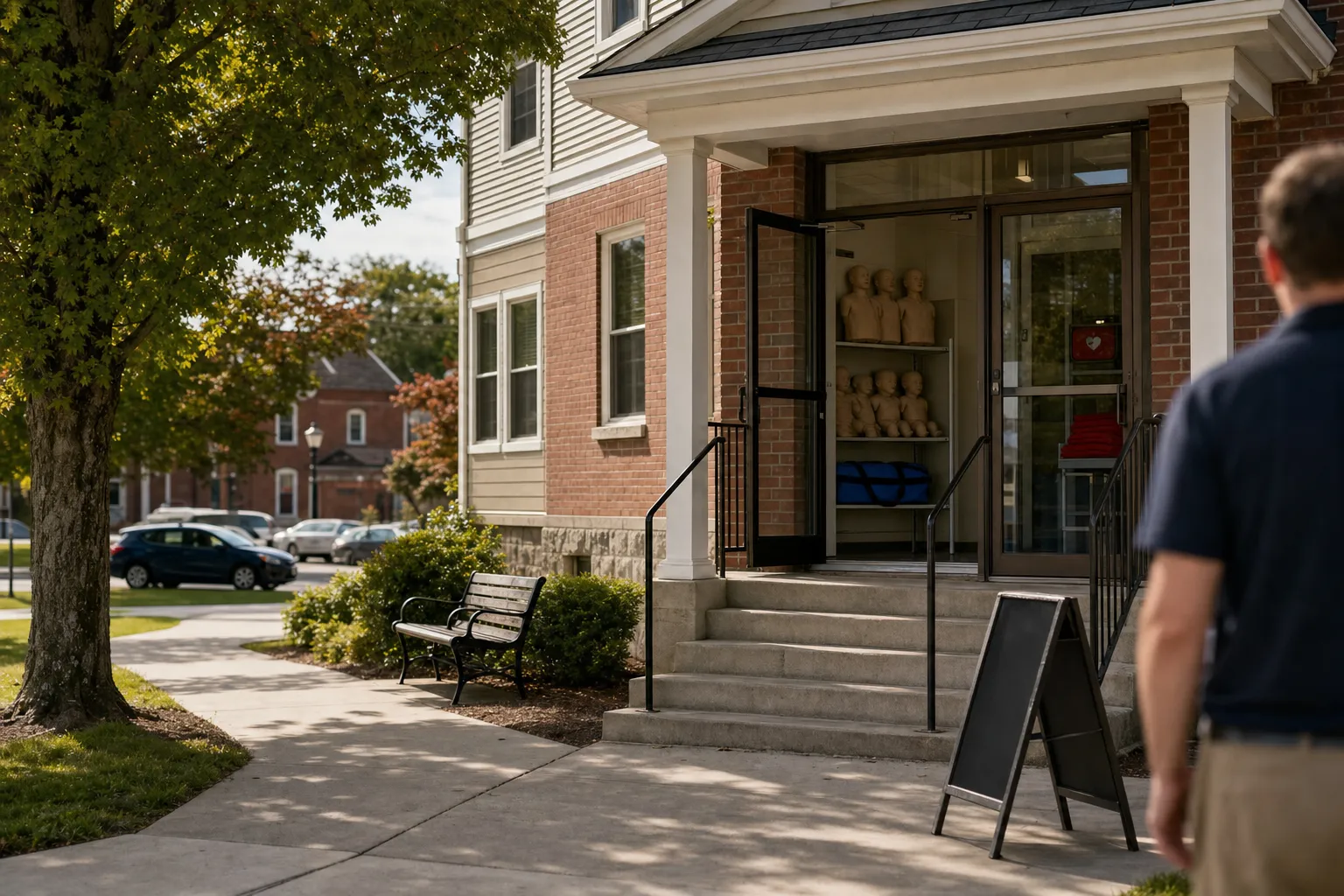
A strong CPR class plan aligns the specific learning goals for your group, combines instructor led demonstration with repeated hands on practice and scenario work, and includes assessment, pediatric and AED content plus a refresher schedule so skills stay usable when they matter most. That combination is what we emphasize for schools, childcare programs and community groups around Draco and Stewartstown.
What a CPR class plan is
A CPR class plan is the written outline instructors and organizers use to turn a learning objective into a class that actually builds usable skills. It lists who will attend, what skills and knowledge they must have by the end, which certifications or standards apply, the timeline for hands on practice, what equipment is required, and how learners will be assessed and certified.
Plans vary by audience. A babysitter class places more emphasis on rescue breaths and infant positioning. A school staff plan adds team resuscitation, communication with emergency services and student triage. A workplace plan focuses on adult CPR, AED use and legal reporting requirements.
Why a strong plan matters locally
In small towns near Stewartstown and Draco, a single trained responder can stabilize a situation long enough for EMS to arrive. Local schools, daycare centers and senior programs face different risks than a grocery store or office. A plan that reflects those local differences improves outcomes and reduces confusion when seconds count.
We connect course content to regional guidance from state and federal resources so the plan fits local expectations and reporting. For background on the clinical steps of CPR, see the general overview on Wikipedia. For preparedness and supply guidance we use FEMA recommendations.
Key elements of a strong CPR class plan
- Clear audience definitions. State whether the class is for lay caregivers, school staff, healthcare providers, or mixed groups. That drives pace and content.
- Learning objectives that are measurable. Examples: place a child in a recovery position, perform 2 minutes of effective adult chest compressions, or operate a specific AED model.
- Standards and accreditation. Reference the certification pathway you will use and include required skills checks and paperwork.
- Hands on practice time. Allocate repeated short rotations so each learner practices compressions, ventilations and AED use under instructor feedback.
- Scenario practice and team roles. Use short scenarios that match the setting, such as a classroom collapse or playground emergency.
- Equipment and supplies list. Include manikins, AED trainer units, masks, and a basic first aid kit aligned with FEMA guidance.
- Assessment and recertification plan. Define how skills are validated, and schedule refreshers or skills checks.
- Accessibility and accommodations. Note how you will adapt content for language, mobility or cognitive needs.
- Post class resources. Provide quick reference cards, a checklist for classroom preparedness, and guidance on storing and maintaining equipment.
How we structure CPR classes at Care First Education
We start every class by matching objectives to the audience and local setting. Instructors certified through the PQAS lead instructor demonstration, supervised hands on rotations, and scenario practice that reflects likely events in schools and childcare settings.
Typical structure for a two to four hour class we run for school and childcare staff:
- Orientation and expectations. Describe the certification pathway, learning goals and assessment methods.
- Demonstration and guided practice. Instructor models technique, then learners practice with immediate feedback.
- Scenario practice. Short, role based exercises that include communication, team resuscitation and transfer to EMS.
- Skills check and documentation. Performance is observed and documented against certification standards.
- Debrief and next steps. Discuss refreshers, equipment care and how to adapt training into on site drills.
Pro tip: Schedule short 15 minute skills refreshers three to six months after initial certification to keep compression depth and rate within target ranges.
We pair classes with our clinician reviewed supply kits so classrooms and childcare centers leave with equipment and a maintenance checklist that follows FEMA and Pennsylvania guidance for emergency preparedness.
Explore our CPR Class offering for class level details and accreditation pathways on our CPR Class page and learn how broader preparedness fits into School And Childcare Safety.
Checklist for planning a CPR class for your school or childcare
Before the session
- Identify the primary audience and maximum class size.
- Confirm the certification standard and required instructor to learner ratio.
- Reserve a space that allows movement and separate practice stations.
- Gather manikins, AED trainers and masks, plus a basic first aid kit aligned with FEMA recommendations.
- Distribute pre class materials and any required forms.
Day of the session
- Start with objectives and a skills demonstration.
- Run at least two full hands on rotations per learner.
- Include at least one scenario tailored to your site, such as a classroom or playground incident.
- Document skills checks and issue completion records as required by the certification pathway.
Choosing the right delivery model
| Delivery model | Best for | What to expect |
|---|---|---|
| Traditional in person class | New learners and mixed ability groups | Full hands on time, live feedback, on site scenario practice |
| Blended model with online knowledge and in person skills | Groups with scheduling constraints | Shorter in person sessions focused on skills checks and scenarios |
| On site group plan | Schools and childcare centers wanting team drills | Customized scenarios, role specific training and facility based preparedness |
Each model has trade offs between convenience and practice time. For schools and childcare settings we recommend models that preserve generous hands on and scenario time.
Key takeaway
A strong CPR class plan matches content to the learners and setting, emphasizes repeated hands on practice and scenario work, uses an accredited pathway for assessment, and builds a straightforward refresher plan so skills remain effective when an emergency happens.
Frequently asked questions
How long should a CPR class plan be for school staff?
For school staff we typically plan two to four hours depending on whether pediatric modules, team resuscitation and AED practice are included. Longer sessions allow more scenario practice and role based drills.
Should CPR classes for childcare include infant modules?
Yes, childcare plans should include infant CPR and choking rescue. The ratios, compression depth and positioning differ from adult care and require dedicated hands on practice.
What materials do we need to run an effective on site session?
At minimum: adult and infant manikins, AED trainer units, pocket masks, gloves, and a basic first aid kit. We recommend following FEMA guidance when assembling preparedness supplies.
How often should staff refresh CPR skills?
Skills degrade over time. We recommend short skills refreshers every three to six months and formal recertification according to the certification body you choose.
Can we combine CPR with other emergency response training?
Yes. Combining CPR with bleeding control, anaphylaxis response or team resuscitation creates more realistic scenarios for schools and childcare centers. See our Emergency Response Training page for coordinated programs.
Where to learn more
Read our School And Childcare Safety topic for local guidance and related resources, review specific class details on our CPR Class page, or see information about our Stewartstown location for in area availability.
School And Childcare Safety CPR Class Stewartstown, Pennsylvania location