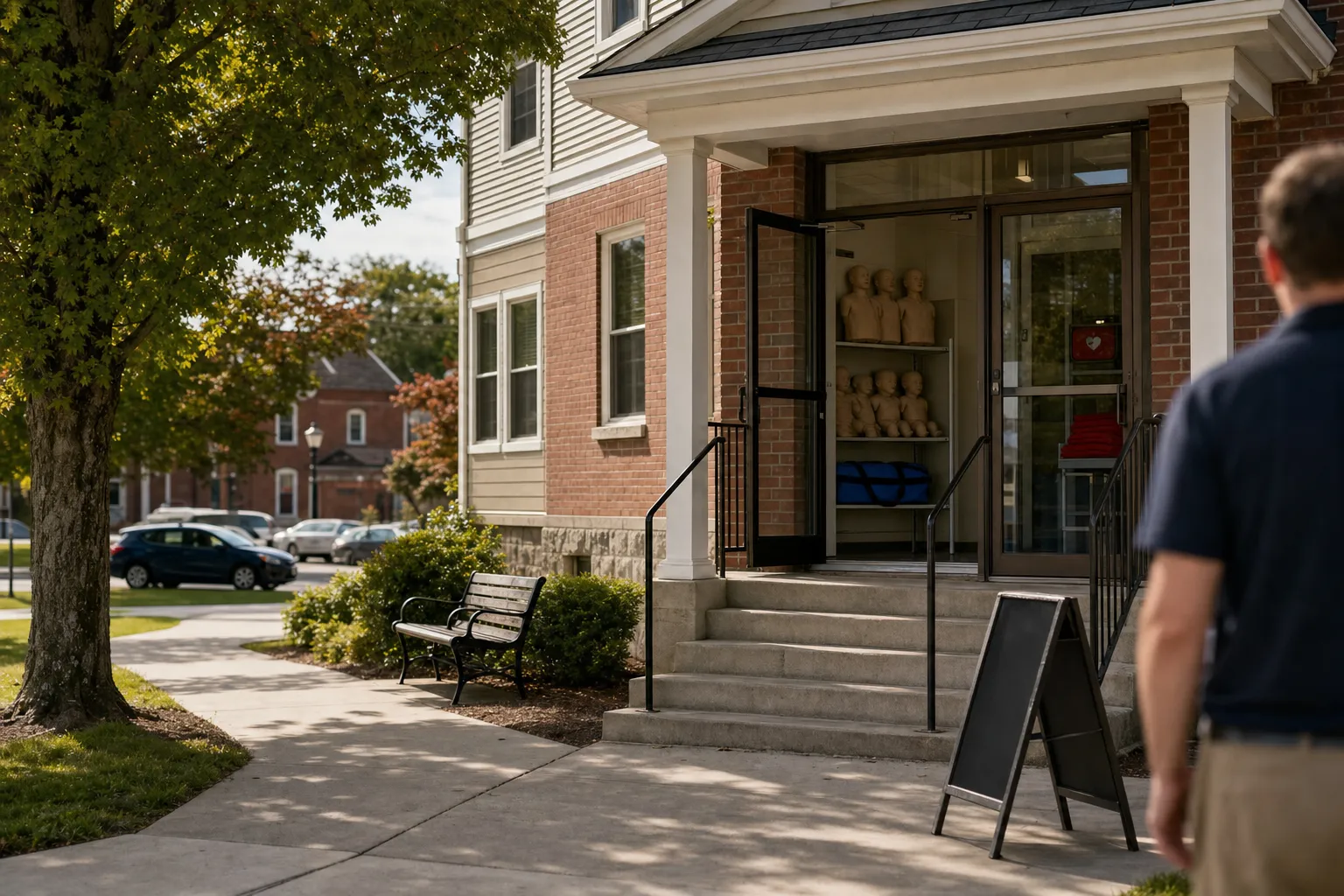
Before you decide on a certification pathway, know which credential you need, which organization issues it, how skills are verified, and how recertification works. We help people and organizations in Shrewsbury Pennsylvania choose the right route for CPR certification so they meet employer, school or regulatory expectations and leave class ready to act.
What certification pathways are
Certification pathways describe the steps you take to earn and keep a credential. For CPR that includes selecting a certifying organization, completing required coursework and skills checks, and following a recertification schedule. Pathways can be classroom only, blended with online learning, employer sponsored, or part of a broader workplace compliance program.
We teach pathways that combine instructor led sessions and hands on skills practice, aligned with the requirements you will see from schools, childcare centers, and many employers.
Why certification pathways matter in Shrewsbury Pennsylvania
Local employers, school districts, daycare centers and senior care providers often require specific credentials. Choosing the wrong pathway can mean repeating a course or failing to meet an employer or regulatory requirement. In our area, practical readiness and documentable certification are central to meeting workplace policies and health care training expectations.
For context, healthcare and related support occupations remain a significant portion of local workforce demand, which affects training expectations for staff and volunteers. The U.S. Bureau of Labor Statistics reports continuing growth in healthcare occupations, which drives demand for reliable, auditable certification and regular recertification.
We align courses with common local needs for childcare staff, schools, small businesses and community groups so a certificate from class matches what organizations expect.
Key concepts to understand
- Certifying organization. Common options include the American Heart Association and the American Red Cross. Each defines course content and card validity.
- Credential type. Basic Life Support for healthcare providers, layperson CPR, or pediatric CPR certificates serve different uses and audiences.
- Course format. Instructor led, blended learning, and onsite group training all build the same skills but differ in timing and how hands on practice is scheduled.
- Skills verification. Hands on assessment of compressions, ventilations and AED use is required for a valid certificate.
- Recertification interval. Most CPR credentials require renewal about every two years. Confirm the interval for your chosen pathway.
- Employer or regulatory requirements. Employers, school districts and childcare licensing may require a specific provider, such as the American Heart Association. Always check which credentials are accepted before you enroll.
- Documentation. A physical or digital card and a roster record from the instructor are the usual proof employers request.
- Supplies and preparedness. Training and readiness go together, so recommended first aid and preparedness kits should match local guidance from FEMA and Pennsylvania resources.
How common certification pathways compare
| Pathway | Typical audience and use | Hands on skills required | Typical recertification interval |
|---|---|---|---|
| American Heart Association Basic Life Support | Healthcare professionals, nursing students, workplace healthcare teams | Yes, instructor verified compressions, ventilations and team resuscitation | About two years |
| American Red Cross CPR and AED | Lay rescuers, childcare staff, community responders | Yes, skills test with instructor observation | About two years |
| Workplace blended or employer specific program | Employees needing company mandated compliance | Usually a skills session after online content | Varies, often aligned with national provider intervals |
We teach American Red Cross and American Heart Association aligned courses so your certificate matches common employer expectations.
How we evaluate which pathway fits you
Decision checklist
- Identify the credential your employer, school or licensing body requires.
- Confirm which certifying bodies are accepted for that credential.
- Decide whether you need pediatric, workplace, or healthcare provider level training.
- Check recertification timing so you can plan continuity of coverage.
- Factor in course format, travel, and scheduling for hands on practice.
- Include any documentation or rostering your organization requires for compliance.
We work with organizers to review these items before class so you enroll in the right pathway.
Common questions people ask before choosing a pathway
Do I need American Heart Association or American Red Cross certification?
Check the specific requirement from your employer, school or licensing authority. Some accept either, others specify a single provider. We offer training aligned with both organizations and can explain the practical differences in course focus and scenarios.
How often do I need to renew my CPR certification?
Most core CPR credentials require renewal about every two years. Employers or regulatory bodies may set shorter intervals. Keep your certificate and verify employer policies to avoid lapses.
Can I do the knowledge portion online and only come for hands on practice?
Yes, blended learning models let you complete cognitive content online and attend a focused hands on skills session to meet certification requirements. That option is common for busy professionals and workplace groups.
Who verifies the hands on skills?
An instructor certified by the credentialing organization, such as a PQAS certified educator for many courses, conducts the skills check and records successful completion.
What to expect during a certification pathway with us
We start with a short intake to confirm your intended credential and any employer or school requirements. Courses include clearly scheduled skills practice, scenario practice and a skills check. Our instructors are PQAS certified and emphasize practical confidence under pressure rather than rote steps.
- Pre class check. We confirm which certificate you need and which documentation your organization accepts.
- Knowledge component. Either instructor led group learning or an approved online module to cover guidelines and rationale.
- Skills practice. Hands on time with mannequins and AED trainers, with instructor feedback.
- Skills verification. Instructor recorded performance meeting criteria for certificate issuance.
- Certificate and records. You leave with a valid credential and an instructor roster record suitable for employers.
We also review basic preparedness recommendations and supply kits aligned with FEMA guidance so you can pair training with practical tools.
Related services and where they fit
Choosing the right pathway often means combining services. For example, CPR Certification may be taken alongside First Aid Training or Emergency Response Training when a workplace needs comprehensive readiness. Learn more about our CPR Certification offerings and how they integrate with other classroom options.
CPR Certification is the primary route for people who need a formal credential. For paired skills, consider our First Aid Training and Emergency Response Training.
Related locations we serve
We are based in Stewartstown and serve nearby communities, including Shrewsbury Station. If your organization is in Shrewsbury or nearby townships, we can align schedules and rosters to meet local needs and compliance expectations.
For information specific to the Shrewsbury area, see our Shrewsbury Station location page.
Helpful resources and authoritative references
When choosing a pathway, consult the certifying organization for course specifics. The American Heart Association explains Basic Life Support requirements and course structure on their provider information pages. For guidance on preparing supply kits and community readiness, FEMA offers practical checklists and recommendations.
For workforce context and to understand how healthcare employment trends affect training demand, see data from the U.S. Bureau of Labor Statistics.
We recommend consulting these sources when you need official policy or statistical reference:
Our courses are taught by PQAS certified educators, and we include scenario practice and hands on skill checks to meet common employer and school requirements in the area.
Key takeaway
Choose a certification pathway by first confirming the credential your employer or licensing body requires, then select a provider and course format that includes instructor verified hands on skills. We help organizations and individuals in Shrewsbury Pennsylvania match course choice to real requirements so certification is valid and useful.
Frequently asked questions
How do I know which CPR credential I need?
Check with your employer, licensing body or school. Many healthcare roles need American Heart Association Basic Life Support while childcare and community programs often accept American Red Cross CPR. If you are unsure, we review requirements during enrollment.
Can I meet my certification requirement with blended learning?
Yes. Blended learning is widely accepted when the online knowledge portion is paired with an instructor led skills session that verifies hands on competency.
How long is a CPR certificate valid?
Most core CPR certificates are valid for about two years. Confirm the exact interval for the credential you select and your employer requirements to avoid lapses.
What documentation will I receive after completing a course?
You will receive a certificate or card from the certifying organization and an instructor roster record showing completion. Employers typically accept these documents for compliance records.
Do you offer pediatric or workplace specific classes?
Yes, we offer pediatric CPR, babysitting training and workplace oriented courses. We can advise which pathway fits childcare staff, school employees and workplace safety teams.
Find local certification information and reviews
Check our Google Business Profile to read recent reviews, see photos and get directions. To learn more about certification options and related topics, explore our pages on certification pathways, CPR Certification and local location information.