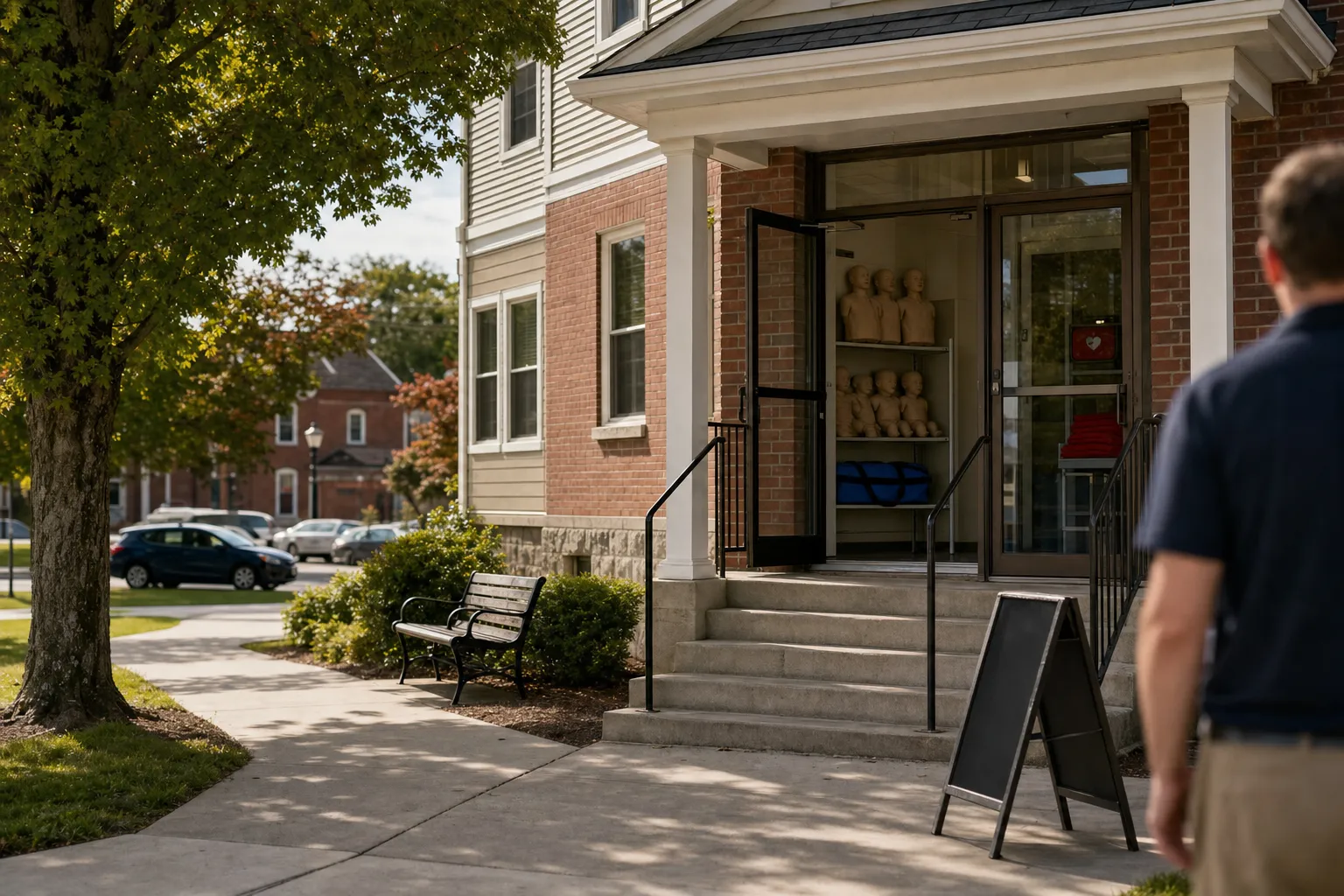
A first aid kit should be sized and stocked for the location it will serve, inspected on a regular schedule, and replenished after every use. We assemble clinician reviewed kits, align them with Pennsylvania and FEMA guidance, and train local groups in Sharon, Pennsylvania on how to keep kits ready without turning the work over to untrained staff.
Why a purpose matched kit matters
Not every kit is the same. A home kit, a classroom kit, a small business kit and an athletic field kit have different priorities. Kits that match the likely incidents in a setting reduce delays, cut mistakes and make it easier for trained responders to work from a common layout.
We teach and supply kits that reflect that idea. Our supplies are curated by a FEMA certified registered nurse and organized so staff and caregivers can find essential items quickly during an emergency.
What we typically include and why
Contents depend on the setting, but every practical kit includes basic wound care, tools for assessment, and disposable barrier items. For organizations that face higher risk, we recommend adding trauma control items and specific supplies for allergic reaction or opioid overdose when appropriate.
Common kit categories and items
- Basic wound care: adhesive bandages, sterile gauze pads, roller gauze, adhesive tape
- Cleaning and protection: antiseptic wipes, antibiotic ointment packets, disposable gloves, CPR barrier device
- Control and stabilization: triangular bandage, instant cold pack, elastic bandage
- Tools and assessment: blunt scissors, tweezers, thermometer, emergency blanket
- Trauma and special items: tourniquet, hemostatic dressing, naloxone pack for opioid overdose when authorized
- Documentation and labels: incident log, pen, medical information forms for students or clients
How often kits should be inspected and replenished
- Monthly visual check. Confirm the kit is sealed, clean, and in its assigned location. Verify that single use items are present.
- Expiration review every six months. Look for expiry dates on medications and sterile items and replace them before they lapse.
- After any use. Restock immediately after a call so the kit stays ready for the next incident.
- Annual full inventory and documentation. Run a complete contents check and update the inventory list. Note any changes to local requirements or supplier guidance.
Watch out: Relying on a kit that looks complete but contains expired or single use items can create risk. Don’t let sealed kits become forgotten assets.
Choosing the right kit for your setting
Decide by matching likely incidents to supplies and training. For example, a daycare needs pediatric sized bandages and allergy management supplies while a workshop benefits from trauma control items and a larger sterile dressing set.
Regulatory and industry guidance can affect what is appropriate. FEMA and local Pennsylvania emergency preparedness resources provide general readiness recommendations, and the American Red Cross publishes suggested kit contents for homes and workplaces. When an organization has specific legal or compliance needs, we factor that into our recommendations and training.
For local groups in Sharon, Pennsylvania, we combine those references with community risk information to recommend kit sizes and supply lists suitable for schools, daycare centers, senior care sites and small businesses.
How Care First Education supports kit readiness and training
We do three things for organizations that want reliable first aid readiness. First, we offer instruction through our certified educators who hold PQAS credentials and now teach American Heart Association Basic Life Support courses. Second, we provide clinician reviewed supply kits selected by a FEMA certified registered nurse and aligned to Pennsylvania and FEMA guidance. Third, our classes include scenario practice so staff know where items are kept and how to use them safely, without turning classroom participants into medical providers.
Our courses, like First Aid Training and CPR Certification, pair hands on practice with kit familiarization so local teams can respond efficiently. We serve Stewartstown and surrounding communities and work with groups in Sharon, Pennsylvania to meet training and compliance needs.
Pro tip: Label kit sections and keep a short inventory checklist inside the kit. That makes monthly checks faster and reduces the chance of missing expired items.
Maintaining kits in classrooms and small organizations
Classrooms and small businesses often name a primary and secondary kit steward. That way responsibility does not fall to one person. We recommend pairing a routine visual check with a simple digital or paper log so you can track expirations and uses over time.
For school and childcare settings, align your supplies and training with state recommendations and the organization’s medical action plans. Our resources on First Aid Kits explain how to coordinate kits, training and documentation for ongoing compliance.
When to call in professional support
Kits and basic training prepare people to respond until advanced care arrives. We never encourage non clinicians to carry out advanced medical procedures beyond their training. If your organization needs policy development, stand by plans for events, or staff training beyond basic first aid, an instructor led course or an organizational review is the right step.
Key takeaway
First aid kits should be chosen for the setting, inspected on a regular schedule, and linked to appropriate training. We supply clinician reviewed kits, teach practical courses, and work with Sharon, Pennsylvania organizations to keep supplies and skills ready.
Frequently asked questions
How large should a first aid kit be for a classroom?
Size depends on class size, ages served and local policies. For most classrooms a medium sized kit with additional pediatric supplies and a restock policy works well. We review specific recommendations during our First Aid Training sessions.
Who should check the kit and how often?
Assign a primary and a backup steward, perform a monthly visual check, and restock after any use. Keep a simple log to record inspections and replacements.
Are naloxone and epinephrine appropriate in kits?
Those items are appropriate when policy, authorization and training are in place. Naloxone is included in some community kits when organizations have proper protocols. Epinephrine auto injectors require individual medical orders and training for school or workplace use.
Can we buy ready made kits or should we build one?
Both are valid. Ready made kits are convenient, while custom kits let you match local risks and regulatory needs. Our clinician reviewed options and custom recommendations are intended to help local groups choose and maintain the right solution.
What resources should we use for official guidance?
For general preparedness use FEMA guidance on emergency supplies. For content and training recommendations, organizations such as the American Red Cross provide suggested kit contents. When you need state specific rules or school guidance, consult Pennsylvania emergency or education resources and align supplies with those expectations.
Learn more and check our local information
See our Google Business Profile for reviews and directions, and read our First Aid Kits topic page to explore supplies and checklists.