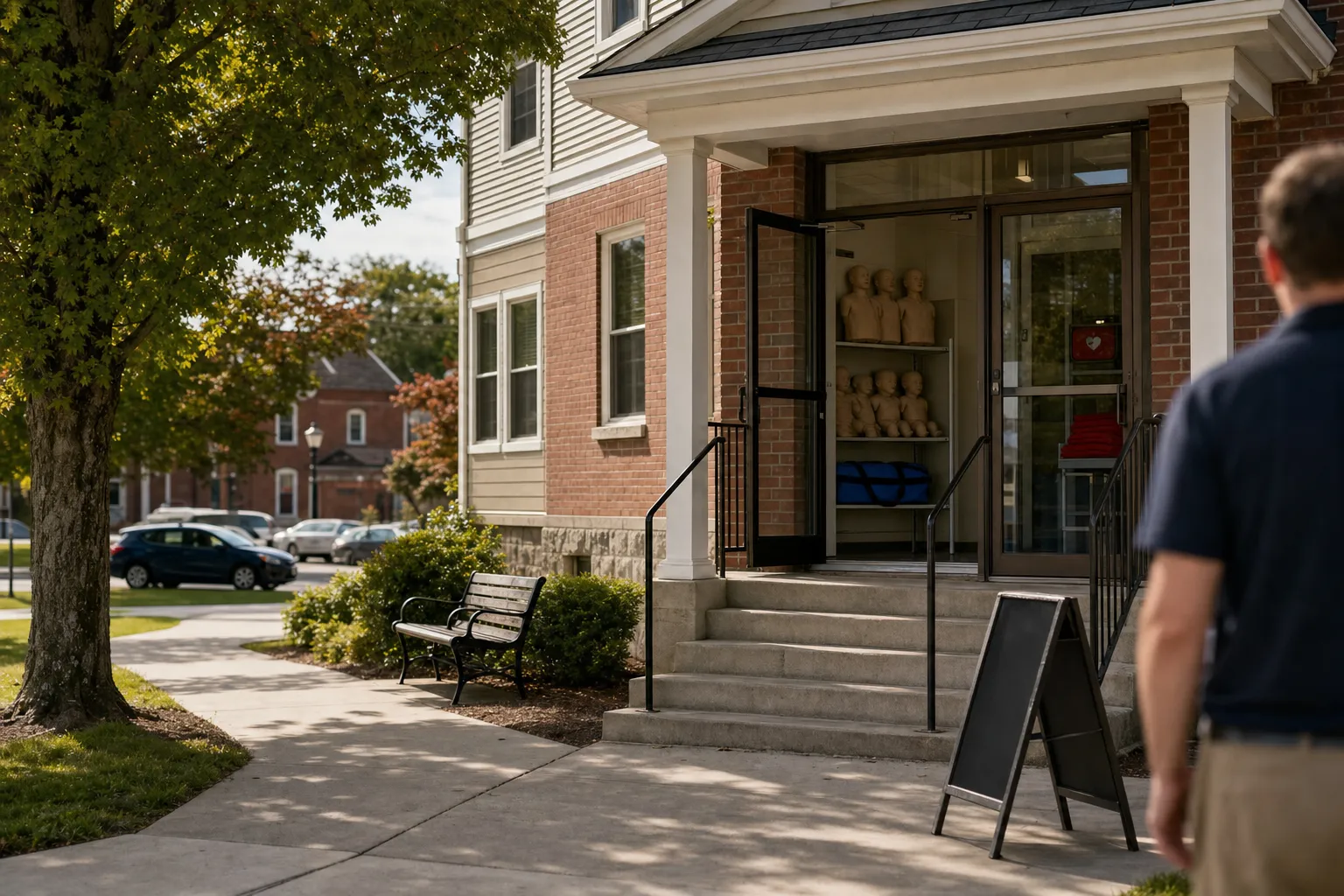
CPR training needs vary across Hyson Hill and nearby communities because population age, workplace risks, distance to emergency care and seasonal activities change which skills matter most. We adjust course content, practice scenarios and supply recommendations so our CPR and infant and child safety classes match local needs and prepare people for the emergencies they are most likely to face.
How local differences change what we teach
Not every community needs the same CPR emphasis. When we plan a class for Hyson Hill or a neighboring town, we look at practical local factors that affect outcomes and learning priorities.
- Population and age mix. Areas with more young families need more infant and child safety and pediatric CPR practice, while communities with higher numbers of older adults benefit from training focused on sudden cardiac arrest and adult chain of survival considerations.
- Common workplaces and occupations. Farms, manufacturing sites and daycares present different injury risks. We tailor scenario practice to workplace realities so staff and supervisors can recognize hazards and act quickly.
- Distance and response times. In places where ambulance response is longer, we emphasize bystander actions that extend care until professionals arrive, including high quality compressions, hands only CPR options, and effective use of available equipment.
- AED availability. If a school or business already has an AED program, we add hands on practice with device placement and quick response coordination. If AEDs are rare locally, we focus on chest compressions and dispatcher-assisted CPR.
- Seasonal events and local activities. Summer camps, outdoor festivals and winter sports change the type and frequency of emergencies. We modify scenarios to match seasonal exposures, such as heat illness, drowning and outdoor trauma.
Why infant and child safety needs special attention in our area
Infant and child emergencies require different compression depth, rescue breath timing and airway techniques than adult care. For communities with many childcare centers or family care providers, we increase pediatric scenario practice and decision drills so rescuers gain muscle memory and confidence.
Our curriculum includes pediatric-focused skills from both American Heart Association and American Red Cross guidance, and instructors explain how techniques change with age and body size. For a deeper look at pediatric scenarios and common classroom approaches, see our topic page on Pediatric Emergencies.
How we decide what to include in a local class
We follow a short process when designing a course for a neighborhood, school or business. This keeps the class practical and relevant.
- Assess the audience. We ask about ages present, job functions, and any known medical or safety risks so we set the right emphasis.
- Map likely emergencies. We review common incidents for the setting, such as choking in daycare, cardiac arrest in a workplace, or opioid overdose in communities where that risk exists.
- Choose standards and scenarios. We select the appropriate certification standard, then build scenario practice that reflects local reality, including bystander roles and available equipment.
- Prepare supplies and references. We recommend first aid supplies and placement based on FEMA and Pennsylvania preparedness guidance and our clinician reviewed kits.
- Deliver hands on practice. We prioritize skill time and small group scenarios so every participant practices compressions, breathing, AED use and rescue actions.
Pro tip: If you are organizing training for a childcare center or school, tell us the age range and staff roles upfront. That allows us to bring pediatric manikins and tailor scenarios so your staff practices the exact skills they will need.
What a tailored infant and child safety module looks like
A local infant and child safety module emphasizes:
- Pediatric compressions and ventilation ratios for infants and children.
- Choking management specific to infants and older children.
- Recognition of respiratory distress, anaphylaxis, and opioid overdose signs in younger patients.
- Dispatcher assisted CPR and when to start rescue breaths versus hands only techniques.
- Coordination with school nurses, daycare policies and emergency services.
We teach these skills with scenario practice that mirrors your setting, whether that is a family home, a classroom, or a playground.
Checklist for choosing the right class for your location
Before you sign up
- Identify the primary audience, for example parents, babysitters, daycare staff or mixed workplace teams.
- Note the most likely emergencies in your area, such as drownings by local ponds or opioid overdoses in some neighborhoods.
- Tell us which certification you need so we align the class with required documentation and learning objectives.
- List any on site equipment, such as AEDs, epinephrine auto injectors or naloxone, so scenario practice can include real device familiarity.
Watch out: Training that skips hands on pediatric practice or uses only adult manikins can leave caregivers unprepared. Infant chest size and airway differences matter, and correct muscle memory comes from practice on appropriate manikins under instructor supervision.
How our background shapes local adaptation
We deliver instructor led certification courses and hands on training using educators certified through the PQAS and clinician reviewed materials. Our offerings include American Red Cross and American Heart Association content where appropriate, and we recently added American Heart Association Basic Life Support courses to our curriculum.
For supply recommendations that match local standards, our kits are curated by a FEMA certified registered nurse and aligned with Pennsylvania preparedness guidance. That combination of certified instruction and clinician reviewed supplies helps local groups meet training and compliance needs.
Seasonal considerations for Hyson Hill and nearby towns
Seasonal patterns change risks and therefore training needs. In summer we emphasize water safety and drowning response for communities with active outdoor recreation. In winter we include cold exposure and slip related trauma scenarios. Planning training around seasonal activities lets participants practice skills they are more likely to use soon.
Key takeaway
CPR and infant and child safety training work best when they reflect local people, places and risks. We tailor course emphasis, scenarios and supply recommendations so participants in Hyson Hill and nearby communities gain the specific skills they are most likely to need.
Related pages and where to learn more
To explore certification options and course descriptions, see our CPR Training service page. For location specific details and directions, visit our Stewartstown location page at Stewartstown, Pennsylvania. For deeper reading on pediatric emergencies and classroom approaches, see our Pediatric Emergencies topic.
When we mention general population or emergency response trends, we use public data and clinical guidance, such as U.S. Census Bureau age and demographic resources and national resuscitation guidance from the American Heart Association.
Frequently asked questions
How does a course for a daycare differ from a workplace CPR class?
A daycare focused class puts more time on pediatric compressions, choking rescue for infants and children, recognition of anaphylaxis, and coordination with parents and school nurses. Workplace classes often emphasize adult compressions, AED use and role assignment for multiple responders. We adapt scenario practice and equipment to match your environment.
Do you teach naloxone use and opioid overdose response?
Yes. Our emergency response training and first aid courses include opioid overdose recognition and naloxone administration where appropriate. We explain legal considerations and work with organizations to include naloxone in preparedness plans when that risk exists locally.
What should we tell you before scheduling training for a local group?
Tell us the age ranges of people to be trained, the setting, any known medical or safety concerns, and whether you need a particular certification standard. That information helps us bring the right manikins, supplies and scenario plan so the session is efficient and relevant.
How do you account for differences in emergency medical services response times?
We ask about local EMS response expectations and adjust the class so bystanders practice sustained care actions that matter when professional help will take longer to arrive. That includes quality compressions, effective team coordination, and practical use of available supplies.
Learn more and check our local listing
Read our Google reviews, get directions and see location details on our Stewartstown page, and find related learning resources on our site to plan the training that fits your group.
Read reviews and get directions for Stewartstown, Pennsylvania