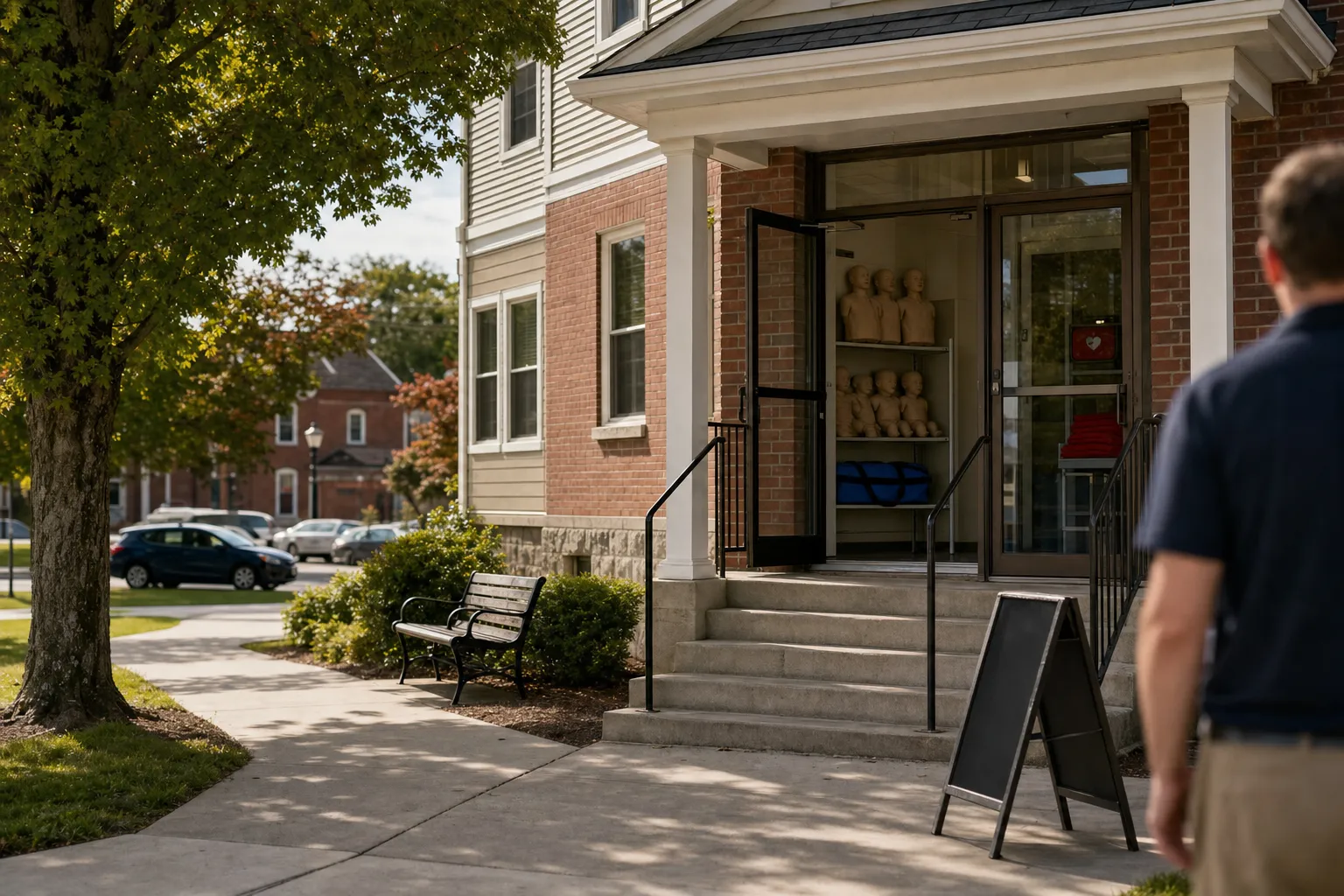
Most people finish a single CPR certification session in one visit, and certificates generally stay valid for two years. Costs vary widely because course type, certifying agency, class format, group size, and supplies all affect the final price. At Care First Education LLC in Stewartstown, we focus on clear certification pathways and practical skills assessment so you know what to expect before you enroll.
What CPR certification timelines mean
Timeline covers three things: how long the classroom or blended course takes, how long it takes to get your proof of certification, and how often you must renew. For many standard adult and pediatric CPR courses, the skills session fits into a single meeting. Blended learning models add an online component that you complete before the in person skills check. Renewal cycles for common provider credentials are typically every two years, which means you will return for a refresher or a renewal course at that interval.
At Care First Education we offer both fully instructor led courses and blended options, and we include a practical skills assessment during the in person session so your certificate reflects demonstrated competence, not just attendance.
Why the timeline and cost matter for Stewartstown learners
In a small community like Stewartstown and nearby towns such as Shrewsbury Station and Glencoe, timing affects your ability to meet workplace rules, school requirements, or childcare licensing. If your school, daycare, or small business requires certification by a specific date, plan the timeline around the in person skills check and the issuing process for your employer or regulator.
Cost influences whether organizations can train multiple staff at once or need to stagger certification over time. We work with local groups to balance class size, practical training time, and supply needs so teams meet compliance and feel ready for emergencies.
Key concepts to understand
- Course type. Basic community CPR for lay rescuers differs from American Heart Association Basic Life Support used in many clinical settings.
- Skills assessment. Demonstrating compressions, ventilations, and AED use in person is the core of most certifications.
- Blended learning. Online knowledge checks plus an in person skills session shorten classroom time but still require hands on verification.
- Certification validity. Most provider level certificates need renewal periodically to reflect current protocols.
- Group training. Larger groups usually lower per person cost but need careful planning for hands on practice time.
What affects how long a course takes
Several practical factors change the calendar for completion:
- Level of certification. A basic CPR and AED course for the public is shorter than provider level courses that include team resuscitation or advanced airway topics.
- Format. Instructor led classes are scheduled as one block. Blended courses require you to finish the online portion before attending the skills check.
- Class size and instructor to learner ratio. Hands on skill practice takes more time in bigger groups unless breakouts or additional instructors are used.
- Special content. Courses that add topics such as naloxone administration, bleeding control, or pediatric scenarios will extend the session.
- Scheduling constraints. Weekend or evening classes affect how soon you can finish depending on availability.
What drives CPR certification cost
We never list fixed prices on a resource page because pricing varies by course type and group needs. Instead, understand the common cost drivers so you can compare options.
- Certifying agency and credential. Courses aligned to American Heart Association or American Red Cross standards have different materials and credentialing processes.
- Class format. Blended models often include fees for online materials plus the in person skills check. Fully instructor led classes bundle instruction and hands on practice in one session.
- Instructor qualifications. Teaching by educators certified through the PQAS and clinician reviewers adds value and may affect cost compared with unaccredited instructors.
- Supplies and equipment. Manikins, AED trainers, and consumables require maintenance and replacement. We also offer preparedness and first aid supply kits curated by a FEMA certified registered nurse, which can be added for organizations that want to equip classrooms or workplaces.
- Group size and location. On site training for an employer or school may include travel or set up time and is priced differently than public classes held at our Stewartstown location or another community venue.
- Certification paperwork and record keeping. Issuing digital or printed cards and maintaining training records is part of the overall cost structure.
Comparing in person skills sessions and blended classes
| Aspect | In person skills session | Blended class |
|---|---|---|
| Time in person | One scheduled block for the full course | Shorter hands on session after online study |
| Pre class work | Minimal | Online modules and knowledge checks |
| Best for | Those who learn best with full instructor presence | Busy learners who prefer to study core content on their own |
| Cost factors | Classroom time, instructor to learner ratio | Online platform fees, plus skills check |
Checklist before your CPR class
What to bring and confirm
- Photo ID if your certifying agency requires verification
- Proof of completion for online modules if you are in a blended course
- Comfortable clothing for hands on practice
- List of workplace or school requirements for certification level
- Any organizational paperwork for group records
Pro tip: If your organization needs several staff certified, schedule a group session. Group classes improve consistency in skills assessment and simplify record keeping.
How Skills Assessment fits into timelines
Skills assessment is the moment a learner demonstrates CPR competency under instructor observation. It is not a written test only. We include scenario practice and practical evaluation so certificates reflect demonstrated ability. That means timelines must reserve enough time for each person to perform compressions, ventilations when required, and AED use while instructors observe and give feedback.
For teams, we recommend planning a longer session or adding instructors so the skills portion does not become a bottleneck.
Related services you might need
CPR certification often pairs with other trainings that change both timeline and cost. We provide and recommend these related options:
- First Aid Training, for wound care, splinting, and emergency response basics
- Emergency Response Training, for workplace plans and team roles
- CPR Training, classroom or blended formats focused on practice and confidence
Related locations and schedules
We serve Stewartstown and surrounding communities including Shrewsbury Station, Glencoe, and Hopewell Township. Local groups often schedule sessions to fit school calendars, shift patterns for caregivers, or childcare licensing timelines. For details about classes in our home community see the Stewartstown location page.
Helpful resources and what we follow
Our courses follow current, accredited protocols and are taught by PQAS certified educators. We pair instruction with clinician reviewed supplies and FEMA informed preparedness guidance, so organizations get consistent teaching and practical equipment recommendations. For the certification pathways we use and how skills assessment fits into renewal planning, see our topic page on skills assessment.
Skills Assessment explains how we evaluate practical ability and how that evaluation affects certification timelines.
Key takeaway
Expect to complete most CPR courses in a single in person session or a short blended workflow, plan for certification renewal every two years, and budget for cost variables such as course level, format, instructor qualifications, and supplies. We emphasize practical skills assessment so certificates reflect real ability, especially for workplaces, schools, and community groups in Stewartstown and nearby towns.
Frequently asked questions
How long does a typical CPR certification class take?
Most single session public CPR classes last a few hours, while blended classes require online study plus a shorter in person skills check. Exact timing depends on course level and how much scenario practice is included.
How soon will I get my certificate after the class?
Many certifying agencies issue a digital certificate the same day or within several days after the instructor reports course completion. The issuing timeline varies by agency and the method of delivery you choose.
How often do I need to renew my CPR certification?
Provider level certifications commonly need renewal every two years. Renewal courses focus on current protocols and reassessing skills. We can help organizations schedule recertification so staff remain compliant with workplace or licensing requirements.
What should organizations budget for group training?
Budgeting depends on group size, whether training is on site, and the course level. Larger groups may lower the per person rate but require more hands on stations. Factoring in supplies, instructor time, and record keeping gives a clearer total cost estimate.
What is the difference between CPR training and CPR certification?
Training refers to the instructional experience where learners practice skills. Certification refers to the credential issued after successful completion of the required training and skills assessment. We offer both classroom training and formal certification courses.
Learn more and check local options
Read reviews and get directions on our Google Business Profile, and review related pages on our site for details about course types and skills assessment. See our CPR Certification page for course pathways and our Skills Assessment topic page for how we evaluate practical skills.
CPR Certification | Skills Assessment | Stewartstown location