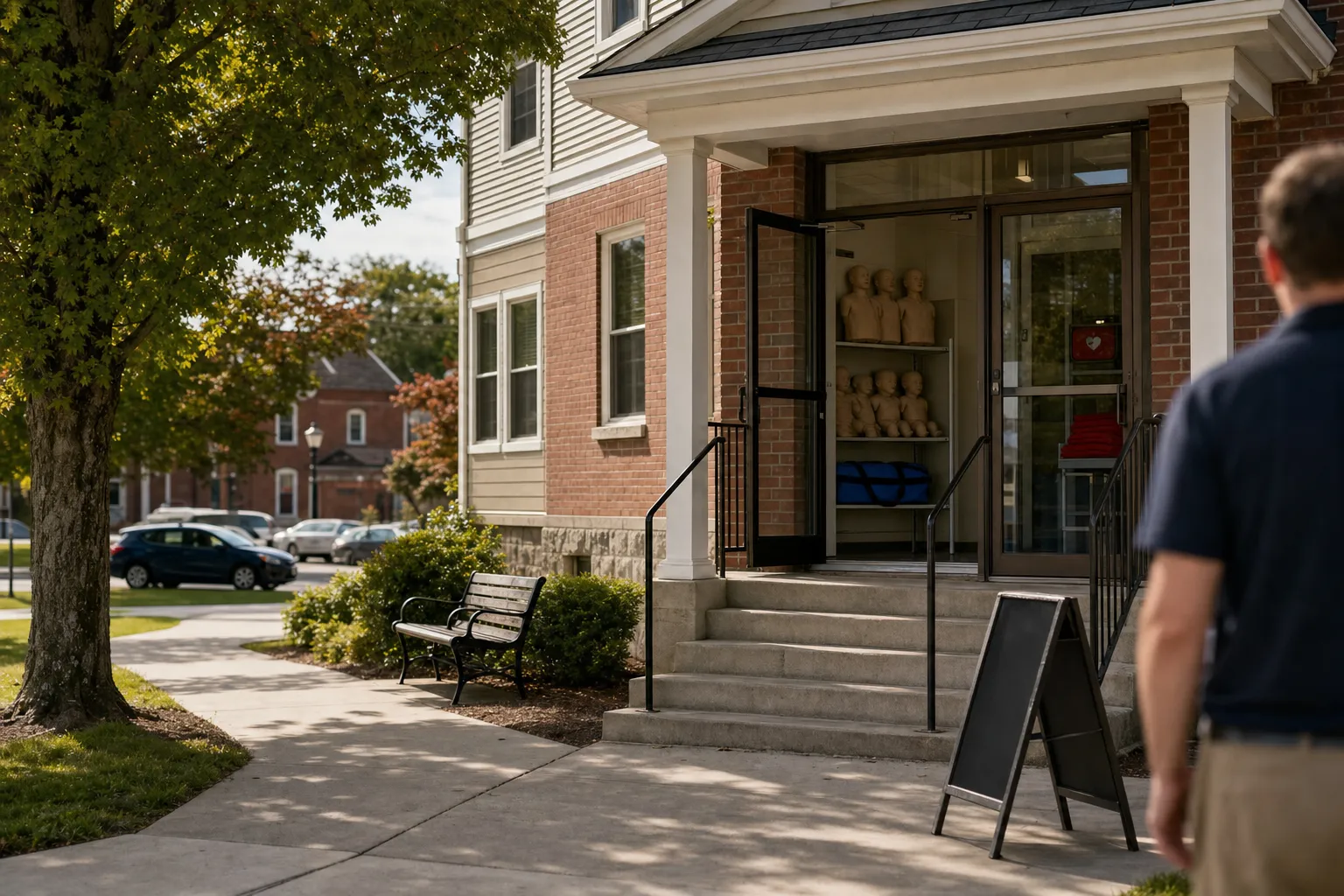
AED programs and CPR training are two parts of the same preparedness system. An AED program defines the device placement, maintenance, policies and who is authorized to use the device, while CPR training teaches people how to deliver high quality chest compressions and how to operate an automated external defibrillator safely.
What an AED program actually covers
An effective AED program goes beyond buying a machine. It combines equipment selection, written policies, training, maintenance and documentation so the device is ready and staff know how to act when minutes count.
- Equipment and placement, including model selection and strategic locations
- Written program policies that explain roles and incident reporting
- Training for users that includes hands on AED practice and chest compressions
- Maintenance schedules and battery and pad replacement logs
- Medical oversight and links with local emergency medical services
- Record keeping for drills, device checks and post event reviews
If you want a concise overview of program components we discuss day to day, see our AED Programs topic page for an outline of practical steps and resources: AED Programs.
How CPR training fits inside an AED program
CPR training provides the human skills an AED program relies on. Compressions keep blood flowing. An AED can analyze rhythm and deliver a shock if needed, but the two actions are complementary.
When we teach CPR Certification and CPR Training we pair compressions with timed AED practice so learners build rhythm, confidence and smooth transitions between manual care and device use. For organizations this means training is a required element of a functioning program, not an optional extra.
For a full description of our certification paths, see our CPR Certification service page: CPR Certification.
Key training elements every program should include
Training must cover more than pushing on the chest. We structure classes around real tasks staff will face.
- High quality adult and pediatric chest compressions, with feedback where possible
- Safe, confident AED operation from powering on to pad placement and delivering a shock
- Timed transitions so rescuers minimize interruption to compressions
- Team roles and communication for two person or larger response teams
- Scenario practice that reflects likely locations such as classrooms, break rooms and senior care areas
- Documentation and post event reporting procedures
How we implement an AED program in a facility
- Select a program coordinator. Assign one person to own device checks, training schedules and records.
- Choose appropriate devices and supplies. Select AED models and replacement pads sized for adults and children if needed. See our notes on equipment care below and the related topic on equipment care for more background: Equipment Care.
- Train staff on CPR and AED use. Provide hands on, scenario based sessions for the people who are likely to respond.
- Document maintenance and drills. Keep a log of weekly or monthly readiness checks, battery and pad replacement, and training records.
- Coordinate with local EMS. Tell your local ambulance service where devices are located and ask about post event reporting expectations.
Watch out: An AED is not a substitute for immediate CPR. Delay in compressions while searching for or preparing a device reduces the chance of a good outcome. Training must emphasize minimal interruption to chest compressions before and after a shock.
Maintenance, inspections and equipment care
An AED program is only as strong as its maintenance practices. Most devices have status indicators, battery life estimates and expiration dates on pads. Regular checks and prompt replacement keep the device ready.
- Daily or weekly visual checks for damage and indicator lights
- Scheduled battery and pad replacement before expiration
- Storage in a visible, accessible and climate appropriate location
- Inventory of associated supplies like nitrile gloves, razor, scissors and extra pads
Pro tip: Keep a small readiness kit with spare pads and a battery status checklist near the device so a quick inspection takes less than a minute.
Training formats that work for local organizations
Different audiences need different formats. We tailor class length and scenarios to match the learners.
- Short refreshers for workplace safety teams and small businesses
- Extended sessions for daycare staff, schools and senior care staff that include pediatric practice and medication emergency awareness
- Blended models with online knowledge checks plus hands on sessions for staff with scheduling constraints
- Team resuscitation drills that practice role assignments, communication and timed AED use
Our educators are certified through the PQAS and include clinician reviewers who align scenarios to real workplace risks. We recently added American Heart Association Basic Life Support courses to our offerings to support clinical teams and early responders.
What good program documentation looks like
Documentation shows readiness and supports learning after an event. Keep simple, consistent records that cover device status, training completion and any incidents.
- Device inspection log with dates, findings and next actions
- Training roster with topics covered and skill checks completed
- Post event report template that captures timeline, actions taken and lessons learned
Who needs an AED program in Cross Roads and surrounding communities
Places where people gather are natural candidates for an AED. Common examples include schools, daycare centers, senior care, small businesses, community centers and places of worship. In our work serving Stewartstown and nearby areas we often help childcare providers and small employers set up programs that fit their risk profile.
For local details about our service area you can view our Stewartstown, Pennsylvania location page: Stewartstown, Pennsylvania location page.
Checklist for starting or improving an AED program
AED program readiness checklist
- Assign a program coordinator
- Map device locations where access is fastest
- Confirm device model, pad sizes and spare inventory
- Schedule initial and recurring hands on training
- Set up a maintenance and inspection log
- Coordinate notification with local EMS
- Run at least one documented drill per year and review results
How we teach these skills at Care First Education LLC
We design courses for the audiences we serve, including healthcare professionals, nursing students, babysitters, parents, daycare centers, schools, small businesses and senior care staff. Classes emphasize hands on practice, scenario drills and confidence under pressure.
Our instructors are PQAS certified and our curriculum is clinician reviewed. That means learners get practical feedback on compression quality, timing, device use and team coordination. We also help organizations organize supplies curated by a FEMA certified registered nurse so your kit aligns with Pennsylvania and FEMA preparedness guidance.
Key takeaway
An AED program and quality CPR training are inseparable. The device extends the chance of a good outcome, but only when it is placed, maintained and used by people who are trained to act quickly and keep compressions going. Planning, hands on practice and simple documentation are the parts that make a program reliable.
Frequently asked questions
Do AED programs require medical oversight?
Most effective programs name a clinical contact or medical director who can advise on protocols, reporting and post event review. Local emergency medical services can often help clarify expectations for your area.
How often should staff be trained on AED use?
Initial training should be followed by regular refreshers. Many organizations run brief refreshers every six to 12 months and a full hands on review every one to two years, depending on staff turnover and local risk.
Can an bystander safely use an AED without medical training?
Modern AEDs are designed for lay rescuers and provide voice and visual prompts. Training reduces hesitation and improves pad placement and compression timing, which is why AED programs include training as a core element.
What inspections should we record for each AED?
Record visual status checks, readiness light or self test results, battery and pad expiration dates and any actions taken. Keep the log simple so checks are done consistently.
Does an AED replace the need for CPR?
No. CPR is the immediate lifesaving action. An AED can diagnose and treat a shockable rhythm, but uninterrupted chest compressions are critical before and after a shock.
Which audiences benefit most from combined AED and CPR training?
Schools, daycare centers, senior care, small businesses with frequent public contact, and community centers all benefit. We tailor sessions to each audience to cover adult and pediatric considerations as needed.
Learn more and check our local resources
For a practical guide on program setup see our AED Programs topic page and for certification options see our CPR Certification service page. You can also view details about our local presence and offerings on our Stewartstown location page.