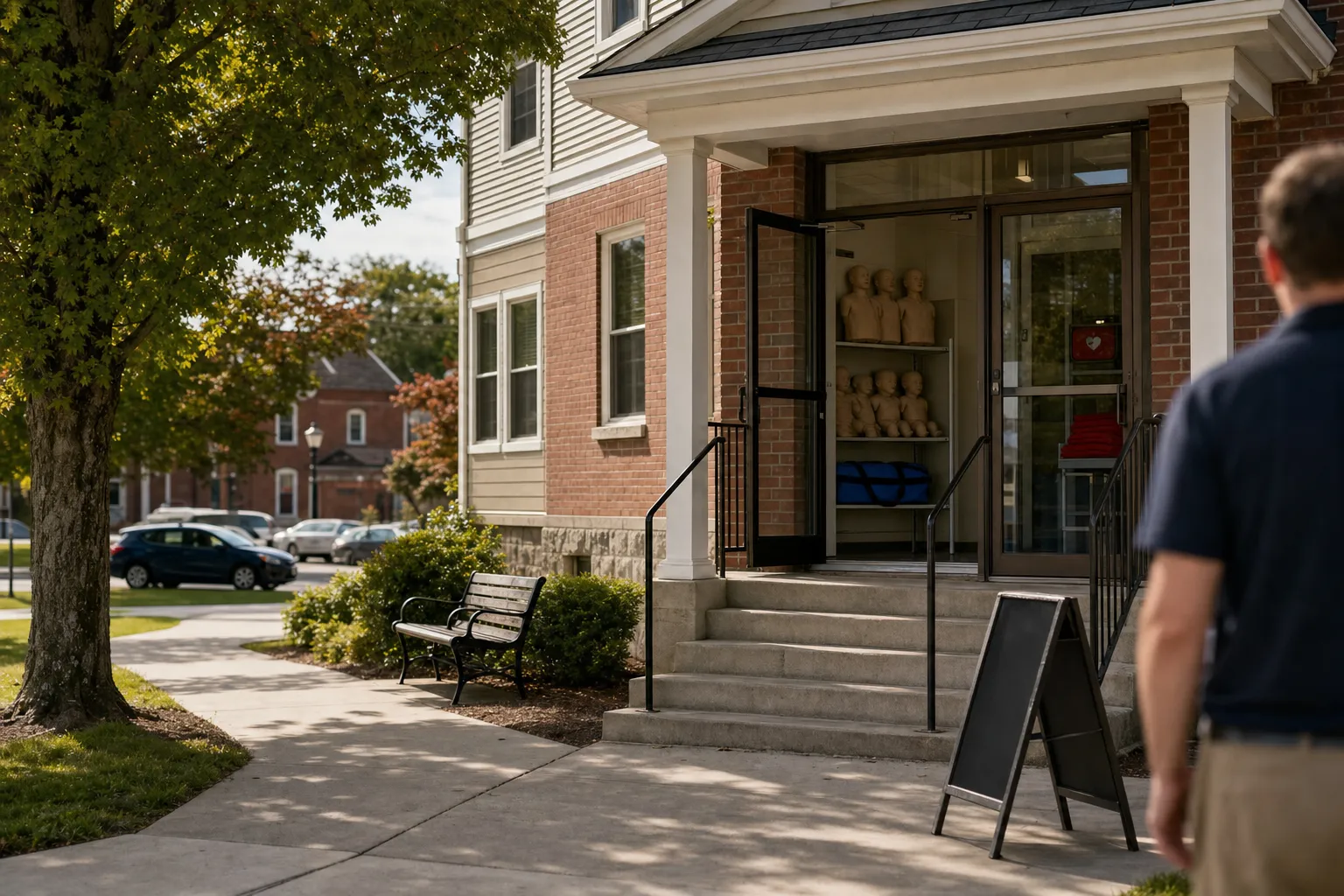
Before you start first aid training, be clear about what you want to learn and how you will use the skills. The main things to know up front are the course level, the skills you will practice, the time commitment and how the class supports community preparedness in Loganville and nearby Stewartstown.
Why first aid training matters for your community
First aid training builds individual confidence and improves outcomes when minutes matter. We teach people who care for children, older adults, coworkers and neighbors, and we design classes so groups from schools, daycares and small businesses practice realistic scenarios. That community focus is why we link training to broader Community Preparedness efforts in Loganville and the surrounding area.
Which course should you choose
The right course depends on your role and the level of care you need to provide. Below are common pathways and who they suit.
- Basic first aid course. Good for parents, babysitters and volunteers who need hands on skills for bleeding, choking and common injuries.
- Workplace first aid and emergency response. Designed for small businesses and school staff who must meet workplace safety requirements.
- First Aid with CPR and AED. Combines wound and medical emergency care with cardiopulmonary resuscitation and automated external defibrillator use. Useful for childcare, senior care and public locations.
- Advanced modules. Topics such as tourniquet application, naloxone administration and severe trauma response are available for groups with higher risk exposure.
Care First Education LLC offers instructor led courses that map to these pathways on our First Aid Training page.
What we teach and how classes work
Our courses emphasize hands on practice and scenario drills rather than long lectures. Instructors certified through the PQAS guide learners through skill stations, manikin practice for CPR, and scenario practice for head trauma, choking and breathing emergencies. We also include modules on recognizing opioid overdose and naloxone administration, anaphylaxis and epinephrine use, and basic life support content aligned with the American Heart Association.
Pro tip: If you need certification for an employer or childcare licensing, check the specific credential required and mention that when you register so we can match the course content.
How to choose the right class for your group or role
- Identify your requirement. Decide whether you need a certification for work, childcare licensing, or general preparedness.
- Match the scope. Choose a course that covers skills you expect to use, for example, pediatric first aid for childcare or bleeding control for community events.
- Confirm the format. Decide between an instructor led class on site and a scheduled public session. We offer both formats depending on group size.
- Check instructor qualifications. Look for PQAS certified instructors and clinician reviewed curricula, which we provide.
- Plan for recertification. Note the certification period so you can schedule refresher training before it expires.
What to expect on the day of class
Bring and expect
- Government issued photo ID if you need a formal certificate.
- Comfortable clothing for hands on practice and basic PPE if required.
- A willingness to practice skills and participate in scenarios.
Classes include demonstrations, skills practice and a short assessment. We supply training manikins, AED trainers and practice epinephrine devices so you can focus on learning rather than equipment sourcing.
Safety and scope limitations
Watch out: First aid training teaches immediate on scene care. It does not replace clinical diagnosis or medical treatment by licensed healthcare providers. If someone has a serious injury or illness, professional medical care is still required after initial first aid.
We also avoid teaching procedures that require licensed clinical privileges. Our role is to prepare lay responders, childcare staff and workplace teams to stabilize and get help, not to perform extended medical interventions.
How training links to preparedness and supplies
Training is more effective when paired with the right supplies. We curate first aid and preparedness kits reviewed by a FEMA certified registered nurse and aligned with Pennsylvania and FEMA guidelines. For community groups in Loganville and Stewartstown, pairing a class with a kit makes drills and real events easier to manage.
Choosing an education center
Look for an education center that lists instructor qualifications, course outlines and the professional standards it follows. We state our PQAS instructor certification and the addition of American Heart Association Basic Life Support courses so organizations can verify alignment with licensing or workplace needs. If you serve Loganville or live in Stewartstown, check that the site or instructor schedule fits local availability.
Key questions to ask before you enroll
- Does the course issue the certification your employer or regulatory body requires?
- How much hands on practice is included per student?
- Are instructors PQAS certified and are curricula clinician reviewed?
- What is the recertification interval and process?
Frequently asked questions
How long does a typical first aid course take?
Most basic first aid courses run three to four hours for layperson formats. Courses that include CPR with AED or workplace modules may run four to six hours. We list estimated durations on our course pages and can advise on group scheduling.
Will I get a certificate after the class?
Yes. Certified courses include a certificate or card indicating the credential earned and its validity period. If you need a specific credential for licensing or employment, confirm the required credential before you enroll.
Do you teach pediatric first aid and infant CPR?
We include pediatric content and infant CPR in classes tailored for childcare providers, parents and school staff. Mention this need when you look at available courses so the instructor can allocate appropriate practice time.
Can a small business run a custom session for staff?
Custom group sessions are a common option. They let you focus on workplace hazards and compliance. See our Emergency Response Training and CPR Training pages for typical group formats and topics.
Do you sell first aid kits and supplies?
Yes. We offer clinician reviewed kit recommendations and curated supplies aligned with FEMA and state guidance. Supplies are organized for home, classroom and community use so your training matches what you carry.
Key takeaway
Decide what you need to do with first aid skills, confirm the certification and hands on time you require, and choose a course that matches your role and local readiness goals in Loganville and Stewartstown.
Learn more and check our local details
See our Google Business Profile to read recent reviews, view hours and get directions. For more on how training links to community readiness, read our Community Preparedness topic or review course options on our First Aid Training page. You can also view local schedules for Stewartstown on our location page.